


Leading female characters have gained popularity in novels and movies in today’s entertainment industry. These roles are a big step in encouraging and embracing the empowerment of women. However, there was an author who featured strong female characters long before it was popular: William Shakespeare.
Several of his plays focus on female characters that challenge the norms and expectations of women. They are stubborn, bold, and fearless, all while maintaining a womanly composure. Despite these defining characteristics, many of Shakespeare’s female characters seem to have a weakness for wanting to fall in love and get married. While many of the female characters in Shakespeare’s works encompass strong personalities, hold their own opinions, and speak their mind freely, they tend to let men and the idea of love shape their actions and feelings.
Perhaps the boldest and most stubborn of Shakespeare’s female characters is that of Katherine in the comedy "The Taming of the Shrew." (or Kat in the movie adaptation "10 Things I Hate About You.") Katherine is headstrong and constantly battles with her younger sister, Bianca, and their father, Baptista. The only way Bianca will be allowed to marry is if Katherine is married first. However, due to her attitude and behavior, no man in the city has any desire to marry Katherine. In an effort to marry Bianca, several men conspire to get Katherine married quickly.
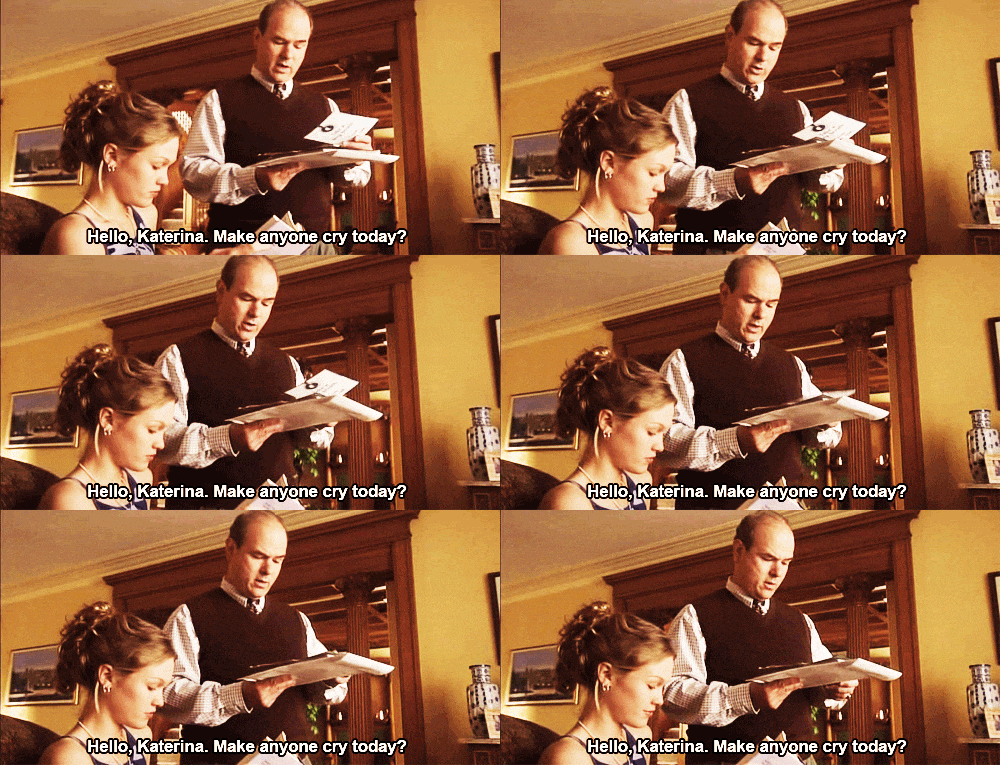
As expected, Katherine is harsh tongued when first speaking to Petruccio, the man that agreed to woo and marry Katherine for a reward. When discussing the date of the wedding with Baptista, Katherine yells at Petruccio, “I’ll see thee hanged on Sunday first” (2.1.291). Her shrewish attitude and behavior dominate her personality in regards to Petruccio. However, this harsh exterior begins to break away when she notices all of the kind things Petruccio says and does for her. She is under the impression that he truly does care about her. She begins to act differently towards him. The whole idea that she is married and has a husband who loves her brings her from a mean and hateful woman to a loving and kind lady. Her bold character is tamed when she becomes involved with a man.
A similar situation takes place in the comedy Much Ado About Nothing. Beatrice is quick-witted and as a sharp tongue. She publically bashes Benedick, who is equally sharp and witty. After Benedick tells Beatrice that he is not in love with any woman, she tells him “A dear happiness to women. They would else have / been troubled with a pernicious suitor. I thank God and my / cold blood I am of you humour for that. I had rather hear my / dog bark at a crow than a man swear he loves me” (1.1.105-108). She is fine with not being married. Beatrice makes it clear that she does not need to be married in order to be happy.
She is also not shy and reserved like many people expect women to be. However, when their friends and family devise a trick to get Beatrice and Benedick to fall in love, she falls for it. The idea that Benedick loves her causes her to drop her independent mentality and fall for him. Again this idea that a man can change the behaviors and personality of a woman is present in Shakespeare’s works.
Even though Shakespeare developed strong female characters that defied the expectation of women of his time, ultimately they succumb to the ways of men. This suggests that although Shakespeare believed these types of woman were important and relevant, men were always more important. Women would always give in to love and men.