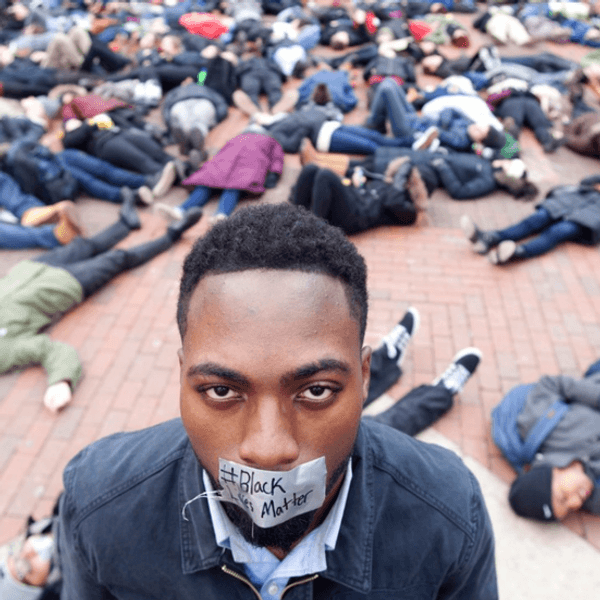

Our society stands on the principle that we have to talk about racism to end it. I know I can't be the only one who sees the lack of logic in that statement. Children are not born with hate for people of a separate skin color than their own; it is taught to them. These children grow up hearing about how they should be careful what they say and how they act around people who look different than they do. Adults think that by teaching the younger generation to think about what they say around people with different skin colors will help to end racism. At first glance, this seems like a good idea, but when you really think about it this is where it all begins.
People whose ancestors are of Eastern European descent are not the only ones who can become racist; although, according to the media they are the only people with hate in their hearts for people of different geographical backgrounds. Any person with breath in their lungs and a beating heart in their chest can have hate for people whose skin is different from their own. We are not going to end racism by ignoring that fact and acting like people of white skin are the only ones who need to be taught racial sensitivity. I'm not saying that there aren't a large amount of white people who are racist; I am just saying that by only focusing on this one group our society is condemning one skin color to try and stop the condemning of another. This is not the way to stop racism; this is how racism is transferred from one skin color to another.
The first big issue I would like to discuss is the fact that we identify people by calling them a "white woman" or a "black man." This is showing that the color of their skin is the thing that defines them. Morgan Freeman said it best in his interview with Mike Wallace on "60 Minutes" in 2005 when he said, "I'm going to stop calling you a white man, and I'm going to ask you to stop calling me a black man. I know you as Mike Wallace, and you know me as Morgan Freeman." We need to stop using race as an identifying factor. There are much more important things than the color of someone's skin. We should focus on their personality, character, interests, or anything else because nothing is as unimportant as the color of someone's skin. The only difference is a different geographical ancestry causing diverse melanin levels in our skin.
The next issue I would like to bring up may be controversial until you read my explanation. Using someone's culture or beliefs to describe them is NOT being a racist. If someone were describing me and they said, "She is a Christian and grew up in Alabama in a middle-class family." this is not racism. Not once was my skin color stated in that sentence. By describing someone as a Muslim, we are only stating their religious beliefs. When people cause an uproar over using a culture to describe someone, they are the ones bringing the racism and stereotypes into play. It is important to know the culture and beliefs of someone so that you can be respectful and understanding.
The issue that I personally think is the one causing the most trouble is giving people of black skin color special treatment to make up for what happened to their ancestors. White people are still having to say sorry for what our ancestors did years ago. We weren't the ones who participated in slavery. We were born long after the fact, so why must we feel like we've done something wrong? There's a difference between acknowledging the wrongs that were done long ago and teaching black people that they are entitled to something because of these wrong doings. Just like no white Americans have owned slaves in generations (I am not bringing human trafficking into this argument for it is irrelevant to my point) no black Americans have been enslaved in generations. We need to stop trying to make up for what happened in the past. Besides, The Civil War was the bloodiest war in American history. Thousands upon thousands of white men died to free slaves, but this fact seems to get left out when discussing the past. By handing out scholarships to people based on their skin color whether it be blacks, Hispanics, Native Americans or any other race we are once again pointing to the color of their skin instead of focusing on their intelligence and drive that should be the main factor in deciding what kind of scholarship they receive. There shouldn't have to be anything said about the color of someone's skin when it comes to their education.
Black History month is one of the most ridiculous inventions to try and help get rid of racism. It's an entire month that focuses on skin color. It's an entire month that says black history is different from American history. Once again, I will quote Martin Freeman in his interview with "60 Minutes" when he said, "Black history is American history." This is just one more thing to add to the list of how our society is talking about people's skin colors defining them and making them different from one another. I’m not saying that we shouldn’t celebrate the accomplishments of people with black skin. The point I am trying to get across is that if we can celebrate the accomplishments of white skinned people without designating a month, why do we need a month to do the same for people who just have a darker shade of skin?
The Black Entertainment Awards (BET Awards) are another ridiculous way to try to prevent racism. We don't have a white music awards. You know why? People think of white music as American music, and therefore award shows are based on the genre instead of the color of the person's skin who sings the song. Well let me tell you a secret, any musician or artist who is an American citizen sings American music. So, guess what? Black music is also American music. So why do we try and label the music on skin color instead of focusing on the talent and hard work these people have put into their songs?
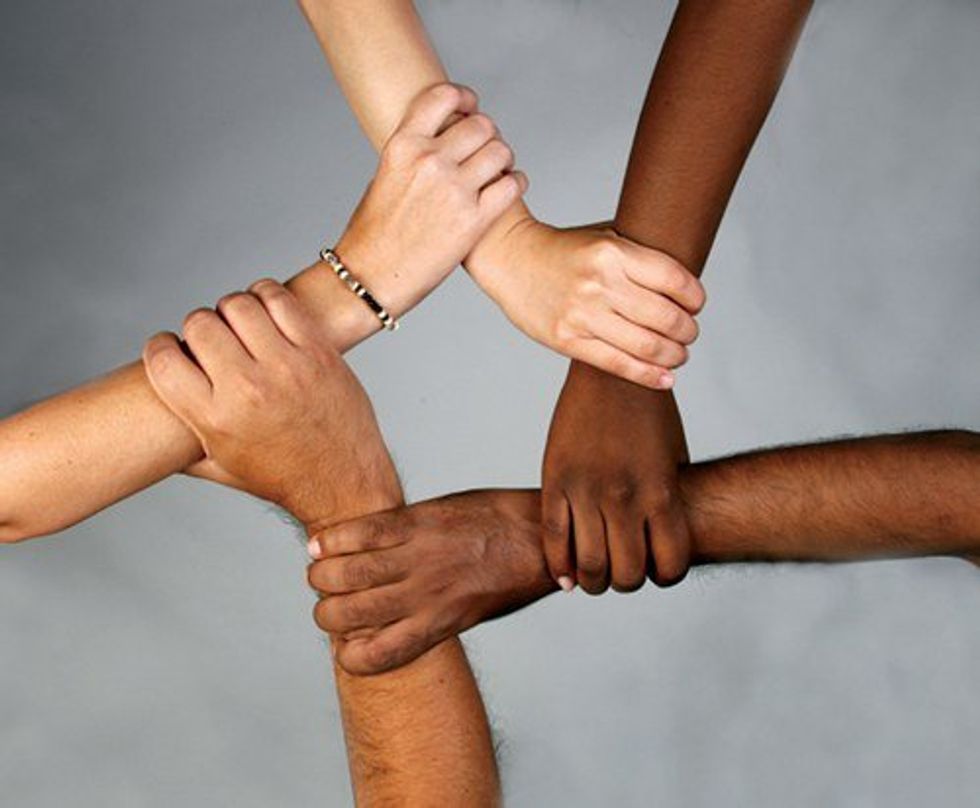
I will close with this: talking about racism is not going to end it. Talking about different skin colors is not helping racism. Creating TV channels, award shows, scholarships or months to discuss history is just another way of pointing out skin colors and trying to create differences that are not there. No matter the color of someone's skin, whether it be white, black, brown, purple or orange, we are all people. There is nothing different about us. Look at the range of skin tones and you will see we are not even different colors; we are all just different shades of brown. No one person is more special than the next. We all have talents, gifts and things to share with the world. Let's focus on bringing out the best in ourselves and others. Let's focus on each other's talents rather than discussing the shades of brown. Remember, culture and skin color are two different things, don't get them confused. Culture is not race, and it is okay to use this as an identifying marker. Skin color is not okay to use to describe people. I pray that everyone will have learned something from this article, and that we as a people can begin to love, focus on what's important, and be sympathetic and understanding of different cultures. We are all just shades of brown.