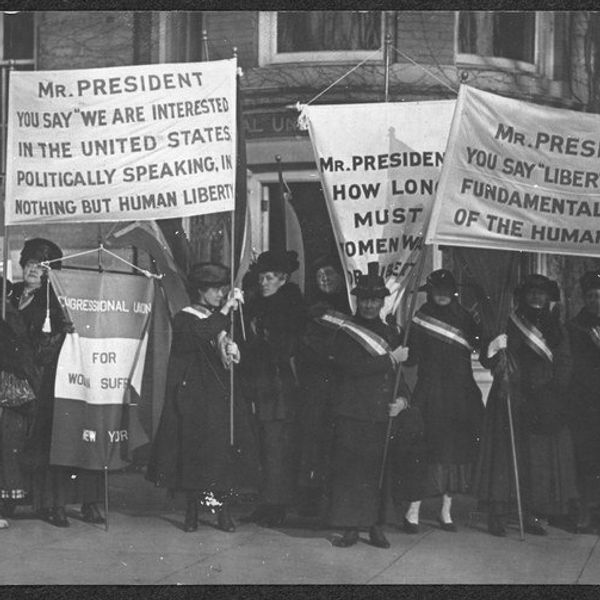
When were women granted the right to vote in the UK?
Not many people know the answer to this question. This is not surprising, given that as long as most of us have lived, women have enjoyed the right to vote. And that's just what it is: it's a right, not a privilege. However, in 1928 when the British Conservative government passed the Representation Of The People (Equal Franchise) Act, which allowed all women over 21 to vote in political campaigns, this must certainly have felt like a privilege.
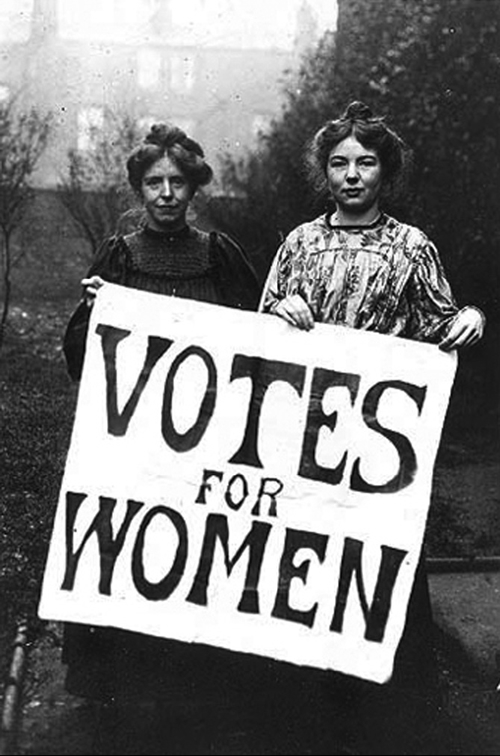
The vote was not just symbolic as a move in the direction of gender equality in the early 20th century, it also signaled the importance of women's voices in political and social institutions all over the country. Women, for the first time, had the opportunity to influence the political decisions that affected their everyday lives. So, how did women get the vote? It certainly wasn't handed to them by generous, forward-thinking, egalitarian MPs in the House of Commons.
Feminism is not a movement that is optional in the struggle for equality; instead it is essential to an egalitarian society.
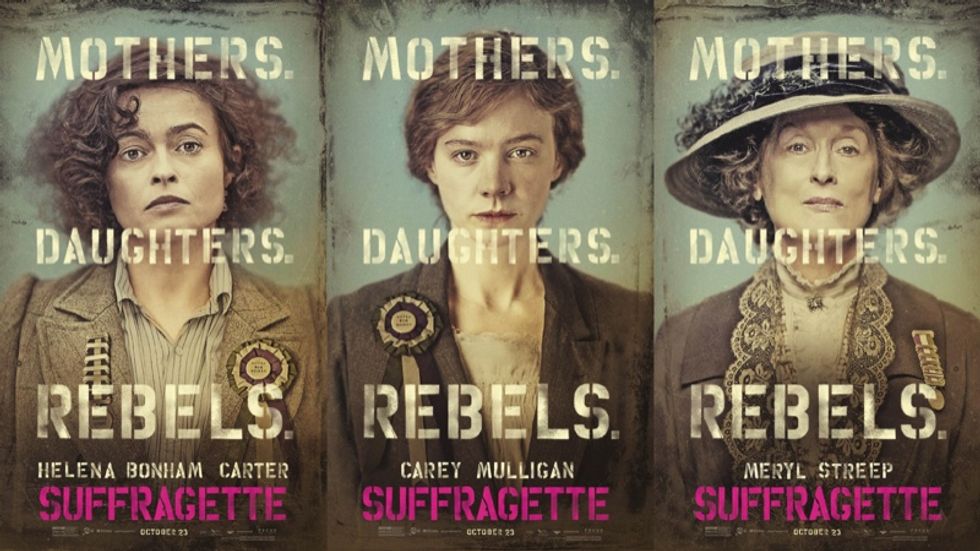
The British movie "Suffragette" details part of the women's suffrage movement and how women won the right to vote in the early 20th century. This historical drama film is extremely important and relevant to all women and men in the 21st century. It does not simply detail a detached series of events that changed women's life experiences 100 years ago. Instead, it reminds us of the historical and current struggle women have fought and are still fighting for equal rights. The movie signals the movement of feminism into the mainstream, revealing to a larger audience that feminism does not revolve around misandry with the goal of women ruling the world.
With the release of this movie, hopefully people will gain an interest in the true goals of feminism, free from the patriarchal media that packages feminism as an extremist movement obsessed with undermining men. Hopefully, this movie will communicate to a larger audience what feminism really is: the "advocacy of women's rights on the grounds of political, social and economic equality to men."
Feminism is not a movement that is optional in the struggle for equality; instead it is essential to an egalitarian society. The acceptance and embrace of feminism will determine a society free from discrimination and prejudice based on sex. Only with feminism can we come to see each other not through a gender determined lens, but instead as equal individuals. Feminism equals women's rights. Feminism equals women's empowerment. Most importantly, feminism equals equality. This should be reason enough to get on board.