Have you been warned about culturally-offensive Halloween costumes?
If so, you are just one of thousands of college students all across America. It is merely a small part of the rise of the political correctness movement on college campuses, which some people think is encouraging college students to be far too sensitive.
Just this past Monday, a student from Colorado College received a two year suspension due to his six word post on Yik Yak. It was definitely cruel and unnecessary, but what about freedom of speech and expression? Is this right slowly and surely being taken away from us?
Last week, an Oklahoma university president wrote a blog post calling out millennials for being both self-absorbed and narcissistic for their sensitivity. He accused students of playing the victim every time their feelings were hurt.
He specifically described one student who came to him complaining about a sermon read in class because he felt personally victimized by a specific Bible verse that made him feel bad for not showing love. The president was outraged and said that students need to toughen up and grow up because "this is not a Day Care; it is a University." He thinks that students are not willing to accept that others do not share their exact same beliefs.
Also in the wake, a few colleges have begun to introduce "trigger warnings" on syllabi in order to protect students from potentially offensive material. As it turns out, this was actually requested by some individuals who claimed they could not attend class because they were rubbed the wrong way by certain political or religious topics.
Some educators are enthused by these trigger warnings, which were initially utilized to flag graphic sexual material because they have potential to build trust between students and professors. But a recent survey shows that many think they are detrimental to classroom discussion and are wary about what encouraging such sheltering of students may mean for the future of education.
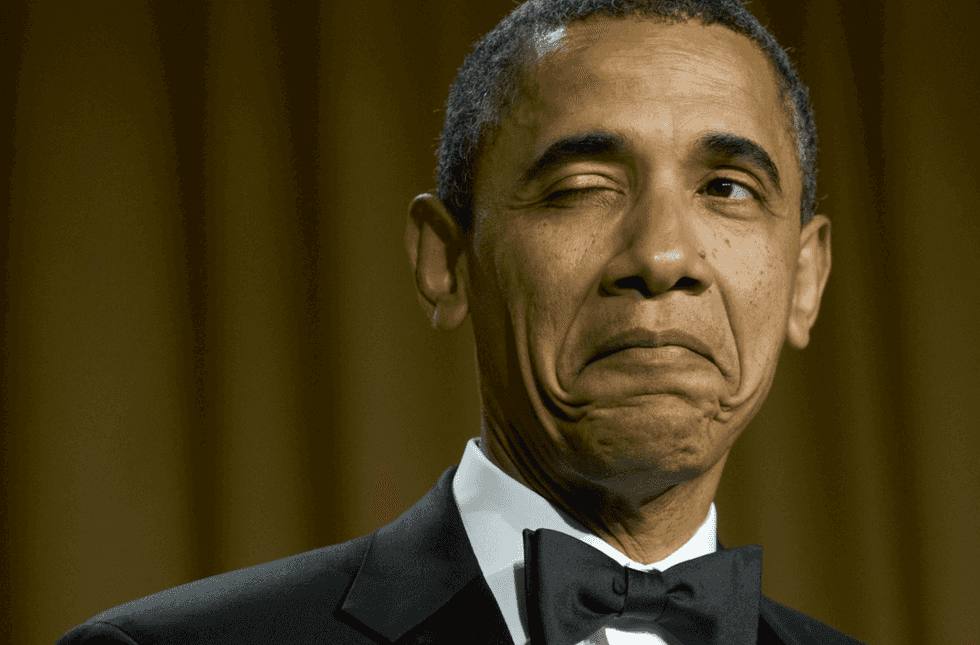
The president of the Oklahoma university and these other educators are not alone. In September, President Barack Obama said the following:
"I’ve heard of some college campuses where they don’t want to have a guest speaker who is too conservative or they don’t want to read a book if it had language that is offensive to African Americans or somehow sends a demeaning signal towards women... I’ve got to tell you, I don’t agree with that either -- that when you become students at colleges, you have to be coddled and protected from different points of view. Anybody who comes to speak to you and you disagree with, you should have an argument with them, but you shouldn’t silence them by saying you can’t come because I’m too sensitive to hear what you have to say.”
Essentially, Obama thinks that college students are 'coddled' and protected today.
College is meant to be a place where all ideas can be explored, and so many people believe that this movement of political correctness is destroying academic freedom.
It is true that focusing on points of disagreement is the foundation of the learning experience, but there comes a time when people misuse their freedom. It can violate the safety and rights of others, such at the acts of racism at Mizzou this fall.
The president of Oklahoma Wesleyan says that his university is "not a safe place. It is a place to learn: to learn that life isn't about you, but about others, that the bad feeling you have while listening to a sermon is called guilt, that the way to address it is to repent of everything that's wrong with you rather than blame others for everything that's wrong with them."
Yes, college is a place where we learn to grow up. But it should be a safe place as well. We are currently in the middle of a struggle to find the fine line between the two.
What do you think?
Are we offended too easily? Or are our educators not progressive enough?
Is this just a tension rooted in the distinctly different mindsets of older adults and liberal millennials?
Could this be the future of our education?