


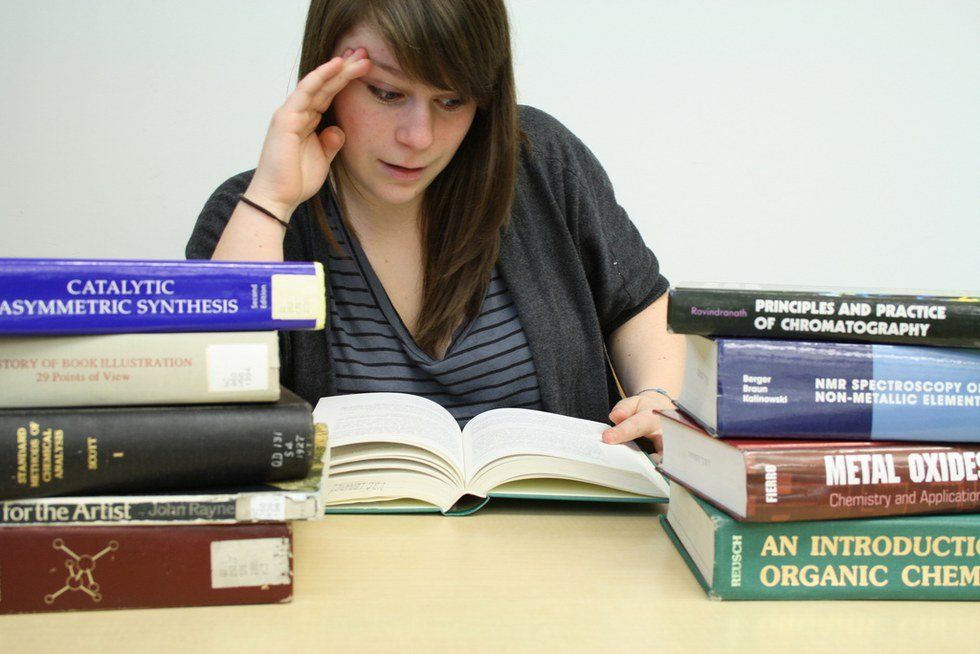
Okay, finals are around the corner, almost there! Finals can be super stressful, so here are some science-backed tips to do better.
1. Don't cram!!
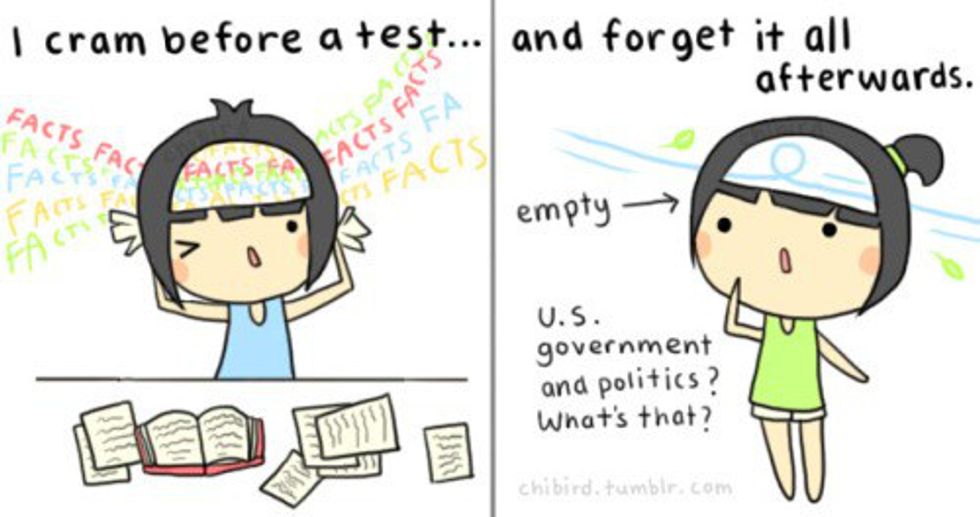
This should be obvious, but start studying as early as you can. This accomplishes two things, primarily reducing your stress levels! It also improves long-term memory for the material. Cramming might work for the test, but it produces worse retention long-term.
2. Test yourself!

Sounds weird, I know, but it is actually one of the study techniques with the most evidence supporting it. Testing on material actually improves long-term memory for the material (assuming reasonable performance on the recall). It's called the testing effect. Test yourself, and check your answers.
3. Study more than you think you have to!
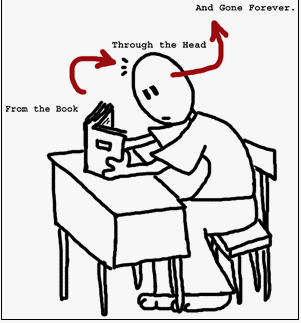
Called overstudying or studying past the point of mastery, by studying more than you think you need to you'll improve long term retention and perform how you want to when under pressure. If you want a C on a test, practice and test yourself to at least a B, if not better. Even if you get 100% on your practice, keep going even past that point.
4. Recall over recognition!

Importantly, test for recall, not recognition. Recognition is multiple choice, looking at something and saying "oh yeah, I know what that is!" Recall is where you have to actually say what something is. If it's vocabulary, actually say the definition or the word, not just flip over the card and say "yeah, I knew that!" Actually write out answers to study guide questions if you have them. This strengthens memory long and short term and prepares you for multiple choice, short answer, and essay questions.
5. Space out study sessions!

Like cramming, studying for too long is a great way to hinder long-term retention of material. Go over a less material at a time more often, called (surprisingly enough) spacing. Also, mix up the material you study. If you have three tests to study for, don't wait until after the first to study for the second (partially because there won't be enough time to do that!).
6. Be wary of study groups!

Okay, okay, I know this is weird advice. However, even the APA says that study groups don't help unless they mean testing each other (see numbers 2 and 4).
7. Don't study to music with lyrics!

Ideally, don't study to music at all, but I know I have a hard time studying in silence so I have to have music playing. Instrumental music is generally pretty good, but there are a lot of variables to that.
8. Take mini-breaks!

Now, I don't mean study an hour then watch Netflix for two, I mean brief (15 minute, tops) breaks from work. There is some really cool evidence on how even seemingly insignificant breaks can improve attention span.
9. SLEEP!!!

I can not stress the importance of getting enough sleep! Sleep deprivation shows similar cognitive impairments as drinking alcohol and a host of other detriments. Especially for studying, you have to get enough sleep. Sleep is when memories consolidate, meaning that's when we store memories. Insufficient sleep means memories don't get stored away properly and, therefore, can't be used to help you on that test you studied until 3am for!

















