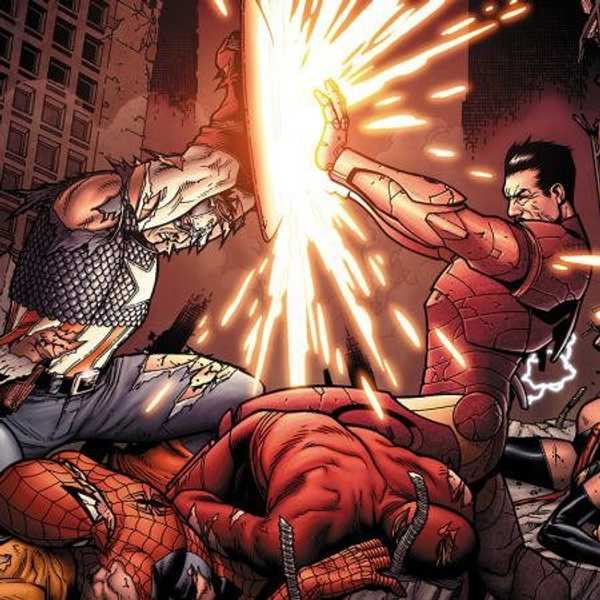
With summer right around the corner, everyone is understandably excited for the release of "Captain America: Civil War." The sequel to 2014’s "Captain America: The Winter Soldier" pits our Star-Spangled superhero head-to-head against Iron Man, the gold and red titan of the Marvel Cinematic Universe.
Everyone is so excited about "Captain America: Civil War" that they don’t see how disturbingly close it resembles our world today.
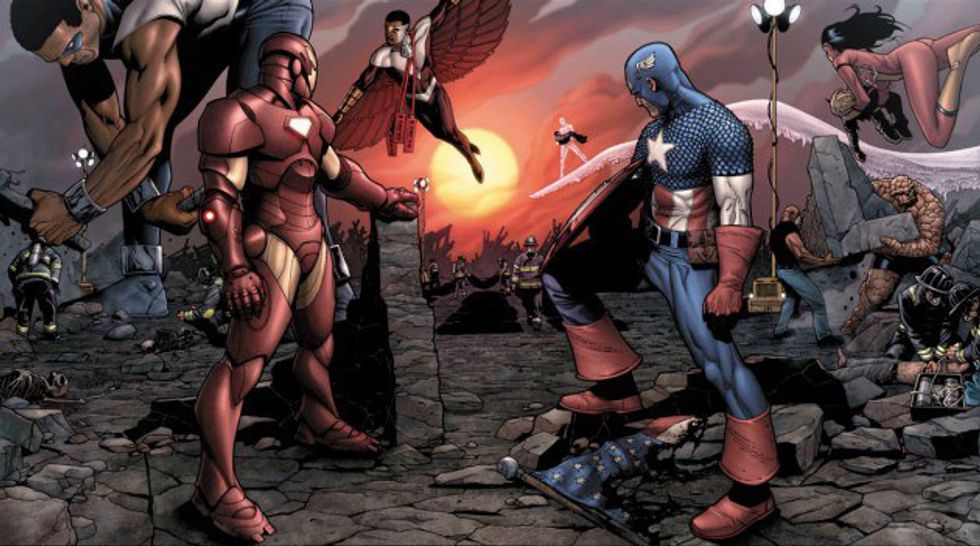
For those of you that aren’t familiar with the comic books, "Captain America: Civil War" is based on a 2007 limited comic book series, also titled Civil War. Just like the movie, it pits Captain America and Iron Man against each other over an issue that doesn’t really have a right or wrong side to it. After a cataclysmic event that results in the deaths of hundreds of innocent civilians, schoolchildren included among them, the U.S. Government proposes and passes a bill titled “The Superhuman Registration Act,” which declares that all superhumans must be registered by the government in order to operate as a superhero.
On one hand, this bill would treat superheroes as government employees, providing them not only salary and benefits, but also legal representation if a battle results in high casualties or property damage. On the other hand, the government would know the heroes’ secret identities, and could possibly manipulate them to conform to the government's own agendas.
In other words, the bill would build upon national security by taking away human rights.
Does that sound familiar?

In 2001, an act of congress was signed into law titled “The USA Patriot Act,” which was more or less considered the U.S.’s response to 9/11. The act details that it can place indefinite detention on immigrants, allow law officers to search homes or businesses without the owner’s consent or knowledge, and even allows the FBI to search telephone, email, and financial records without a court order.
This may sound like a reasonable reaction to one of the worst terrorist attacks in U.S. history, but run it through your head again. The government is basically allowed to give out infinite incarceration, invasive searches, and data collection to anyone they choose.
It’s trading civil liberties for civil security, and there are divisive proponents and opponents of the act to this day.
It’s not hard to see why.
Fast forward to 2016, where we have "Captain America: Civil War." Like the Patriot Act, "Captain America: Civil War" proposes a problem there isn’t really a right or wrong answer to. Do you trade freedom for security? Do we give away our rights for more protection? Can the government be trusted with more information? Or will they abuse that power to their advantage?
As our entertainment continues to reflect our reality, these are questions we need to find the answers to, even if they aren’t clear ones. But as you think about how our constantly changing world is pushing the boundaries on surveillance and security, also keep in mind one key thing Captain America says to Iron Man in "Avengers: Age of Ultron."
“Every time someone tries to win a war before it starts, innocent people die,” Cap says. “Every time.”