

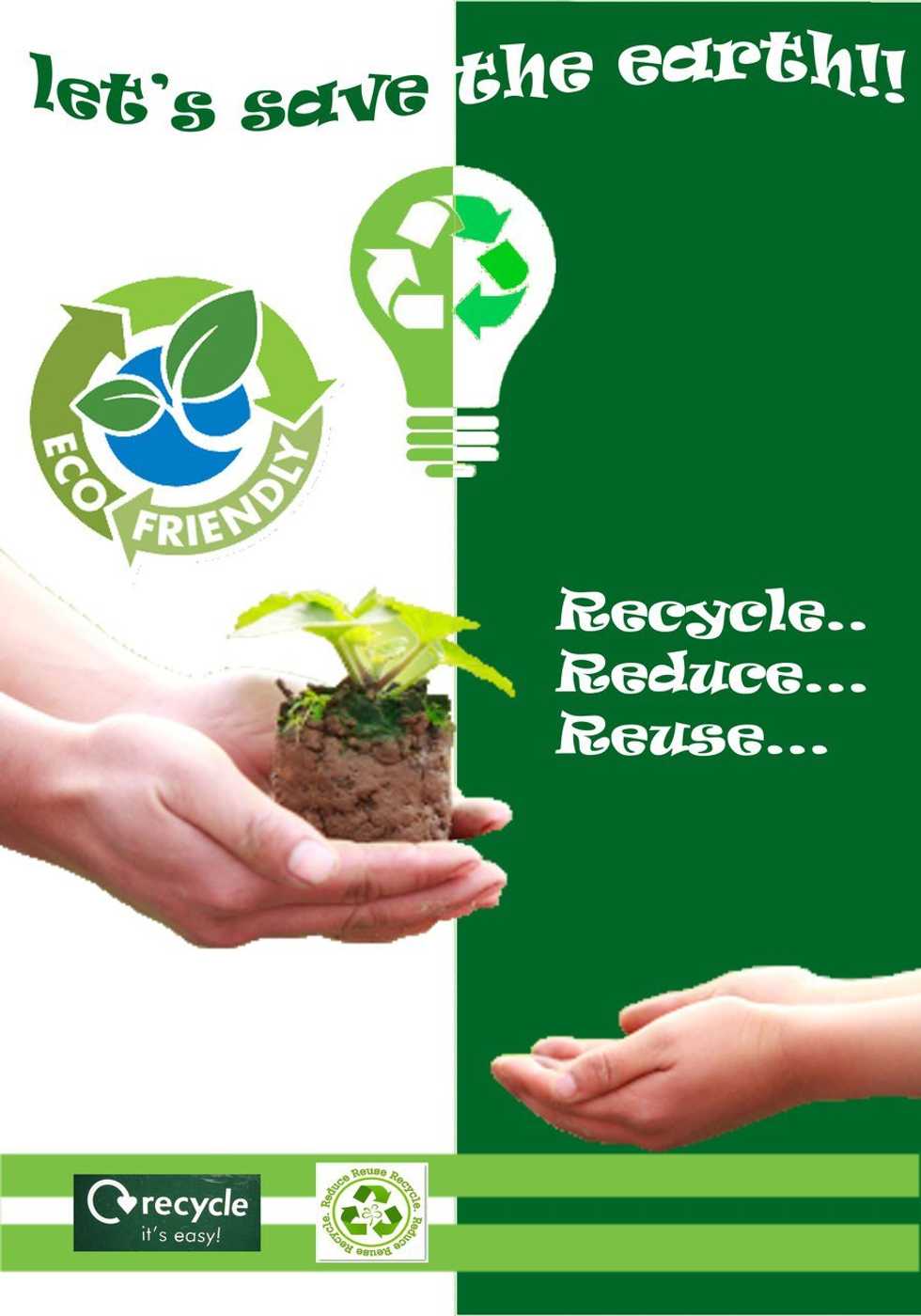
Greetings, Earthlings. I'm Keisha, Neumann's very own President of the Students of Environmental Awareness Club. As President, I do important things, like to meetings, talk to the advisor, talk to the other executive board members, be at the open houses and the involvement fair, get people interested in the club, get people to come to the meetings by email, in person, or even by text message. Being a president of any club is hard enough, but that is not what I am writing about. I am writing about how to care for the Earth and the environment and everything around it. Let's start with the Earth. Here are 10 things you can do to help save the Earth:
1. Pay attention to how you use water. The little things can make a big difference. Every time you turn off the water while you're brushing your teeth, you're doing something good. Got a leaky toilet? You might be wasting 200 gallons of water a day. Try drinking tap water instead of bottled water, so you aren't wasting all that packaging as well. Wash your clothes in cold water when you can.
2. Leave your car at home. If you can stay off the road just two days a week, you'll reduce greenhouse gas emissions by an average of 1,590 pounds per year. Combine your errands -- hit the post office, grocery store and shoe repair place in one trip. It will save you gas and time.
3. Walk or ride your bike to work, school and anywhere you can. You can reduce greenhouse gases while burning some calories and improving your health. If you can't walk or bike, use mass transit or carpool. Every car not on the road makes a difference.
4. Recycle. You can help reduce pollution just by putting that soda can in a different bin. If you're trying to choose between two products, pick the one with the least packaging. If an office building of 7,000 workers recycled all of its office paper waste for a year, it would be the equivalent of taking almost 400 cars off the road.
5. Compost. Think about how much trash you make in a year. Reducing the amount of solid waste you produce in a year means taking up less space in landfills, so your tax dollars can work somewhere else. Plus, compost makes a great natural fertilizer. Composting is easier than you think.
6. Change your light bulbs. Compact fluorescent light bulbs (CFLs) last 10 times longer than a standard bulb and use at least two-thirds less energy. If you're shopping for new appliances or even home electronics, look for ENERGY STAR products, which have met EPA and U.S. Department of Energy guidelines for energy efficiency. As of December 2013, ENERGY STAR had helped families and businesses to save an estimated $295 billion on utility bills and prevented more than 2.1 billion metric tons of greenhouse gas emissions from being released over the past two decades.
7. Make your home more energy efficient (and save money). Clean your air filters so your system doesn't have to work overtime. Get a programmable thermostat so you aren't wasting energy when you aren't home. When you go to bed, reduce the thermostat setting -- you won't miss those extra degrees of heat or air conditioning while you're asleep.
8. Maintain your car. Underinflated tires decrease fuel economy by up to three percent and lead to increased pollution and higher greenhouse gas emissions. Underinflation also increases tire wear, so it will save you money in the long run if you're good about checking your tire pressure.
9. Drive smarter. Slow down -- driving 60 miles per hour instead of 70 mph on the highway will save you up 4 miles per gallon. Accelerating and braking too hard can actually reduce your fuel economy, so take it easy on the brakes and gas pedal.
10. Turn off lights when you're not in the room and unplug appliances when you're not using them. It only takes a second to be environmentally conscious.
Now, the environment. Here are some ways to help save the environment:
1. Switch off anything that uses electricity when not in use. If you're not using it, turn it off. This goes for lights, televisions, computers, printers, and so on.
- Put timers on lamps and use them to turn off lamps at the same time each day. Timers like these can be found in hardware stores and they can be plugged into outlets, then control the power to your lamp.
- You can also find heaters and fans that have timers on them. So if it's cold or hot during the night it will switch off for you. Most of the timers go for an hour and then automatically switch off.
2. Unplug devices when possible. Leaving devices plugged in, such as laptop chargers or toasters, can use "phantom" energy. Even when an appliance is turned off, it may still use power. It is best to unplug anything that you do not anticipate using in the next 36 hours (or more).
- Use a power strip to turn lots of things off with the flip of a single switch. You can plug all your devices in one area—say, your computer—into a power strip. When you're done, simply turn the power strip off with the switch.
- Measure the energy your devices use or look up typical energy use. To measure usage yourself, use a Kill-a-Watt. You plug an appliance in through the Kill-A-Watt, and it measures the power use. This tool can also tell you whether a particular appliance or device draws power when it is turned off.
3. Trade in your dryer for a good old-fashioned clothesline. Air drying leaves your clothes smelling fresh and is environmentally friendly. Tumble dryers are among the biggest energy users in most households, after the refrigerator and air conditioner. If you do use a dryer, make sure to keep the vent clear, for safety as well as efficiency.
- Also, when using a washing machine, make sure you have a full load of dirty clothes. Do not just put a couple of dirty clothes into the washing machine as that wastes water. Instead make sure you have a full load of dirty clothing to conserve the water and electricity.
4. Run your air conditioner sparingly or not at all. Air conditioners use a great deal of electricity. Use natural ventilation or a fan to keep cool, as much as possible.
- If you do use an air conditioner, set it to a slightly lower temperature than outside. Remember that setting the temperature lower uses more electricity, and it won't cool things off any faster.
5. Close the heating and air conditioning vents in your home. If you are not using certain rooms in your house, close the vents in these rooms, and close the doors. Doing this consistently will reduce the amount of energy squandered by heating or cooling seldom occupied spaces.
6. Don't use electronic exercise machines. Instead of using exercise equipment, use a real bicycle (or a unicycle), or walk to get to nearby destinations or for pleasure. Calisthenics, push-ups, and other bodyweight exercises work, as well.
7. Use a warm blanket or sweater in winter. Bundle yourself up and lower your thermostat by a few degrees. Aim to set your thermostat at 68°F (20 °C) in the winter, perhaps even lower at night. Every degree above this will generate about 6-8% additional energy output.
Actually, these are some of the things to help save the environment, including planting a tree, recycling all you can, not wasting food, using reusable bottles for water, conserving water, switching to fluorescent or LED light bulbs, planting a garden, donate or share usable household items and volunteering your time.
There is so much you could do to help the environment and you can start doing it now.