


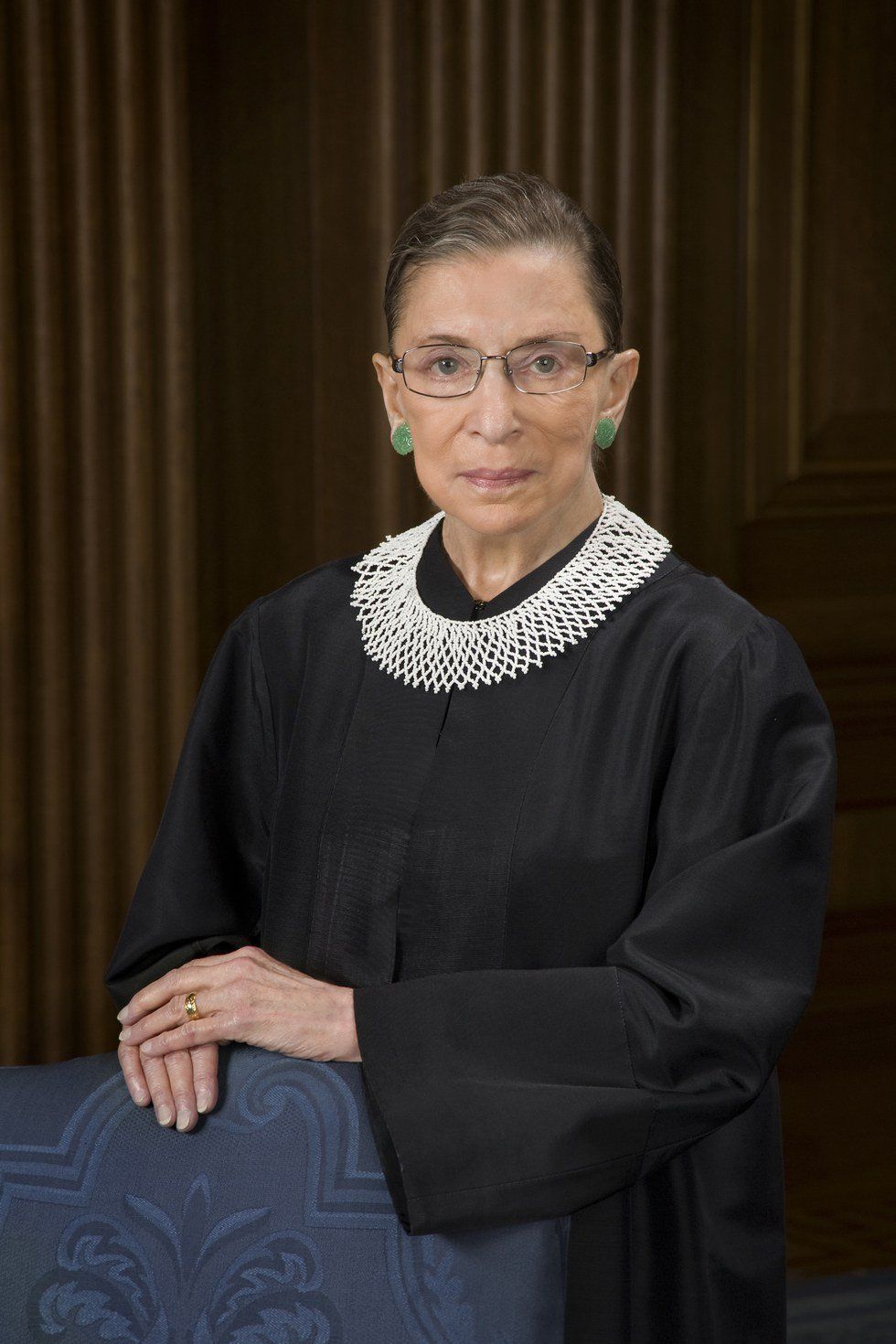
Ruth Bader Ginsburg has served as the Associate Justice of the Supreme Court of the United States for 22 years. She was sixty years old when she was sworn in as a justice. Ethics and a personal sense of righteousness are two things that play a role in how a justice will rule on a case. Judaism established the foundation for Bader Ginsburg’s ideas of equality and justice because of the beliefs taught within that religion. The Jewish faith is one described as an “ethical monotheism” and a highly regarded belief is that “God judges everyone, Jew or Gentile, by his or her behavior.”
Bader Ginsburg was aware of these qualities found within Judaism because she had learned of them from a young age, but it was discrimination against Jewish people that fully influenced her belief that every human being deserved legal rights and dignity. To understand the connection between her religion and her personal convictions regarding equality, one must understand the prejudices she and other Jewish people faced during the years. Bader Ginsburg had been born on March 15, 1933, approximately six years before World War II began. Her parents raised her in the Jewish faith during a violent, ongoing war and during the time that American society discriminated against them.
One historical and well-known instance is her decision in the Obergfell v. Hodges court case. Obergfell v. Hodges was a court case that argued whether same-sex marriage should be legal or not. Bader Ginsburg had cast her vote in favor of legalizing same-sex marriage because doing so would bring some sense of equality between the gay community and the heterosexual community. Homosexual people or anyone hoping to marry someone of the same-sex had long lived without the possibility of marriage in America. Bader Ginsburg listened to all the arguments and chose to vote in a way that would not hurt a good portion of the country. Her contributing decision in Obergfell v. Hodges helped legalize same-sex marriage in America, thus helping many homosexual citizens gain a right that heterosexual people had always been permitted. She contributed by making a positive impact on many lives and taught people that progress was good for the country.
Bader Ginsburg usually chooses to vote in cases that regard the equality of minorities, such as women and homosexual people. Her own faith encourages followers to seek justice and rid the world of inequalities with balance. Many groups, racial and non-racial, are discriminated against in America and being someone who had witnessed societal preconceptions growing up, Bader Ginsburg would follow Judaism’s teachings in ensuring that the world did not go on to support prejudice. Although same-sex marriage and same-sex relations are considered to be forbidden in the Torah, it is never stated whether homosexual people are exempt from the rule that everyone is entitled to equal rights and treatment. Choosing to marry is a personal choice and Bader Ginsburg never forced anyone to marry with this ruling, but allowed homosexual Americans to have the option if they chose to engage in the institution of marriage.
Many Americans look up to Ruth Bader Ginsburg because of her ability to analyze the societal implications of Supreme Court cases. Her decisions in these court cases have led to rulings that improved conditions for men, women, and homosexuals. Even today, Bader Ginsburg is influenced by these two events because she strives for societal progress as a Supreme Court justice who can make significant decisions.
















