You may have seen those articles that detail some of the darker sides to your favorite childhood movies, tarnishing your love and admiration for the films. This is not one of those articles.
Well actually, it could be. Let me begin with a story of my own.
I remember my first time visiting Tufts as a soon-to-be senior in high school. I sat in on an info session in what was to me an unknown place called Cabot (which I am all too familiar with now). The ecstatic admissions staff, the eager (hopefully) prospective students, the promise of a free meal afterward – you get the picture of what this looks like. This was my first college visit ever, and I was alone. Even still, I had already felt prepared for this since I heard all about these tours when my sister was looking for schools three years prior.
What I was not prepared for, though, was for this single info session to make me think. A LOT. After discussing the many resources and facilities at Tufts, the enthusiastic speaker started switching gears to talking about the rigorous academics and engaging classes that will challenge everything you know and love. Including "The Lion King."
Admittedly, throughout this info session, I was dozing off and my mind kept tuning in and out to what I was hearing. When I heard “let’s talk about 'The Lion King' movie,” I immediately directed all of my attention to her.
What transpired afterward was a mixture of heartbreak and horror – she went on to describe the political undertones of the movie that reflect popular negative tropes commonly shown in American media. From the anti-Blackness implicated in the portrayals of Scar and the hyenas versus Simba and Mufasa to the political strife linked to Simba’s exile and Scar’s subsequent tyranny, it only becomes clearer that growing up and learning about the world can be really upsetting.
Even still, the education I’ve made for myself at Tufts has definitely opened my eyes and encouraged me to think outside the box with everything. Though Disney will always have my heart or being so enchanting and filling my childhood heart with joy, I decided to go back and re-watch some of my childhood favorite films and see what I could dissect.
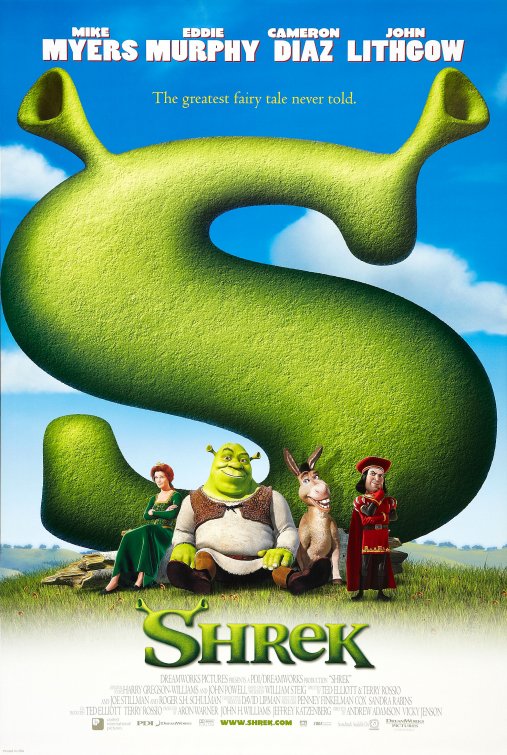
I switched over to watching Dreamworks films – Shrek and Shrek 2 were the most enjoyable to watch for me. How could I not have fallen in love with Donkey’s adorable personality and the perfectly selected soundtracks? But alas, watching these movies again with a more sophisticated eye shed light brought up some crucial things that are so easily ignored.
1. Women are always meant to know how to serve men.
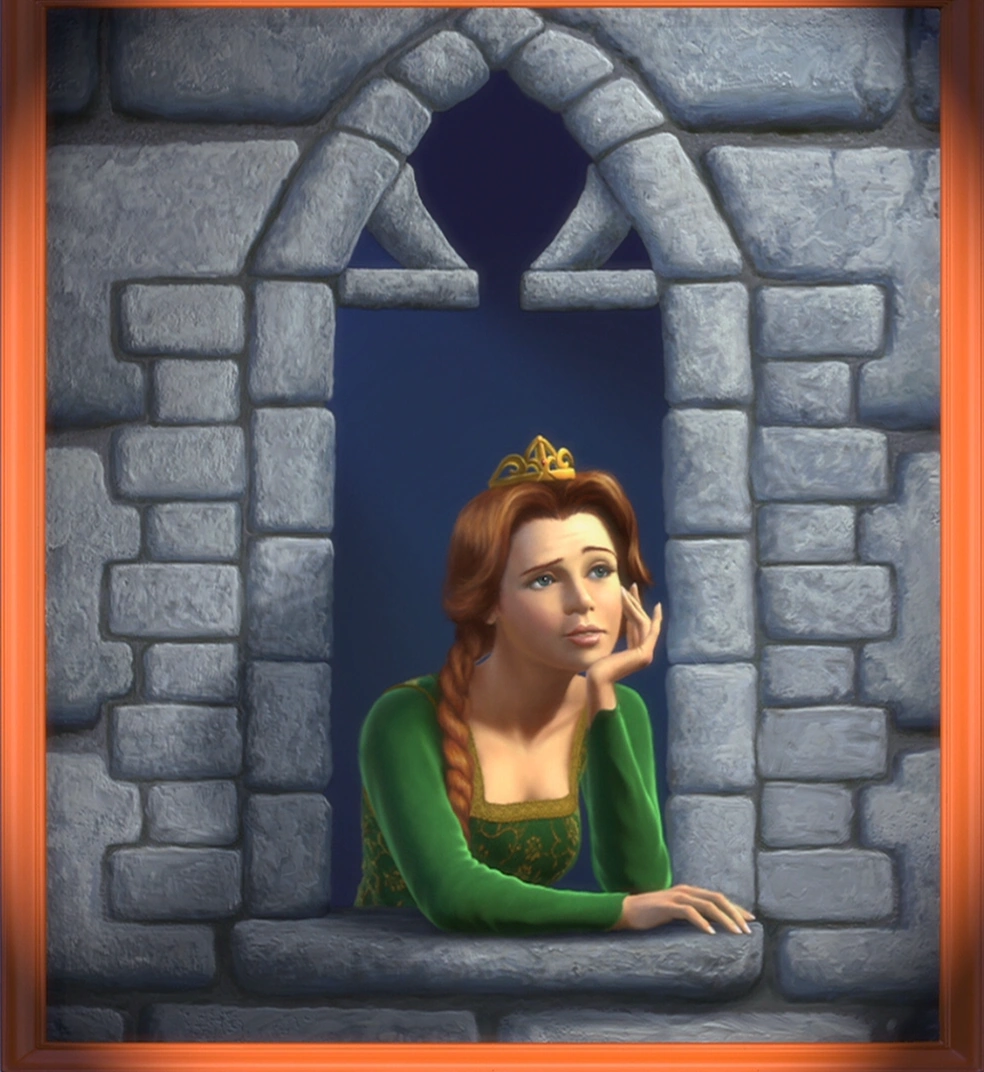
Fiona was locked away in a castle FOR YEARS, and yet when Shrek came to rescue her, she was ready with her beloved handkerchief to woo any potential suitors. Where did she learn that from? Is it just because she is a princess? Or did she already, somehow, know what to do?
2. "Ogres have many layers,” so check your stereotypes.

Remember the scene where Shrek tries to compare himself to an onion when talking to Donkey?
Shrek: Ogres are like onions... Onions have layers. Ogres have layers. Onions have layers. You get it? We both have layers.
Donkey: Oh, you both have layers. Oh. You know, not everybody like onions.
This talk calls out to audience members to think of how some may tense up when certain folks walk by in public – check the reflexive shuffling and bringing one’s belongings closer so as to not get something stolen. Piggy-backing off of the previously mentioned anti-Blackness that was present in The Lion King, this discussion of someone having many “layers” speaks to how some people may quickly assume how others may act based on their appearance. In light of the many news reports of police brutality in the United States, this could not be more relevant.
3) Fiona’s transformation into an ogre is labeled as a “curse” – reflecting more anti-Blackness/staying away from the “Other.”
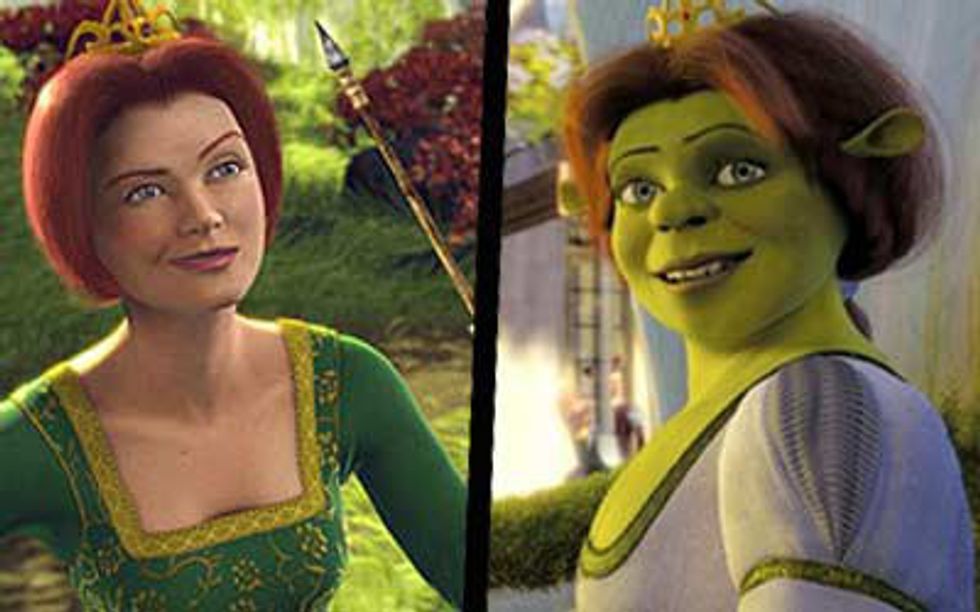
Sure, so many fairy tales include some spell where a character turns ‘hideous’ or ‘undesirable.’ Fiona’s transformation from a thin, elegant (White) princess into a heavier, clumsier ogre is referred to as a “curse.” Her metamorphosis into a form that is similar to Shrek’s is shunned and labeled as disgusting and ugly by Lord Farquaad. He quickly orders Fiona to be detained when she changes forms during their wedding – another indication of the anti-Blackness sentiment that permeates much of this film.
4) Finally, Shrek drinks the “Happily Ever After” potion in Shrek 2 and changes into a “handsome man.”

Segueing from how Fiona’s transformation from a White princess to an ogre was met with disgust, Shrek’s change to a handsome White man was met with admiration and attention from other women. It is no accident that DreamWorks chose to write the story this way.
Of course, movies can be fun and for pure enjoyment. Nothing beats mindlessly watching the “oldies but goodies” films from the simpler days of childhood. The timelessness of some of the more popular movies, though, like Shrek, can remain put to the test when examined against the backdrop of modern events in the United States. These animated films do not design themselves, and so there is bound to be many underlying messages. You just need to dig a little deeper.