
After I heard about the most recent racial incident on campus, in which a student posted a hurtful racial message on the whiteboard of a faculty member’s door, I hate to say that the event didn’t come as a huge surprise to me.
This is one racial incident of many that have occurred on our campus over the last couple of semesters—there was the infamous Yik Yak incident back in December in which a student anonymously posted a racial violent threat on the app, as well as the campus radio broadcast in March in which a few students used racial and violent language while on air.
It was initially easy for me to brush off the most recent incident as “not a big deal” because these things happen so frequently. I, as well as many of my fellow white students, even found ourselves wondering after the Yik Yak and radio broadcast incidents: “Is the punishment even really that necessary? It’s almost like they’re blowing things out of proportion.”
It wasn’t until a group of minority students on campus brought up the issue of safety on campus that I recognized my own ignorance and indifference. Frankly, I had never felt unsafe on this campus because as a white student, I had no reason to. But when I thought more deeply about the recent racial events that have taken place both on this campus and nationwide, I can’t say that minority students feel the same.
It is easy for white students to be indifferent to minority students’ feelings and to have a lack of empathy when it comes to racial events both on campus and nationwide, because as whites who make up the majority of students on this campus and who, despite what many people say, still maintain a dominant force nationwide, such racial threats and incidents do not directly affect us if we don’t allow them to. In many ways we can block such events out and separate them from ourselves and our own actions. I’m not saying, by any means, that this behavior is right. What I am saying is that it happens, quite often, and that even I am guilty of doing it.
As white students in the 21st century it’s true that we are not members of the generation that practiced slavery and discrimination laws against minorities; However, this still does not make us “innocent” in a racial sense. By separating ourselves from whites who did and still do practice discrimination and hate against minorities, and by taking on the attitude that it’s the “other” white people’s prejudice and hate that is the problem, we are basically enforcing the idea that because slavery and discrimination laws no longer exist, minorities no longer experience the effects of such institutions and prejudice. Based on current events, this is clearly not the case. By not being active in our understanding of current racial events both on campus and nationwide, white students are just as guilty as those who do actively practice racism and hatred toward minorities, because both types of people demonstrate a lack of understanding and empathy for minorities’ lives and day-to-day experience.
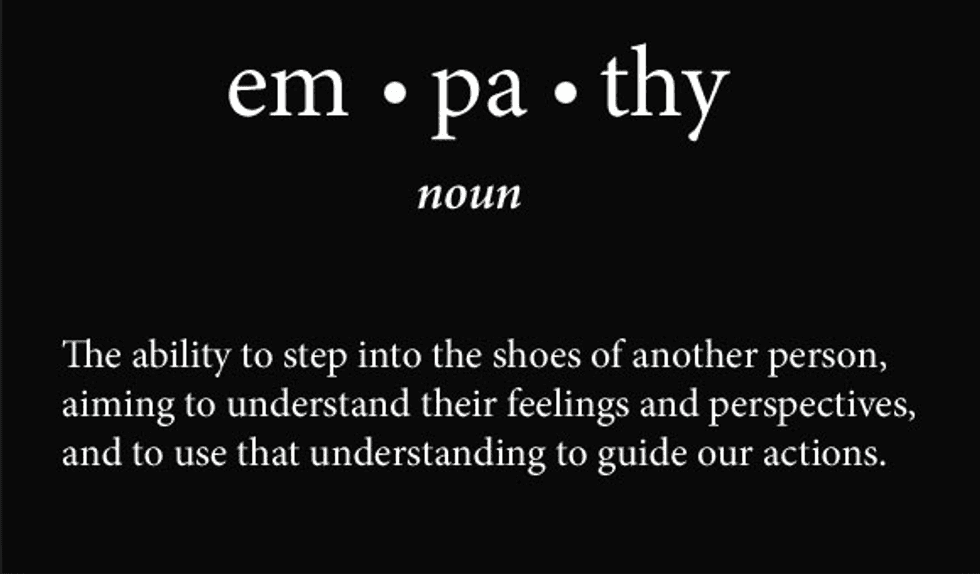
As “easy” it is for white students to separate ourselves from the current racial events that have taken place both on our campus and nationwide, it is also very easy to practice understanding and empathy when it comes to such events. Try seeing the issue from a different perspective, from the point of view of a minority student on campus, rather than a white student who never experiences such racial threats. For me, I found it extremely effective to imagine the campus as a mostly minority-dominated campus rather than a white dominated campus, and I switched the past couple of racial events and threats so that they were aimed at white students, instead of minority students. When I did, I saw the recent events in a much different light and could better understand (even though not completely), what it feels like being on a campus where one does not feel welcomed or safe.
As a collective student body, we are not going to solve all of the racial issues on this campus in a short period of time, but if each student can try to practice a greater amount of awareness, understanding, and empathy when it comes to racial events, as a campus we can wholly work toward a more inclusive, safe campus community for all students.