

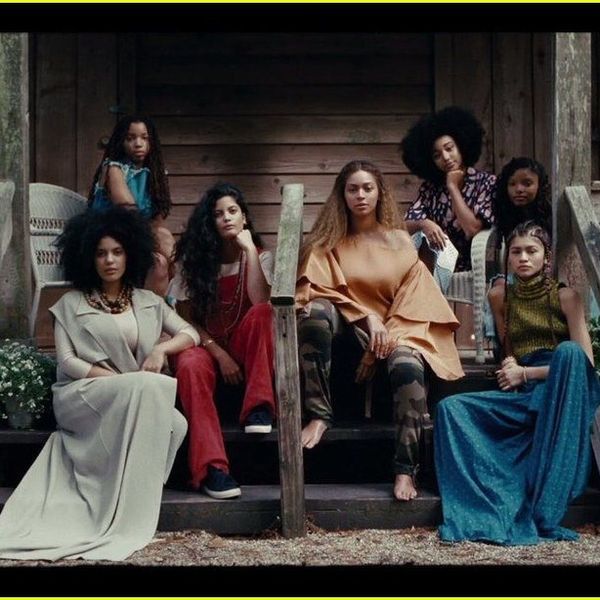
If you haven’t already heard, Beyoncé came out with a new song and video, "Formation," last weekend that speaks on Black empowerment, impacts Black culture, and addresses Black issues. Through Beyoncé’s visuals and lyrics, Beyoncé made homage to her roots, embraced features that the Black community is often stereotyped for, and called attention to the recent persecution and brutalization that the Black community faces every single day. Read my last article on how "Formation" is changing the game.
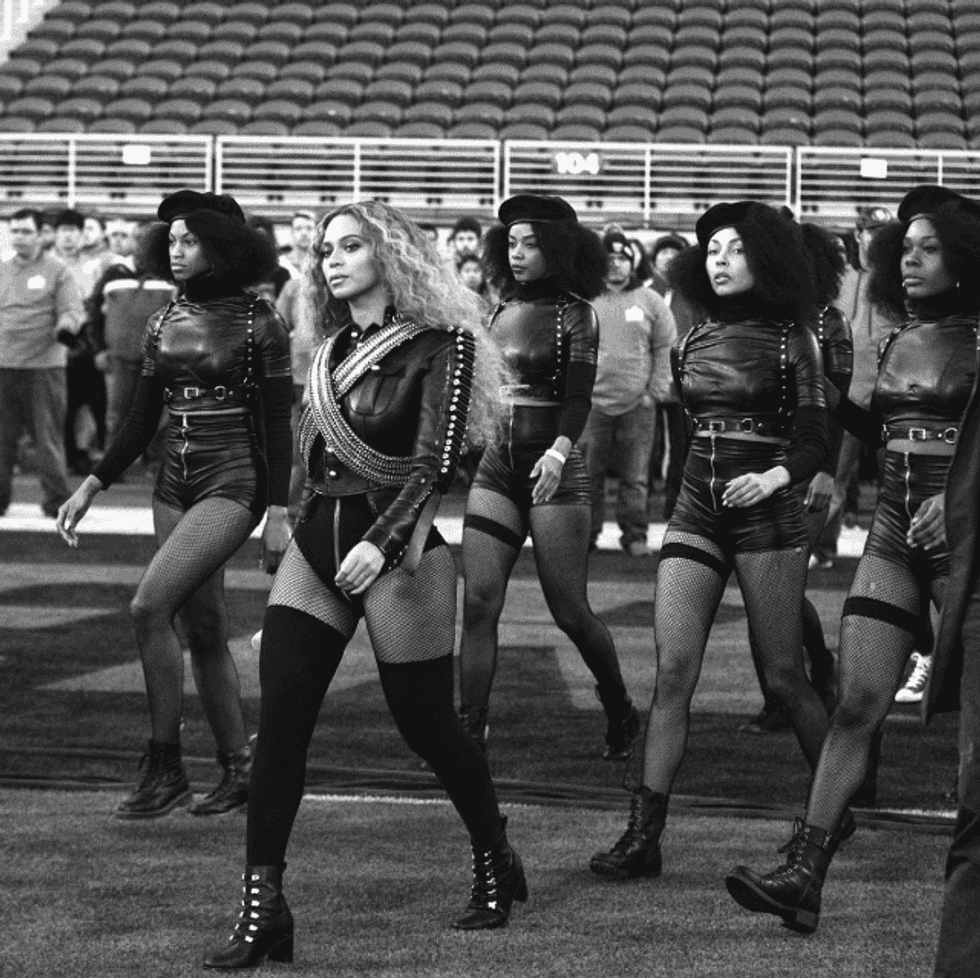
Since then, Beyoncé has performed on Super Bowl Sunday debuting a live version of "Formation" for all of America to see. Beyoncé’s performance was essentially a tribute to the 50th anniversary of the Black Panthers, Malcolm X, and Michael Jackson. Like in the "Formation" music video, Beyoncé’s backup dancers were Black women in Black Panther attire, and they were all shades of brown slaying with natural hair and embodying a strong essence of being irrevocably and unapologetically Black.
Much of the backlash towards Beyoncé’s performance was because the backup dancers were dressed to celebrate the Black Panther Party. For example, a news anchor said in a resentful manner, “little white girls want to be like you just as much as little black girls do,” implying that “little white girls” were somehow being robbed of representation. A Milwaukee Sheriff argued had a “white band came out in hoods and white sheets in the same sort of fashion…we would be appalled and outraged.” And finally, Rudy Giuliani, former mayor of New York, said on FOX News,“I thought it was really outrageous that she used it as a platform to attack police officers who are the people who protect her and protect us, and keep us alive. And what we should be doing in the African-American community, and all communities, is build up respect for police officers.” These arguments are suggesting that Beyoncé, as a Black woman using her platform to address critical issues affecting the Black community and empowering the Black community (especially Black women), is somehow “attacking” police officers, depriving the White community, and even suggesting that the Black Panther Party is equivalent to the KKK.
Because we live in a society that marginalizes people of color and minority religions and perpetuates heteronormativity, empowerment is imperative to aiding these marginalized communities to success and achieving excellence, despite the discriminatory trials and tribulations. Throughout the history of the United States, many organizations, movements, networks, and groups have been created in order to empower communities of color, for example: BET (Black Entertainment Television), Latina Magazine, the Civil Rights movement, the Chicano movement, LGBTQ Victory Institute, National Asian American Coalition, the Black Lives Matter movement, Inner-City Muslim Action Network, Centro Autónomo, and many, many more. All of these organizations, networks, movements, etc, have been created to empower all marginalized communities.
Firstly, the "problem" seems to lie with "Formation" being a pro-Black anthem. To understand the need for a pro-Black anthem, first, it's crucial to understand that people of color are disadvantaged in the United States. It's important to note that race is a social construct, no one race is better than the other. Although this is the case, in the United States a race disparity persists. To see this race disparity, notice the amount of people of color in mainstream TV and magazines. Notice the amount of people of color in higher education. Notice the amount of people of color who live in poverty. Notice the amount of people of color that are disproportionately persecuted and brutalized by police. Notice the amount of people of color that are not allowed to vote due to criminal records. Notice the amount of people of color in corporate jobs versus jail cells, all in comparison to white people. Granted, there are successful people of color, but at a disproportionate amount in comparison to white people.
The FOX news anchor implied that Beyoncé has excluded “little white girls” through her performance on Super Bowl Sunday by having all brown backup dancers with natural hair. Although Beyoncé does have a white audience, to empower Black women doesn't suggest the exclusion of white women at all. For years the Black community has been expected to assimilate to white culture. Black women had to alter the texture of their hair to mirror straight hair and use skin lightening treatments, while simultaneously enduring damaging stereotypes such as “the angry black women,” “the help,” etc.
Throughout history, the Black community, as well as all other marginalized groups, has been misrepresented through harmful stereotypes that belittle the community. In media today, and especially in the media of the past, there has been a center on white culture, essentially creating an erasure of the diverse communities in the United States. Recently, celebrities and people alike have been calling out the Oscars for their lack of diversity using the #OscarsSoWhite hashtag. This year will have the least diverse Oscar nominees in acting categories since 1988. Due to this history of lack of representation and misrepresentation, it's no wonder why Beyoncé would want to empower Black women. Media surely hasn’t done justice.
An example of one these empowering movements is the Black Panther Party. In short, the Black Panther Party was a “revolutionary” and non-violent movement started in the mid 1960s in order to combat economic and social inequality facing the Black community while protecting the Black community from police brutality. Contrary to what Guiliani and the Milwaukee Sheriff believe, the Black Panther Party did not consider all white people racist, nor did they wish to kill all police officers.
Similarly, the Black Lives Matter movement is scrutinized for the same points. In regards to police brutality, the Black Panther Party, as well as the Black Lives Matter movement, wished to end the disproportionate persecution and brutalization of the Black community by police. The Black Panther Party and the Black Lives Matter movement both attempt to affirm the importance of the Black community, seeing as seemingly society in the United States does not. It should be noted that lack of validation happens with all marginalized communities as well. All movements that move to empower marginalized communities do not do so as an effort to imply that these communities matter more. Only simply to, in a way, grant these communities potential, because it is obvious that media, social institutions, our economic system, and even our democratic process does not.
Ultimately, this is only to motivate, energize, inspire, and love ourselves. That’s why we see so much love about Michelle Obama’s #BlackGirlsRock, #BlackGirlMagic, #BlackExcellence, and #BlackLivesMatter, and there are other movements very similar to this. But it’s simple. Because society and the different social institutions and systems won’t validate us, we need to validate ourselves for our survival, for our sanity, for our souls. It’s the only way we will be able to succeed, and in our own ways, feel liberated and free because that is what we strive for. We get free.
So, Beyoncé’s act of resilience doesn't threaten anyone. It simply reminds us of our power, it reminds us of our influence, and it reminds us of our own intrinsic and ethereal potential.
















