Below are two newspaper headlines relating to actions of the Ku Klux Klan (KKK):
“Pennsylvania Avenue Mass of White During Klansmens’s Parade”, The Washington Post
“22 Arrested, tear gas deployed as Ku Klux Klan rallies in Charlottesville”, Richmond Times-Dispatch
One of these captions was published in 1925 and the other in 2017. Without the presence of major news outlets and social media could you tell which heading applies to each year? History may be repeating itself before our eyes.
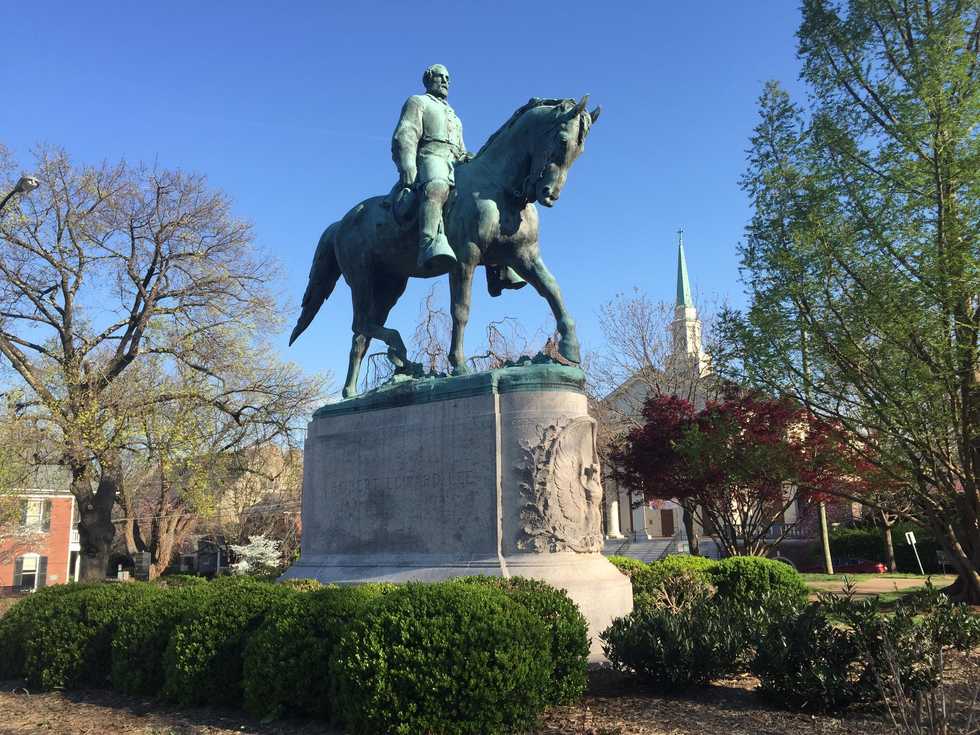
On July 8, 2017 I traveled to the University of Virginia (UVA) in Charlottesville, Virginia to partake in the annual Midsummers weekend. Midsummers attracts large crowds of UVA students, alumni, and friends for a weekend of camaraderie and fellowship. For weeks before Midsummers it was publicized that KKK members would be in Charlottesville for the weekend to riot against the city council decision to remove the town’s General Robert E. Lee statue. Days before the weekend began, news broke that these KKK members would be armed.
Upon arrival to Charlottesville, the mood was very different from past visits. I discovered that the first event I planned to attend had moved to another location, for the purpose of being located at a further distance from the KKK riot. Although I saw no one dressed in a long white robe, I was wary of every white Charlottesville resident I saw, as if each person could have been a Klansman in plain clothes. The most reflective event of the weekend’s circumstances occurred when a UVA student with a megaphone yelled “The [KKK] rally is coming” to myself and the large group of African Americans I was walking with on Rugby road.
The scene was overtly symbolic and reeked of privilege and entitlement. The UVA student, a white male, stood on his third floor dormitory balcony with five other white males, out of reach of anyone affected by his words. His body language did not carry the same force as his words; I knew he would not have uttered the same bold statements had he not been separated from my group by the dormitory. None of us walking on street level retaliated as we knew any negative exchange with the UVA student would lead to trouble on our behalf.
Although I was not physically threatened, I found myself wondering if I was experiencing the same racially charged trauma as my ancestors, yet in modern form. How could this be? The mere presence of the KKK in Charlottesville activated local racist agenda before my eyes. Although I have experienced prejudice to varying degrees before, my time at UVA felt more extreme. The resounding question I had connected to the source. Considering their hateful history, how is the KKK still able to function legally within the public eye?
The answer to this question lies in the First Amendment right to freedom of speech in the United States Constitution. Although there are limits to the First Amendment as defined by case precedence and litigation, these rights are guaranteed to every United States citizen regardless of their beliefs. A few key court cases have shaped the ability of the KKK to function in the public eye under the protection of the First Amendment. The most noteworthy of these cases are Brandenburg v. Ohio and International Keystone Knights of The KKK v. Georgia, which lead to protections for the KKK’s hate speech and public display.
In Brandenburg, a 1969 United States Supreme Court Case, Clarence Brandenburg, an Ohio Klansman, invited a Cincinnati television reporter to film a KKK rally in Hamilton County, Ohio. Footage showed robed and armed men burning a cross and speeches promising vengeance against African Americans, Jewish people, and their supporters. Brandenburg was charged with advocating violence under Ohio’s criminal syndicalism for his role in the rally. He was convicted at trial and ultimately through a series of appeals his case was granted certiorari by the United States Supreme Court. The Supreme Court reversed Brandenburg’s conviction, holding that government cannot constitutionally punish advocacy of force or law violation. This holding greater defines the First Amendment by allowing inflammatory speech and advocacy of violence, allowing public hate speech from organizations such as the KKK to continue.
In Georgia, a 2016 Georgia Supreme Court case, the International Keystone Knights of the KKK applied to Georgia's “Adopt a Highway” program in May 2012. They sought to adopt a one mile segment of Georgia State Route 515 in Union County. Participation in the highway program involves controlling garbage in the sponsored area in exchange for the right to have the sponsor group's name posted on signs along the adopted segment of road. The Georgia Department of Transportation denied the KKK’s application on two grounds. First, the agency felt it unsafe to adopt the road because it's a controlled-access highway with a speed limit of 65 mph. Second, the department felt that having a sign featuring the KKK would cause social unrest or interference with traffic flow.
The American Civil Liberties Union (ACLU) sued on behalf of the Klan, citing that the denial of the “Adopt a Highway” application violated the Klan’s First Amendment free speech rights. Interestingly, this is not the ACLU’s first time representing known hate groups, as they have represented both the KKK and the American Nazi party in the past. Georgia sought a motion to dismiss for sovereign immunity, a concept meaning the government is immune from lawsuits unless it consents to them. The trial court denied the motion in 2014, reasoning that sovereign immunity is not relevant to claims of alleged restriction of constitutional speech. Under the same rationale, the Georgia Supreme Court denied appeal, favoring the KKK and their request to participate in the highway program.
Through litigation, the First Amendment has been shaped so that public speeches and actions of the KKK are legally protected, thereby allowing the same group that terrorized my ancestors to have a modern existence. These applications of the First Amendment seem particularly disproportionate when compared to the attacks and infiltration that minority socialist groups such as the Black Panther Party and Young Lords experienced in the late twentieth century at the hands of the FBI.
However hope for positive progression is not completely lost. The 1925 Washington Post article shows thousands of Klansmen proceeding through Washington D.C. with no opposition. In contrast, during the Charlottesville armed rally of 2017, the demonstration of 50 armed Klansmen were opposed by 1000 angry protesters, eager to stare racism in its face. This stark difference in public reaction shows that although the hateful ideals of the KKK are legally protected, they are becoming significantly less accepted amongst the populace. I hope encounters with the KKK will be a thing of the past for the next generation of Black youth.