


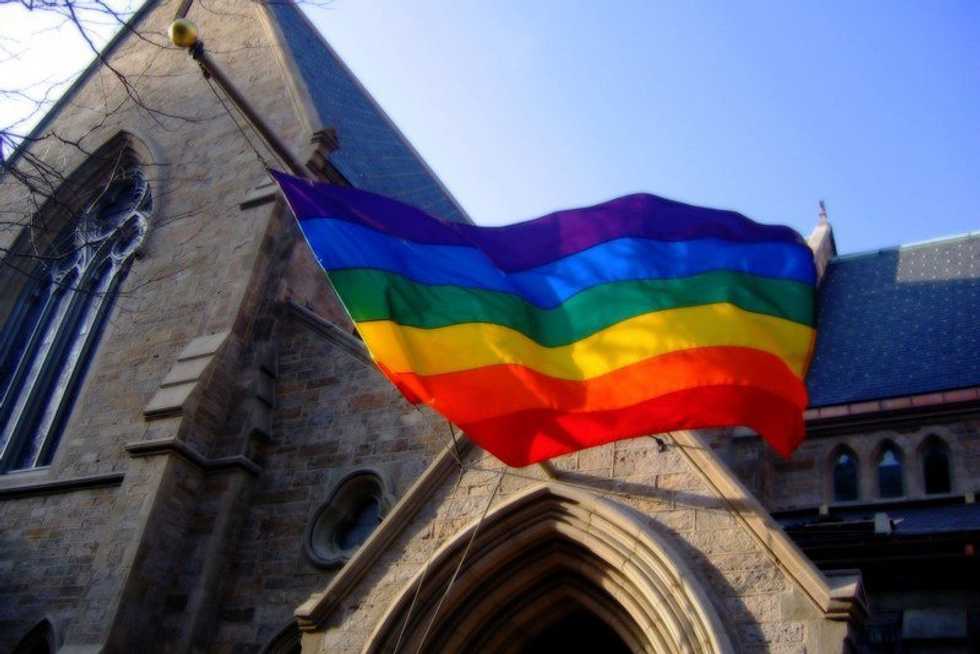
Discrimination against the LGBT+ community is nothing new. Ever since people started to believe that the queer community would cause he extinction of mankind through lack of reproduction, we’ve been pushed aside, punished, and shamed for who we are.
While America has made advances over the past few years in regards to issues such as equal treatment and marriage equality for the queer community, there’s still a long way to go. As recently as 2015, 32 states offer limited to no protection for LGBT workers who can be fired for their identity. We're only two months into 2016 and multiple states have already attempted to pass laws enabling LGBT+ discrimination under the guise of “religious freedom”.
Unfortunately, this doesn’t really come as surprise. Religion has been used in the past to defend awful institutions like slavery in America, as well as other horrible and unjust practices. Conservatives often take the first amendment as a free pass to enforce unjust or discriminatory policies. Because the first amendment is part of the legal foundation of our country, it gives undeserved credibility to those who use it as an excuse.
According to the Constitution, “Congress shall make no law respecting an establishment of religion, or prohibiting the free exercise thereof; or abridging the freedom of speech, or of the press; or the right of the people peaceably to assemble, and to petition the government for a redress of grievances.” Basically, this means two things: America does not have a national religion (regardless of what many might want you to believe), and the government can’t ban the practice of religion. This brings up questions of what constitutes a religion and religious practices.
These questions considered, we find that the issue is not in the Constitution, but rather in people’s interpretations of what prejudices are justified because of spiritual validation. Christian beliefs have changed over time, as seen through the various reformations and divides the church has gone through throughout history. Often, these changes in beliefs reflect societal trends more than they reflect spiritual shifts. For example, if one wanted to discuss the frequently quoted Leviticus passage stating that man shall not lie with man, they must take into context the society in which the book was written. A quick look into Biblical society reveals a patriarchal culture that condemned actions that threatened masculine dominance, suggesting that the passage is concerned more with men retaining social status than it is about queer actions. The shift of interpretation from male dominance to homophobia reflects cultural and ideological change. In this sort of sense, religion often mirrors society’s values and prejudices in a way that focuses responsibility on a higher power rather than an individual. While we need to respect people’s religious beliefs, we must also recognize that these beliefs don’t excuse prejudice and hate.
This brings us back to the current laws that several states are trying to pass. With a focus on “defending religion” through allowing businesses and organizations to refuse services to non-straight customers, our government is practically enabling segregation. We're sent the message that the government cares more about the wants of the oppressing classes (white, straight, Christian guys) than it cares about equality for minority groups. Rather than changing the minds and viewpoints of the oppressive, we instead appease them to keep them comfortable.
If the law is moving towards discrimination right now, what comes next? Several judges around the country, including Roy S. Moore, have ignored or outright disobeyed the laws nationally legalizing gay marriage. While we publicly celebrate progress, we move backwards in different areas. Religious freedom has its place, but that place does not and cannot include oppressing people. It’s time that we recognize that prejudice and hate don’t have a place in government, and that religion isn’t an excuse to oppress.

















