
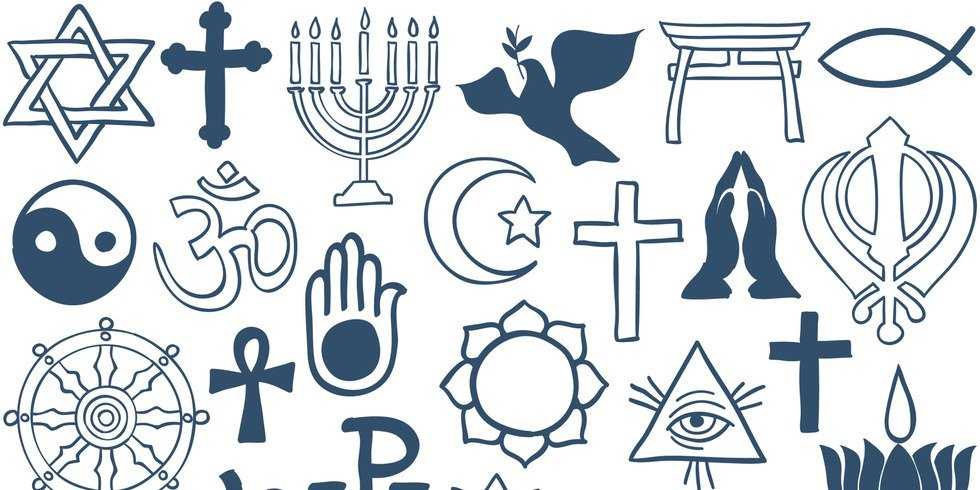
The relationship between religion and politics goes way back. Running-around-in-diapers-together kind of way back. The belief in the divine and the innate human need for community and order may as well be first cousins. They are both evidence of our ever-evolving intellectual capacity; of our desire to understand our purpose and our relations with one another.
It’s only natural then that the two would come to be intertwined. The earliest recorded evidence of theocracy is believed to be a collection of prehistoric paintings on the Altamira cave walls in Cantabria, Spain. Their depictions of tribal shamanism are estimated to be about 47,000 years old. Other paintings scattered on the walls can be dated to as early as about 20,000 years ago.
Theocratic systems are defined as governments and laws whose authority is derived from the divine. However, we need not look as far back as 50,000 years ago to find instances of how religious beliefs can influence, inform and even dictate politics, directly or otherwise.
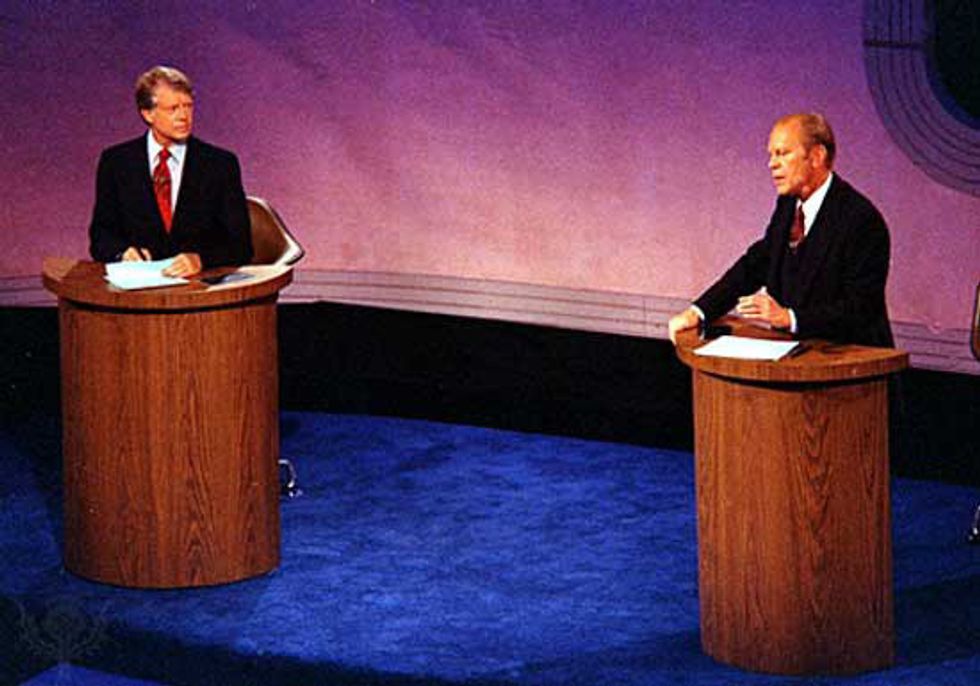
With the exception of Thomas Jefferson, and Abraham Lincoln, whose exact religious beliefs are still under question by many historians, most of America’s 44 presidents were religiously affiliated. Of the 42 that were, there were varying extents to which their beliefs crept into their office, or even helped them get there. During the primaries for America’s 1976 presidential election, Commander-in-Chief to-be, Jimmy Carter, declared himself a born-again Christian. Subsequently, the public grew deeply interested in the beliefs of other candidates. In response, almost every one of Carter’s fellow runners spoke publicly about their own religious beliefs. It is widely believed that the strong support of the evangelical population, affiliated with one of Christianity’s many sects, helped bring Jimmy Carter’s triumph over Gerald Ford.
It may be a bit simpler to analyze instances in which governments are more heavily informed by their constituents’ beliefs. The Islamic Republic of Iran is a strong example of more textbook theocracy; its constitution indicates that its laws are to be drawn directly from Islamic criteria. One of the most powerful bodies within Iran’s borders is the Guardian Council of the Constitution; they supervise elections and can approve or disapprove of candidates for high office, including President. The Council is even more symbolic of Iran’s status as a theocracy because 6 of its 12 members are charged exclusively with approving or vetoing bills based on their accordance with Sharia, or Islamic, law.
Islamic theocracies, because of their global status and because they are more abundant than theocracies affiliated with other religions, provide gripping insight into different interpretations of the same belief system. Iran’s tougher older sibling, Saudi Arabia, has a force of religious police, or mutaween, that strictly enforce Islamic ideals. The Saudi Arabian mutaween go one step further than Iran’s blasphemy law, which only implicates any activity that criticizes or insults Islam or that deviates from Sharia. As of 2006, the mutaween no longer have the power to arrest violators, but can instead report violations of Islamic dress codes, the practicing of minority religions and homosexuality. Theocratic systems organized in such a way that they seemingly oppress their constituents are prone to criticism.
One of Aristotle’s beliefs, albeit one of his secular ones, was that a community comes together for the sake of living and remains together for the sake of living well. As it is widely accepted that governments should be by their people and simultaneously for their people, we cannot be so quick to retaliate against foreign governments on the grounds that they appear to oppress their people. Without defending those regimes that do oppress their people, what must first be established is if those people truly feel oppressed by their governments, and thereafter, their oppressive status.