
Over the past few years there has been rising tensions in the Middle East due to the Arab Spring, a grouping of revolutions with the hope to take down the dynasties that have been ruling for centuries and replace them with more democratic based governments. In many countries this was successful, in some it failed but in Syria it turned to extreme violence. This has caused many Syrians to be forced out of their home country and considered refugees.
Every day we see new discussions on Twitter, the news and political debates about the refugee crisis in Syria. Since the conflict struck in 2011, there has been quite a bit of change in a short period of time. With there being a few different groups trying to take or keep power and a variety of different nations backing each of the different sides, there’s a lot of confusion around the Civil war and the refugees. In particular how did it start, where the refugees are, where they want to go, and what it takes for them to get there? With it being such a hot topic of debate in the upcoming presidential election there has been a lot of miscommunication, misunderstanding and straight slander when it comes to the Syrians and their efforts to seek asylum in the US and in other countries. This lack of knowledge only leads to fear, prejudice, and can make it harder for innocent people to find a home. So here it is, the refugee crisis: explained.
Let’s start with a little background.
In 2011, there was a wave of revolutions in the Middle East called the Arab Spring. A time where multiple nations including Tunisia, Egypt, Libya, Yemen, Bahrain, Syria, Algeria, Iraq, Jordan, Kuwait, Morocco, and Oman, all broke out in major protests -- some even ending in political change as the heads of the regimes that had been ruling for thousands of years stepped down in response. When Syria broke out into peaceful protests in 2011 following the Arab Spring, their leader Assad retaliated with gunfire into the crowd. The Syrians responded by fighting back and even part of Assad’s army disbands to form the Free Syrian Army, which started the first rebel group of Syrians fighting against Assad. In 2012, extremist groups like Jihadists and Al Qaeda start to back the Syrian rebels with violence. They did this because there is a unique opportunity to take over as the leader of the nation, so each group is fighting for more power. Neighboring, powerful countries start to pick sides as Iran shows military support for Assad and the Gulf States and Turkey provide the rebels with money and guns. In August of 2013, Assad used chemical weapons on the Syrian civilians which breaks the Geneva Convention, getting the US to oppose Assad and for Russia to back them. In 2014, ISIS, a new extremist group breaks away from Al Qaeda, fighting the rebels. So this is where we currently stand -- with Assad being backed by Russia and ISIS becoming increasingly extremist while the rebels are being trained by the US military in order to help take down ISIS and gain their government back along with their freedom.
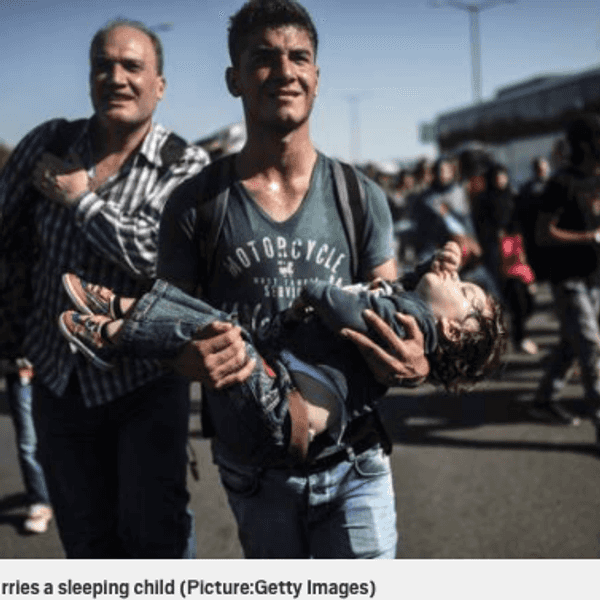
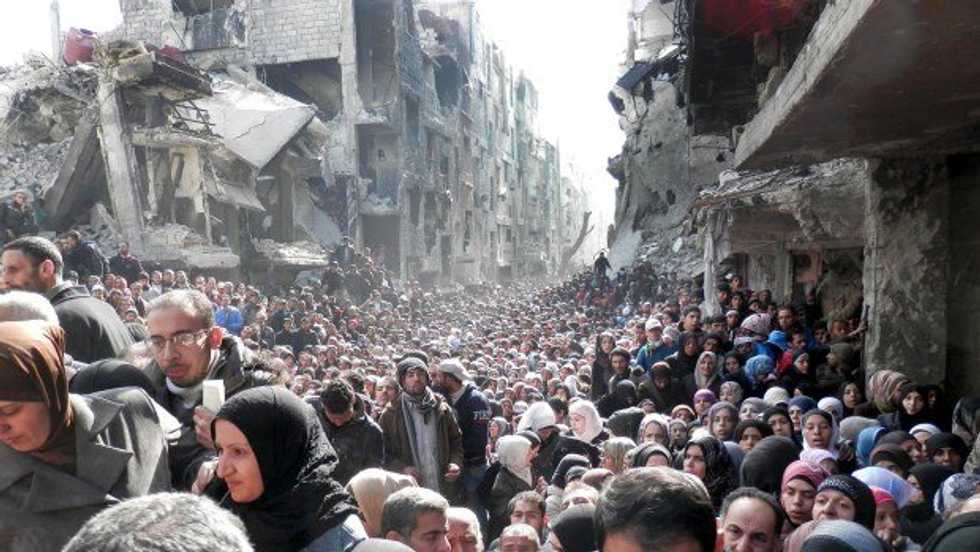
So now that we know what’s going on politically in Syria, let’s look at how the civil war is affecting the civilians. As previously mentioned, in the summer of 2013, Assad broke the Geneva Convention by using chemical weapons upon the innocent civilians, killing 1,700 and leaving over 3,000 with neurotoxic effects. This is a fraction of the 100,000-300,000 Syrians that have been killed thus far due to the Civil War. Everyday these citizens are put at risk of extreme violence and terror. Many have had their work, school and home bombed by any of the conflicting sides. There is no escape from the constant threat that one day you might wake up with everything and everyone you’ve ever known turned to dust. It’s not only unsafe to stay in the country, but it’s become deadly. This is why over a third of the population has moved to other parts of the country, otherwise known by the United Nations as “being displaced.” It’s also why four million Syrians have been forced to leave their country, leaving behind their possessions, homes, and sometimes even their families. This is when they become refugees.
Where are these four million refugees going?
For the most part, the refugees are traveling to the bordering countries of Syria, whether the countries can handle them or not. Many refugees fled to Greece, which is in the middle of a depression and can’t sustain them. The island of Lesbos, which is usually a tourist attraction due to its prevalence in ancient Greek poetry, has been used to house the refugees until Greece had to transport them back to Turkey because it could no longer maintain to keep them on the island. The refugees had come from Turkey, which is currently taking in the highest amount of refugees at 1,100,000. Other close Middle Eastern countries are taking some responsibility for providing them safety too with Lebanon at 1,200,000 refugees, Egypt at 130,000, Iraq at 250,000, and Jordan at 650,000. The European Union, as a whole, is planning on taking in 1,300,000 refugees, the most in Germany who promised they would take in 800,000 of them. In 2016, the US can only take in 10,000 refugees by law. At the moment, most of the refugees are in camps. Due to the fact that the UN was not prepared for the amount of people that ended up coming out of Syria, most camps are overcrowded, underfunded and understaffed. This leads to poor living conditions in the camps and is why many Syrians are trying to leave them behind and find asylum in other nations. Fortunately, for the first time in years, some of the children of the revolution are getting an education again. Yet, sometimes the camps are so packed that there’s only one to a few teachers for hundreds of children who aren’t getting the academic attention they deserve after years of neglect in that field. It is important for these children to get their education because this will be the generation that builds back Syria, which is already an extremely well educated nation having the majority of the adult refugees with degrees of some kind. It is often forgotten in times like this that these refugees are educated -- they were doctors, lawyers, engineers, and much more. They came to this unfortunate way of life due to no fault of their own. These are real people with real lives and real families who deserve respect and more importantly help.
So what’s stopping them from getting where they want to go?
Let’s focus on the US for this one because a lot of different countries have different views and legislation against or for bringing in refugees.
For the most part, it’s a lack of education on our side of who these people are and what it takes for them to get here. It’s been rumored that approximately 100,000 refugees are coming to the US. This isn’t true. Based off of legislation, the US can only take in 10,000 refugees during 2016. It is also rumored that coming into the US as a refugee is an easy process that will let in just about anyone. This gives a lot of Americans fear that terrorists will be able to come in through the refugee program as a kind of “Trojan horse.” This also isn’t true. The process of coming into the US is extremely rigorous and can take years for your application to be even considered. First, it has to be decided that you had to leave your country due to persecution for religious, political, racial or social reasons. Then multiple background checks are conducted from various departments in the federal government and then multiple interviews are conducted in order to make sure that the refugees fit the criteria in order to come into the US.
If anything, the increase in the Syrian population into the US would benefit our society as a whole. Many Americans have rightful concern after over 400 criminal sexual assault complaints were filed on New Year’s Eve in Cologne, Germany, shortly after a new wave of refugees came to the country. It was thought that the assaults and other countless number of theft complaints made that night were due to the refugees. Yet, out of the arrests made, only two were Syrians. As I mentioned earlier most Syrian refugees are educated and most coming to the US are women and children with some family. They are here to finally start their lives again after years of being in a warzone. They’re here to work and contribute to our sciences, liberal arts, universities and culture. They're here to raise their families and not be worried about their lives being threatened. The US is a country of refugees. Most of our ancestors came here for a better life or because they couldn’t live in their countries anymore due to a plethora of different reasons. That’s all the Syrians are doing. They’re looking to America as a place where they can resume their lives for the better and that’s what being an American is all about -- having the opportunity to live a better life.