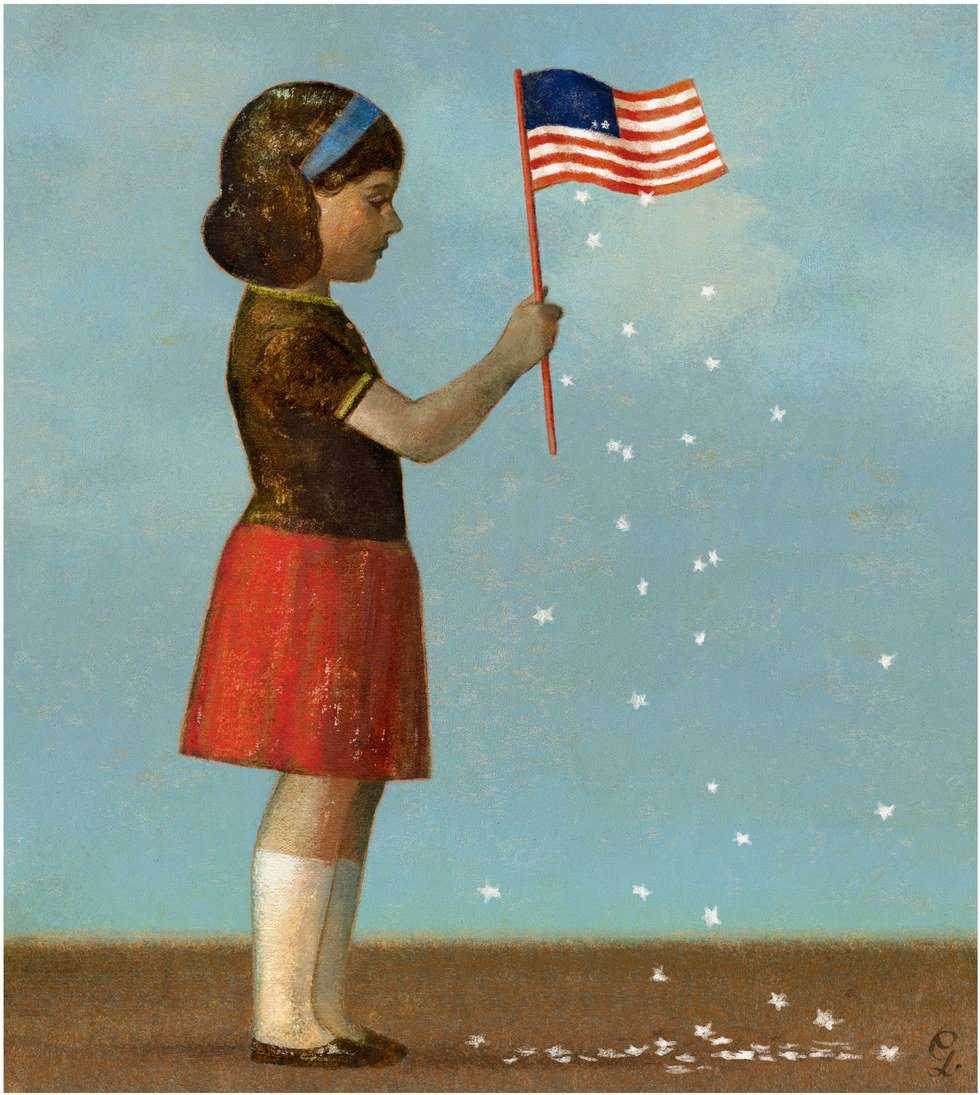
“We believed deeply in the basic bargain at the heart of the American Dream: No matter who you are or where you come from, if you work hard and play by the rules, you should have the opportunity to build a good life for yourself and your family.” - Hillary Rodham Clinton
Is there reason to believe that the American Dream is not simply an illusion, but rather a justified hope to strive for?
The half-empty glass perspective: no. The rules have always been rigged in favor of a certain type of American citizen.
The ideals that the American Dream has stood for have always failed their reality checks throughout history. Consider the creation of the U.S. Constitution and its famous mantra, “All men are created equal” in light of the blatant inequality manifested in the form of slavery. The American Dream was used as a justification during the post-industrial revolution in which rich tycoons dominated domestic affairs while exploiting the labor of the poor by chanting the rags-to-riches mantra. Needless to say, the majority of factory workers were never able to lift themselves out of the poverty they hoped to escape through hard work. This kind of exploitation is still practiced today in a heavily capitalistic society where the “rules” are set by the rich and thus, solely benefit those at the top, causing the top one percent to earn as much as the rest of the 99 percent of the population. If anything, the American Dream has always been a story of exceptionalism rather than the norm.
But I still believe in the American Dream.
My belief in the American Dream does not stem from excess optimism or naïveté regarding the current state in which discriminations in all forms and colors still permeate society, a cultural attitude that statistics can unnervingly affirm. Although the majority of Americans across the board are earning more than their parents at their age ever did, the relative wage gap between classes and ethnicities is soberingly increasing. Thus, I concede that basing the merit of the American Dream on overall increase in wages is a shallow way to draw such conclusions.
My belief in the American Dream is based not so much on the orthodox definition of the ethos, but rather, from a more progressive, futuristic outlook on the possibilities that can make the American Dream no longer a dream but a reality.
The proximity of its unleashed potential stems in the awakening of the nation’s consciousness regarding the injustice of the system currently in place. Movements and protests that have sprung up in retaliation against racism and sexism have induced real change within the past century alone, an activism that continues in the present. America’s rate of change is unprecedentedly swift compared to that of other nations considering how young the country actually is. The mass support and traction Bernie Sanders has received for his firecracker rhetoric against the prejudiced status quo and the increasing discussion regarding these inequalities have reason for a cynical onlooker to hope, even if just a little.
It is also hard to ignore what the American Dream represents for the people who do believe in it. Immigrants who have come to American shores seek to capture the dream of a better life denied to them by their homelands. I have encountered stories in which immigrants have told me that the lives they lead in America are humanely better than the ones they left behind. Already this kind of faith gives me reason to believe that the American Dream is not entirely hopeless.
However, there are problems to address. The intensity of the debate concerning whether the American Dream is real should instead lend itself to how this dream can be better achieved. Progress has never been a downhill battle, but has always begun with a dream albeit unrealistic in its present time yet visionary in its possibilities. Martin Luther King, the most recognized activist for his work for racial justice in his time, once referred to this strenuous aspect of progress during one of his rallies, “Change does not roll in on the wheels of inevitability, but comes through continuous struggle.”
For those of us in the privileged positions to have a roof over our heads and to obtain an education, it is a civic responsibility to try to understand the complex causes of poverty, the role of prejudices like racism, and why only some have a decent shot of living their lives comfortably and securely. This chronic problem is so convoluted and heavily entangled with a system that appears to be permanently set in place that change may seem impossible. Yet it is as Miss Maudie told a discouraged Jem in To Kill a Mockingbird: "Well, we're making a step- it's just a baby step, but it's a step." These very baby steps in the right direction can eventually achieve the progressive policies need to be implemented to address the dysfunctions of the system today. It is perhaps why political activity and social protest are crucial elements to spearheading these changes and why the workings of democracy should not be dismissed so easily.
History shows that the American Dream is an improbability. But history also shows that the popular voice is a force that cannot be ignored forever. There is much work to be done, but again, who said progress was easy?