


On Jan. 4 2010, President Obama proclaimed January as National Slavery and Human Trafficking Prevention Month. This was a call upon the people of the United States to recognize the vital role we can play in ending modern slavery, and to observe this month with appropriate programs and activities.
The fight against the sex trafficking of women and children is not by any means a recent development on the spectrum of global issues. Despite increased media attention in recent years, sex trafficking remains poorly understood by the masses. But this is all changing as people are coming to the table by utilizing social media to raise awareness. By sharing posts, people are taking steps to end this injustice one hashtag at a time.
Six years since President Obama's proclamation, #RedLightWednesday is being used to bring awareness to women enslaved in red light districts across the world. At every red light, people are encouraged to stop and reflect upon the on-going crisis of human trafficking happening around the globe.
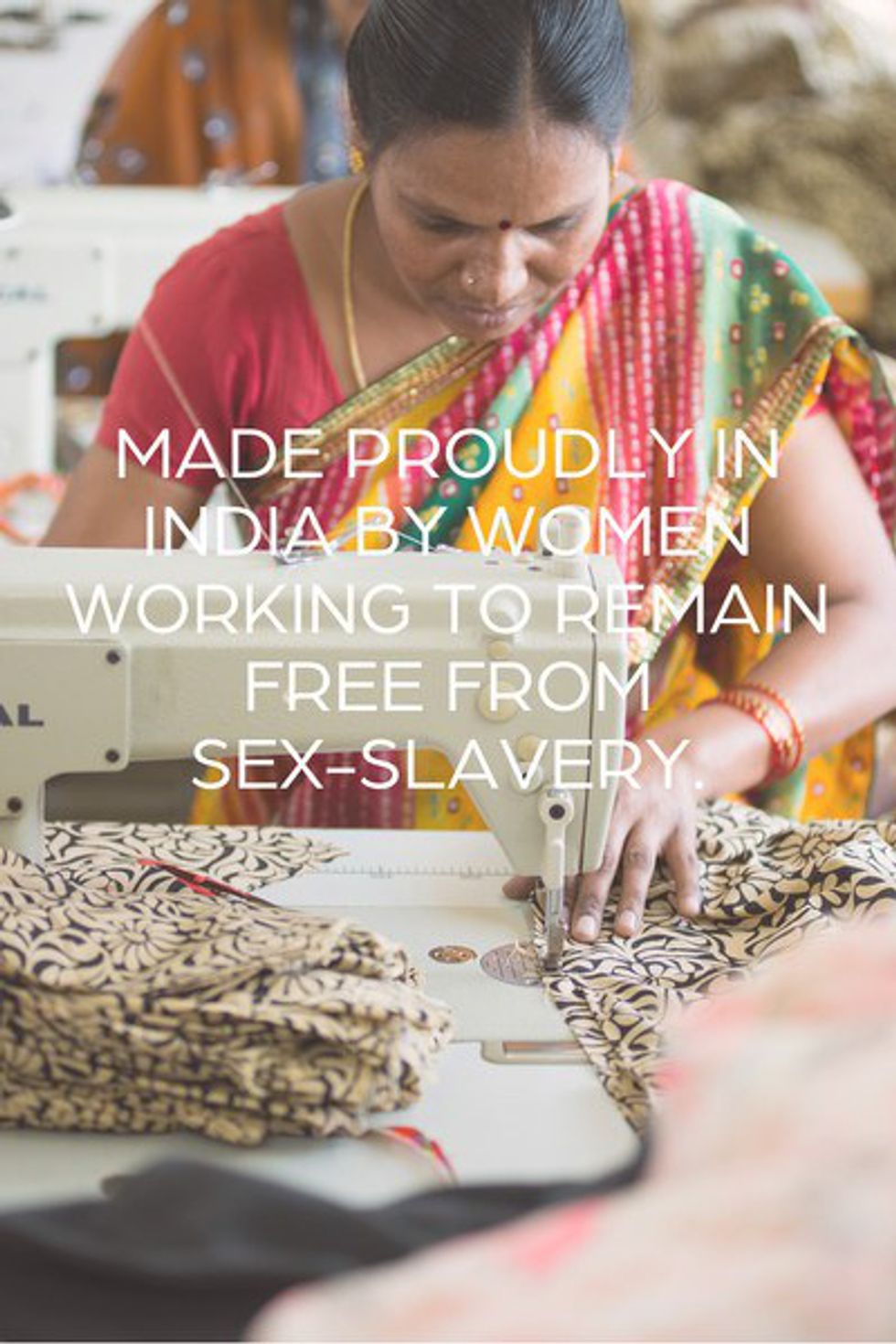
At the forefront of #RedLightWednesday is Sudara, a company dedicated to empowering women who are working to remain free of sex slavery. Sudara is giving woman in India the opportunity to gain job skills and a long-term career by teaching any women wanting to stay out of the red light districts how to be seamstresses. Their products reflect the local culture and keep true to fair trade policy, but it’s not enough to end sexual slavery once and for all. To do that, it’s essential that we break the cycle for generations to come.
Trafficking victims can be any age, race, gender, or nationality. Trafficking victims can be men or women, young or old, American or from abroad, with or without legal status. This industry thrives because sex slavery is immensely profitable with minimal risk. Because it is relatively cheap to purchase sex, there is always a constant demand for it. Visitors to red light districts abroad are subject to the host countries laws, which often tolerate or turn a blind eye to factors such as age of consent or other permissible sexual activities. Tourists mostly include men from the United States and Europe traveling to sex tourism destinations. People are safer pursuing sexual relations in destination countries because prostitution is legal or less regulated. The tourist has disposable capital which can be used to pay for sexual services as well as a number of other experiences associated with travel (i.e. hotels and dining).
The workers are usually women coming from many different backgrounds and communities. Every culture has a different perspective on sex and soliciting sex. Often it is very common and socially reinforced because there is such a high value placed on the male sexual experience while women are expected to remain sexually pure. This results in a constant demand and industry for sex workers.
Enforcement of prostitution laws vary from country to country. There is often discrepancy between laws and practice. Sex workers are usually living in poverty and providing sexual services because it is the only option available to them.
Women living in the United States have every opportunity in the world to pursue our passions and understand how to have a meaningful contribution to society. I am so disheartened by the plight of sex workers, many of whom are my age or younger, and are forced into soliciting sex against their will. We are fortunate enough to be distanced from that. But the distance doesn’t make their struggle any less real. We can close that gap by following companies like Sudara on Instagram and Facebook and sharing #RedLightWednesday. Staying informed is key: by educating and empowering women to work for themselves, we can change the world.