
I, being a generally unopinionated and passive observer of the political theater, am excited about this election season. Change is on the horizon, in one way or another, and this seems like an important time in the country's history. From the President of the United States to the Student Body President (SBP) of Carnegie Mellon, I am excited for everything that is to come. On our local stage at Carnegie Mellon, the race for our new student leadership is coming to a head. With elections right around the corner, I would like to highlight the pair who I believe represent not only the spirit of the Student Body President's office, but the spirit of Carnegie Mellon and its student body as a whole.
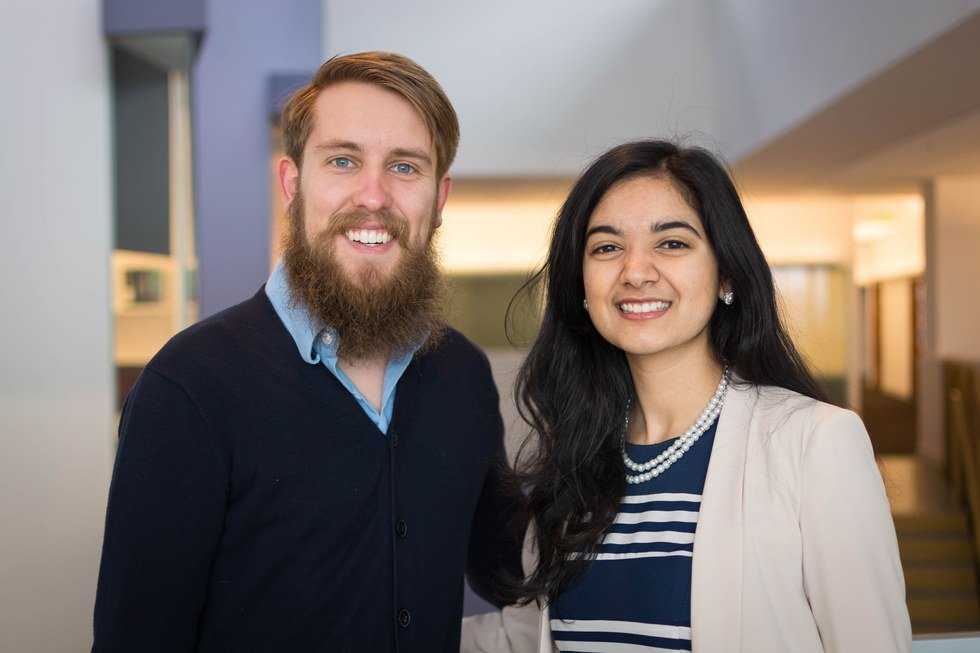
I had the pleasure of sitting down with Vaasavi Unnava and Aaron Gutierrez, one of the four candidate teams that are running for Student Body President and Student Body Vice President, respectively. These two are running a grassroots campaign, creating a personable and approachable image. "It's not about us," said Unnava, "it's about the elections. We're trying to make this about the school. Hopefully, if we hit that note right, that's how people will feel. If we walk away with people feeling good about the school, that's a win in my book."
Unnava and Gutierrez's campaign ideology stands out among other candidates, both past and present, in that they are dedicated to emphasizing their student status. They aren't interested in the prestige or the image of the office, but the access that it offers. "The single biggest thing that the executive offices have is access to the administration," said Gutierrez. "We're not able to do anything different than we'd be able to do as students, other than talk to the right people."
This philosophy is mirrored in their campaign platform, of which the central goal is to empower students and drive home the idea that we, as students, have not only a voice, but a power that is all our own. "We want to work with the students because the students are the ones who make change," said Unnava. "Culturally, we’re the ones who determine what this campus looks like." Their platform is built around this idea that students have power, that we should be better equipped to use it, and that we need to have opportunities to create meaningful changes on our campuses.
To this end, administrative transparency is one of Unnava and Gutierrez's central platform tenets. "[Transparency] gives us ownership of the university," said Unnava. "We should have a sense of ownership to the decisions being made, rather than just reacting to them. The idea of having a transparent decision process is that people get to question things and be treated like real people instead of children." As a follow-up, Gutierrez remarked, "People who know why decisions are made generally don't have as extreme reactions to them." One of the more obvious examples of is the problem of increased tuition. Carnegie Mellon's average resident tuition is $67,980 or more and it is continually increasing. Money issues are some of the most contentious and, as the group that is affected by these decisions, students need to have a voice in the decision-making process. When we have a role in deciding what is necessary and what can be let go and when we are incorporated into the decisions about whether or not a tuition component is necessary, rather than simply informed about it, we will be more comfortable with the final decision.
Vaas and Aaron, as they are known by many of their constituents, seek to empower students. They aim to create an actionable model for social change by involving the presidents of clubs and organizations, some of the most influential members of the campus community, in board-of-director meetings and incentivizing them to utilize their positions and their influence to create meaningful experiences for the campus. Whenever I think of the most influential events or organizations that I've encountered on this campus (five of which I've explained here), the key players are always students. Sure, there is funding and administrative scaffolding behind much of what we do. Nothing on such a grand scale would be possible without that support, but really pushing the envelope and making this campus the place that it is is all in the hands of the students. We forget that too often. We are the ones for whom this University works and we should be major players in the experience that this university creates.
It's time to empower ourselves and to allow our voices to be heard. So, to that end, I will continue to support Vaas and Aaron in their endeavors.
To learn more about the campaign, you can go to their website or follow them on Facebook.