
A few weeks ago, I wrote an article about what it means to study vocal performance. I went into the scholarly reasons why Opera is not an easy endeavor to take on. Now I would like to explain why I, and I suspect many others, have embarked on the journey that is studying Opera.
First, let me start with what I believe to be the basics of Opera. Keep in mind that I am a young student who might not be the greatest scholarly resource. Opera is the singing of a story, usually hyper-dramatic when compared to real life. Basically, Opera is story telling. Let's go back to Homer and his epics. Since history has been recorded, man has found story telling entertaining and has cultivated it in multiple forms. Opera is no different. What distinguishes it from spoken recitation, however, is singing.
Let me attempt to explain what it feels like. For me, singing is an impulse. Imagine you've been sitting for a long time, let's say on a flight, and you start to feel the urge to shift. So what do you do? You shift. And you do so often to keep yourself comfortable. Singing is the same impulse to me. There's that same need to sing in me as there is to get comfortable on a flight. I should know, I am writing this on an eight and a half hour flight to Germany. I have to sing. I really do. It's hard to imagine a day without at least singing along to the radio or warming myself up at my family's piano.
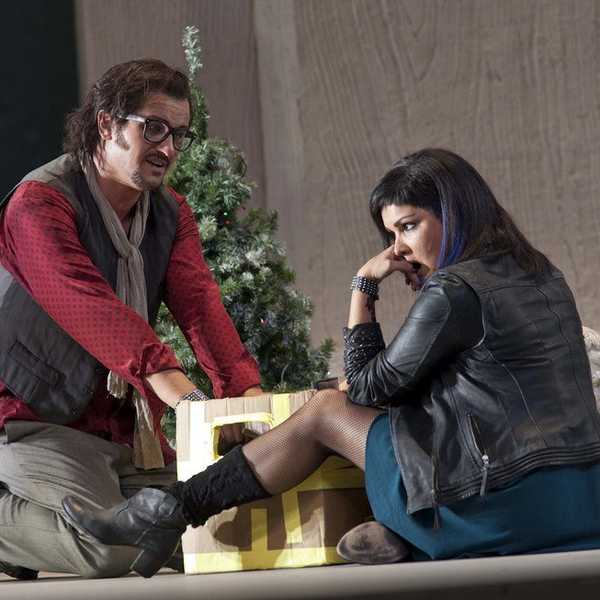
So mix that impulse with another need of mine; the need to communicate. Ask my girlfriend, and she'll tell you that I have an inherent need to communicate what I am feeling. And it's usually a long process (Sorry, babe). Just as she listens, an audience listens to a singer on stage. That character being portrayed has an entire mentality attached to it. When getting into character, you have to consider the character's past. What have they gone through? What has made them the way they are? I read in a book once that characters all have a goal, and the story usually lends itself to that goal. However, it is the singers job to convey the nuances of that goal in order to make it believable. After all, most of our rational responses to betrayal or sadness are not murder or suicide as many Operas portray. So, the singer must pick a body language, countenance set, and must select specific moments of affect that portray the character.
Opera connects me to the rest of the world. Opera is in practically all European tradition as well as in American tradition. Therefore, I share a common interest with singers all over the world, and all throughout the history of mankind. It's pretty amazing to me that I can go to a show anywhere watch a tenor sing a role with the same goal of communication and beauty that I have when singing.
Music brings me so much peace. The discipline that I have learned from studying voice has given me an outlet for anxiety. When I sing, I'm focusing on my entire body. Here's a checklist that I'm constantly thinking about as I sing:
1. Is my breath originating from my lower abdominals?
2. Is my larynx in a relaxed and low position?
3. Is my tongue flat and relaxed on the front of my bottom teeth?
4. How is my posture? Is my chest inflated? Are my feet planted firmly and shoulder-length apart?
5. If I am moving, am I maintaining an inflated chest and proper breath line?
6. Is my neck aligned over my spine and the rest of my back?
7. Are my knees locked?
8. Is my jaw free and not locked?
9. Is my soft palate lifted?
10. Is my throat open and not grabbing at the sound?
Now, that might seem overwhelming, and I must admit that it can be. But, there's something about learning how to coordinate your body that is so peaceful. I know that I can employ these tools and I will be more successful as a result. It's awesome.
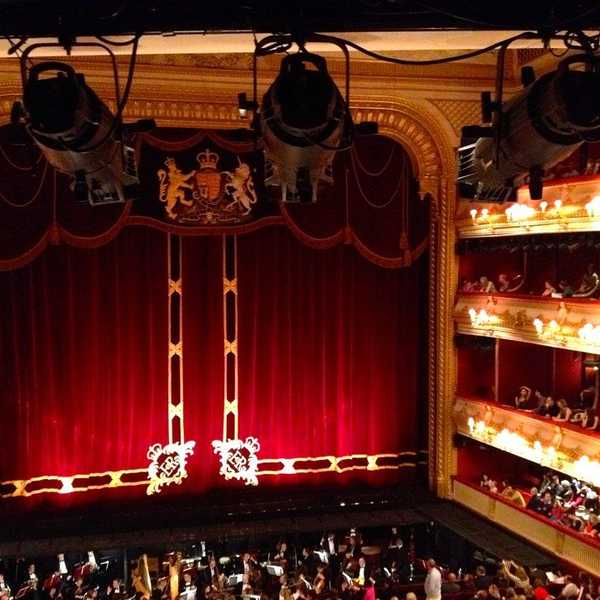
Opera gives me the chance to collaborate with other artists. When onstage, the singer is what the audience is paying attention to. But our job would be completely different were it not for the orchestra, and most importantly, the conductor. Or as music abs know them, Maestro. The Maestro is like an encyclopedia of knowledge for a singer. He has studied the story, theory, history of performance, and technique involved with performing a role. Along with the orchestra and singers, he/she is there to create a masterpiece.
Opera is enigmatic to most and can even be perceived as elitist as a result. Those of us who study the art know what it takes to be successful. The rest of the world sometimes doesn't appreciate it because they can't understand. As singers, it's our job to be patient and to explain why we are involved in Opera. The future of Opera depends on this. So to sum up this lengthy article, Opera is a means to communicate, discipline, and to connect to the world! I hope that you, if you're studying voice, have your own reasons and I encourage you to tell your loved ones about them!

















