Try to imagine.
You get to your favorite course and the professor is ready to teach. He opens the class with a silly joke intended to loosen the present stress of the day. You had a rough morning shift at work, so it's nice to lose a bit of a laugh while you unzip your bag and heave your text onto the desk. The professor offers the lesson plan, and then he begins his lecture.
You think you hear the classroom door latch close, but you assume someone just left to use the restroom, you pay no mind because you are engaged in the class and are committed to learning the fundamentals of your future career. As you follow along skimming the highlighted sections of your text, you're reminded of a concept that was giving you troubles last night, so you wait for an appropriate time to raise your hand, and...
Just as you raise it, the professor stops and looks over at the girl who managed to sneak into a seat nearly unnoticed. You look over, too. It seems that she was responsible for the faint latching of the door.
Remembering the professor's rule: If you're going to be late; don't bother showing up; you assume he is going to remind her of it.
You know the girl, she was in your study group for the last test. She helped you and some of the other members understand the most complex concepts. She's usually on time to class. So you wonder what might have happened to cause her tardiness today. You remember she did say something about her grandma being in the hospital a couple of weeks ago, and you wonder if the circumstances are connected.
The professor condescends to her about being tardy and then asks her to leave.
Feeling confused and empathetic for her, you try to refocus and try to think about what the professor was saying. Then they ask you what your question was (your hand is still raised) and...you can't remember.
He continues, "This is why it is very disruptive and disrespectful to intrude on the class after we've begun".
You wonder if it was the girl, who politely went into her seat nearly unnoticed, who was responsible for the interruption.
Every day, college students are faced with numerous stresses, all of which are significant to their lifestyle, i.e., work, school, family, and relationships. According to an annual study done in 2013 by the American Psychological Association, "Stress in America", young adults between the ages of 18-33 face higher amounts of stress than any other age group. The study reports that heart disease, depression and obesity are complicated by stress, which causes both the illnesses and the stress to progress further. Also, the survey found that young adults felt that they were not properly equipped to deal with their stress and manage it well.
With the rise in stress in adults, last year's study found that an increase in stress directly impacts a person's sleeping habits. On average, adults reported six-hour sleep nights and nearly half of adults reported fair to poor sleep quality. Also, 46 percent of adults reported lying awake at night due to stress in the past month. Behavior can also be affected by stress with the study reporting that 47 percent of adults are losing patience with or yelling at their spouse or partner in the last month when they are feeling stressed.
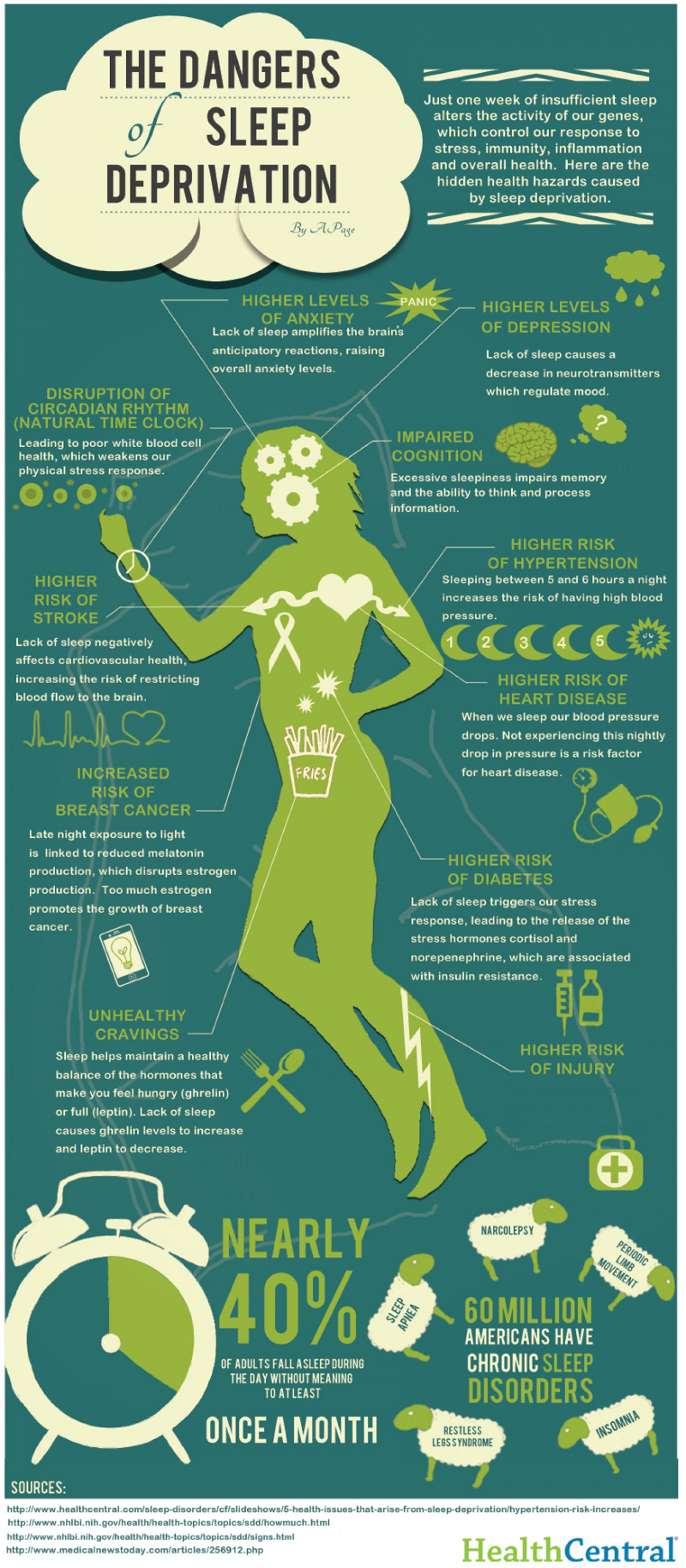
Let's face it, the current world is far more demanding than it was five years ago, or last year for that matter. Advancements in technology, which are capable of doing just as much to alleviate stress as they to introduce it, are fighting against the friction of outdated classroom policies. This is causing our society to become yet more stressful for adults, which, in turn, causes them to develop poor performance in work and school. We should do what is necessary to remedy stress whether it be caused by relationships, sleep, workmanship or attendance. With policies like "If you are going to be late, don't show up", students are being presented with an unfortunate situation that causes a snowball effect in their performance.
Professors argue that they are being faced with difficult situations such as chronic tardiness and lack of respect for the class itself when students are late. In an article for Faculty Focus: Students Who Are Chronically Late to Class,
"Habitual lateness to class, much like when friends or family members habitually arrive late for social gatherings and usually infuriate us because of their thoughtlessness, is typically a sign of devaluation of and contempt for instructors and other students who have arrived to class punctually. Even more important, it is most likely a sign of devaluation and contempt for one’s own education, albeit unconscious, since the student’s habitual lateness will necessarily curtail his or her time in class and cause the student to forfeit important opportunities for learning".
So then is the best approach then to turn a student away for being late or is there a better solution? A comment under the article for Faculty Focus feels that there should be considerations made depending on the student body.

"[...] Most working adults learn the importance of punctuality. In grad school, there were times I could not make it to class on time, and as a professional, I would have considered it rude for the teacher to embarrass me in front of the class. However, I get the point. As an instructor, being too lenient encourages a lackadaisical attitude toward my course. Discussing the problem individually with the problem student seems to be the most mature approach. Being a dictator might work for some, but will leave a negative impression on many students ...and certainly [doesn't] promote a creative learning environment. "
Someone who goes by Gregory left a lengthy reply in which he feels that the best approach is to deal with the student who is constantly tardy and to do so privately.
"[...] Throughout my education, I had to juggle multiple (significant) responsibilities, so I have some empathy for my students. I do not deny that continual lateness, such as arriving 10 minutes late to class for a month, is a problem. In this case, I might email the student to ask to speak with him or her after class. But if you teach in a city where the major form of transportation is not the automobile, it may not be surprising that some students [run] a few minutes late.
[...] assumptions about these irreverent, tardy students, such as that they are 'probably displaying a form of resistance or defiance,' they are late due to their 'thoughtlessness', or to express their 'devaluation of and contempt for instructors.' [...]
I oftentimes do not even notice late students if the class is in a lecture hall. In a smaller setting, it is noticeable, but students know not to cross directly in front of me. It takes about 10 seconds for a student to sit. During this time I am occupied by more important affairs, although I will note that I am not easily distracted. The students should not be [distracted] either if you are an effective educator. Your students should be so focused on every minute of the lecture that they learn to ignore distractions, daydreaming, rufflings, lest they miss an important point. I'm glad they have come to learn and expand their knowledge, and I hope to make it as much as a stress-free environment as possible.
Some of these students have it hard enough as it is. Some deal with the stresses of work, family, and health concerns. If you had to choose (not that we would need to) between a consistently late A+ student, and a consistently early F-student, which would you pick? I would feel much more disrespected by students who make little attempt to pass the class (i.e. fail), after I devoted hours preparing for lectures, giving them, grading homework, providing feedback, etc. Let's be honest--nothing irks a professor or instructor more than a student who repeats the same mistakes on each paper after you corrected them each time!
Demonizing late students is not the best way to go about this. A bit of finesse helps."
At Colorado Mesa University in the Maverick Guidebook, the rule clearly states that students are expected to attend all of their classes and can be dismissed from class at the instructor's discretion.
Considering the 2016-2017 Fall and 2017-2018 Spring Semester tuition costs