Let me just start off by saying that any author whose fan base is mostly in Portland is pretty much required to be weird as sh*t.
But if there's anything I've learned in the past week or so, it's that Katherine Dunn wasn't just weird: she was a total badass. She was also surprisingly normal, despite having had a turbulent life that led her to Greece, Ireland and eventually to her hometown of Portland to work for the Willamette Week (otherwise known as the only free weekly in town to have printed a comprehensive chart describing the intergroup dynamics of Juggalos) covering boxing. It was while working there that she became a well-known author and a prominent figure in the area of Northwest Portland where she lived, which features heavily in her work (Rose Gardens, anyone?).
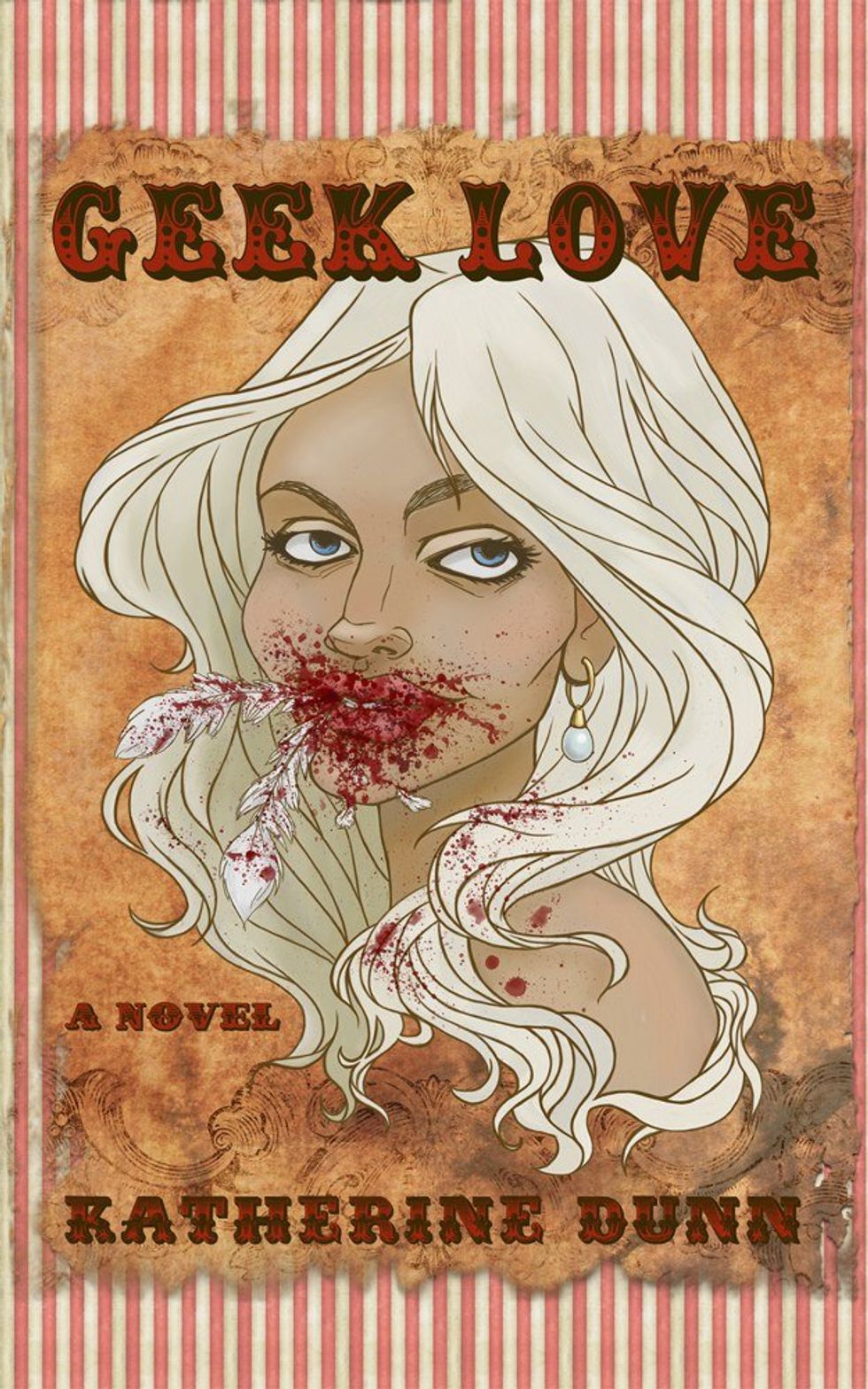
When Dunn passed away this spring, she left a collection of her papers and letters to Lewis & Clark's special collections, including several copies of the work she's most famous for. It's called "Geek Love," it's about a family of circus performers and it's alternately darkly funny and completely terrifying.
To start off, the somewhat misleading title and the fluorescent orange cover seem to suggest that this is a YA story about two charming but socially awkward teenagers who fall in love and bond over their shared love for Javascript. That's certainly what I thought, which is why I never picked it up, but that is not the case. The word "geek" here comes from the title of a circus performer who breaks the necks of chickens with their teeth while the audience watches. This bloody deed is done best by the narrator's mother, Crystal Lil, so called because of her once-beautiful teeth which have since been replaced with prosthetics.
The fate of those teeth ties into what becomes the novel's preoccupation with change and decay, with things that are constantly being moved and replaced. Mistakes are made over and over again, failed ideas inspire more experiments. The circus is a transitory beast, and it grows to accommodate the acts of the Binewski family: the piano duet of the two siamese twins, Elly and Iphy, the voice of the albino hunchback Oly, the novel's narrator, the strange telekinetic powers of the otherwise normal Chick, and the speeches of Arturo the Aquaboy, the limbless older brother who speaks to his audience from a tank and eventually founds his own cult, Arturism, whose members cut off their limbs one at a time in pursuit of fulfillment.
Creeped out yet? Because there's a lot more coming.
Dunn will do things to her narrative that completely destroy you and still have something left in her reservoir to keep . You begin, like the Binewski children, to get frustrated with the adults in the story, wanting Al and Lily to wake up from their drug-and-ego-induced fog to see that their life's work is slipping away from them, wanting the Arturists to realize they're being played, even wanting the Bag Man to surface from his blind devotion to the twins and save himself before it's too late. Even the villains in this story are understandable, and the main characters are only sympathetic because the narrator is on their side.
But everything unfolds so beautifully that even when you're disgusted with where things are going, it's hard to stop reading. Dunn spent ten years of her life writing this book, and it shows. Though the subject matter seems simplistic at first glance, it is anything but. Things connect in strange ways: the legless electrician becomes the carnival worker whose last name is used by the narrator, twenty years later, to escape detection by her estranged daughter as she sits with her to have her portrait painted. The strange, twisted thing that Arturo's religion becomes inspires one Miss Lick to do something similar, years later, despite the spectacular failure of her predecessor. All of this is a good stand-in for the circus where the novel takes place: something out of time, always gathering inspiration from its own failures.
This passage sums up that sentiment beautifully: “A carnival in daylight is an unfinished beast, anyway. Rain makes it a ghost. The wheezing music from the empty, motionless rides in a soggy, rained-out afternoon midway always hit my chest with a sweet ache. The colored dance of the lights in the seeping air flashed the puddles in the saw dust with an oily glamour.”
Verdict: 8 out of 10. Read if you want something creepy and melancholy (with a touch of humor) that will make you want to throw your copy across the room when you're finished-- but in a good way.