“It was a haunting feeling, the sort of sensation you get when you wonder whether you are two people, the other of which does things you can't explain, bad and terrible things.”
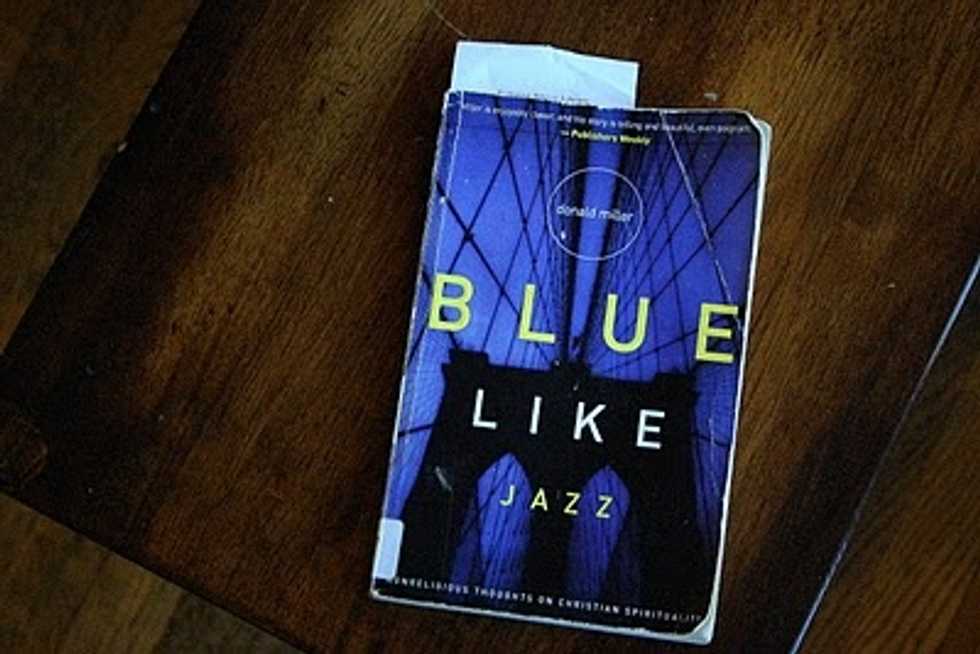
It was in the midst of a hostile state of depression that I picked up Donald Miller’s "Blue Like Jazz" for the second time. The first time, I skimmed through the summary on the back and then quickly put the book back on the shelf at Barnes & Noble and walked away. It wasn’t the heaviness of the memoir-themed plot, but the subtitle that stared at me dauntingly on the cover -- “NonReligious Views of Christian Spirituality.” It was an intimidating statement to a 16 year old new believer. I remember thinking that I was nowhere near ready to begin questioning my faith, feeling it be as fragile as a newborn, and I, a mother, afraid to expose it to anything that could make it impure.
But it was this summer, after one of the hardest years of my life that I was finally ready to expose my faith to doubt, questions, and new ideas because it was where I found my faith headed, sprinting down a path towards apathy, which I would consider its death. It was in this minute of doubt, anger, and unbelief that I was ready to read something that was going to look at Christianity from a different -- or what I thought a dangerous -- perspective. Something wholly separate from the general Christian self-help books that try to convince you that you’re okay, and to choose joy.
When I finished Miller’s memoir, I felt understood for the first time in a year and felt hope. I want, so badly, this same experience for you. So, after looking over my notes from my reading of the work, here are two of the most significant takeaway’s that I gathered from experience that I hope move you to read the book too.

"I will love you like God, because of God, mighted by the power of God. I will stop expecting your love, demanding your love, trading for your love, gaming for your love. I will simply love. I am giving myself to you, and tomorrow I will do it again. I suppose the clock itself will wear thin its time before I am ended at this altar of dying and dying again. God risked Himself on me. I will risk myself on you. And together, we will learn to love, and perhaps then, and only then, understand this gravity that drew Him, unto us."
Love is not a commodity.
Miller explains how we describe relationships -- how we invest, how we value -- as if love were a currency that we choose to keep or give away to whomever we believe earned it. This realization was a sucker-punch to the gut. I had been selecting who I gave my love to and who I kept it from, who I “invested” love in hopes for some return, and believing that I had the authority to spend love how I wanted to. I mean, how dare I decide who and who doesn’t deserve love? I know that I am sure as hell not deserving of it, but I’m still a recipient when I choose to accept it, of love that’s unconditional – no contracts or guarantees involved.
“I can’t be obedient and love God, unless I accept his love, unconditional love, for me.”
Accept God’s love.
I have found that this is one of the most difficult concepts I have ever been challenged to face. For the past two years, I had believed that maybe if I loved God through loving others, doing good, etc. that it would bring me closer to Him and give Him more of a reason to love me. Though it is a fundamental principle in Christianity that good works do not win favor with God, it’s humanly natural to believe that it does for the nature of how our civilized world spins. But it was then that I found that I was emptier than ever and blaming God for all of it. I blamed him for my sadness and anger and apathetic outlook on life because he wasn’t responding to my tangible offerings of love to Him.
In "Blue Like Jazz," Miller tells a story of a friend who became a believer and tried to change everything about himself so he could become someone worthy of loving. It wasn’t until he failed, turning back to his old ways, that he lost all hope and then attempted to end his life. It was when he woke up on the floor, still breathing, that he came to this elemental conclusion: he must accept God's love if anything is going to change. It’s the understanding that you will never be good enough, no matter what you do, but still you are loved for the ugliest, most filthy part of you. You are loved unconditionally by that person. Accepting His love is what changes the condition of your heart -- the way you think, the way you speak, the way you treat others. That’s when things change.
“...to be in a relationship with God is to be loved purely and furiously. And a person who thinks himself unlovable cannot be in a relationship with God because he can't accept who God is; a Being that is love. We learn that we are lovable or unlovable from other people... That is why God tells us so many times to love each other.”
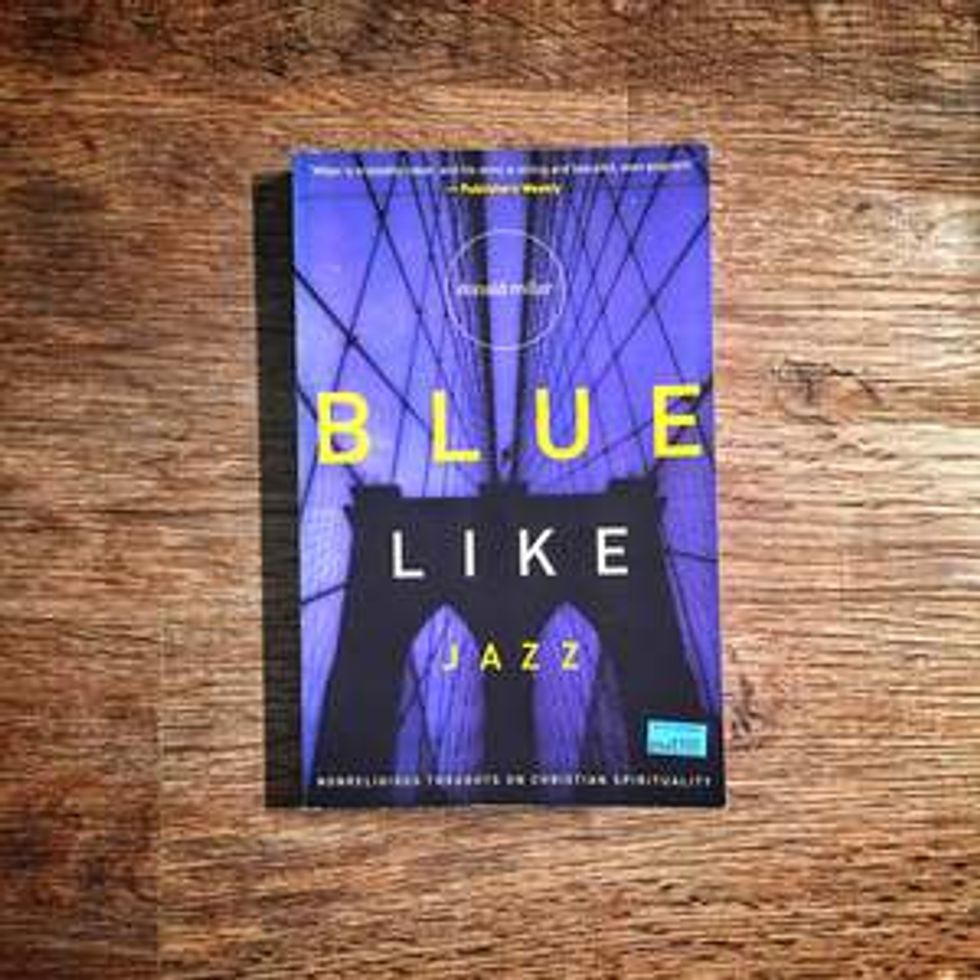
"Blue Like Jazz" found its way into my hands in the heart of two-year bout of depression, insecurity, and anxiety, and the absolute last thing I wanted was an encouragement. I wanted to understand right where I was. I wanted to be loved and known at that moment, not fixed or talked out of my chemical induced despair. I was looking to be spoken to, not at. Donald Miller’s stories and ideas were like bread to a starving child. Miller did what many authors try and fail to do, and that’s be themselves. His honesty and willingness to ask hard questions of his faith made me feel accepted and understood.
I recommend this read if you’re in a place where you’re afraid to admit to being, if you have questions and doubts that you wish you didn’t, and if you want your world rocked. So if you are doubting, searching, or questioning, pick it up. No matter what you believe in, this book asks the questions you’ve always had of Christianity and will continue to have. It’s not trying to convince you of anything, but instead grabs your shoulder, looks you in the eye and says, “You’re not alone.”

“At the end of the day, when I am lying in bed and I know the chances of any of our theology being exactly right are a million to one, I need to know that God has things figured out, that if my math is wrong we are still going to be okay. And wonder is that feeling we get when we let go of our silly answers, our mapped out rules that we want God to follow. I don't think there is any better worship than wonder.”