

In light of the dress code that went viral at a high school in Kentucky, there are some things that need to be said. Having a hair policy that targets natural, black hairstyles could be very damaging to young children’s self image.
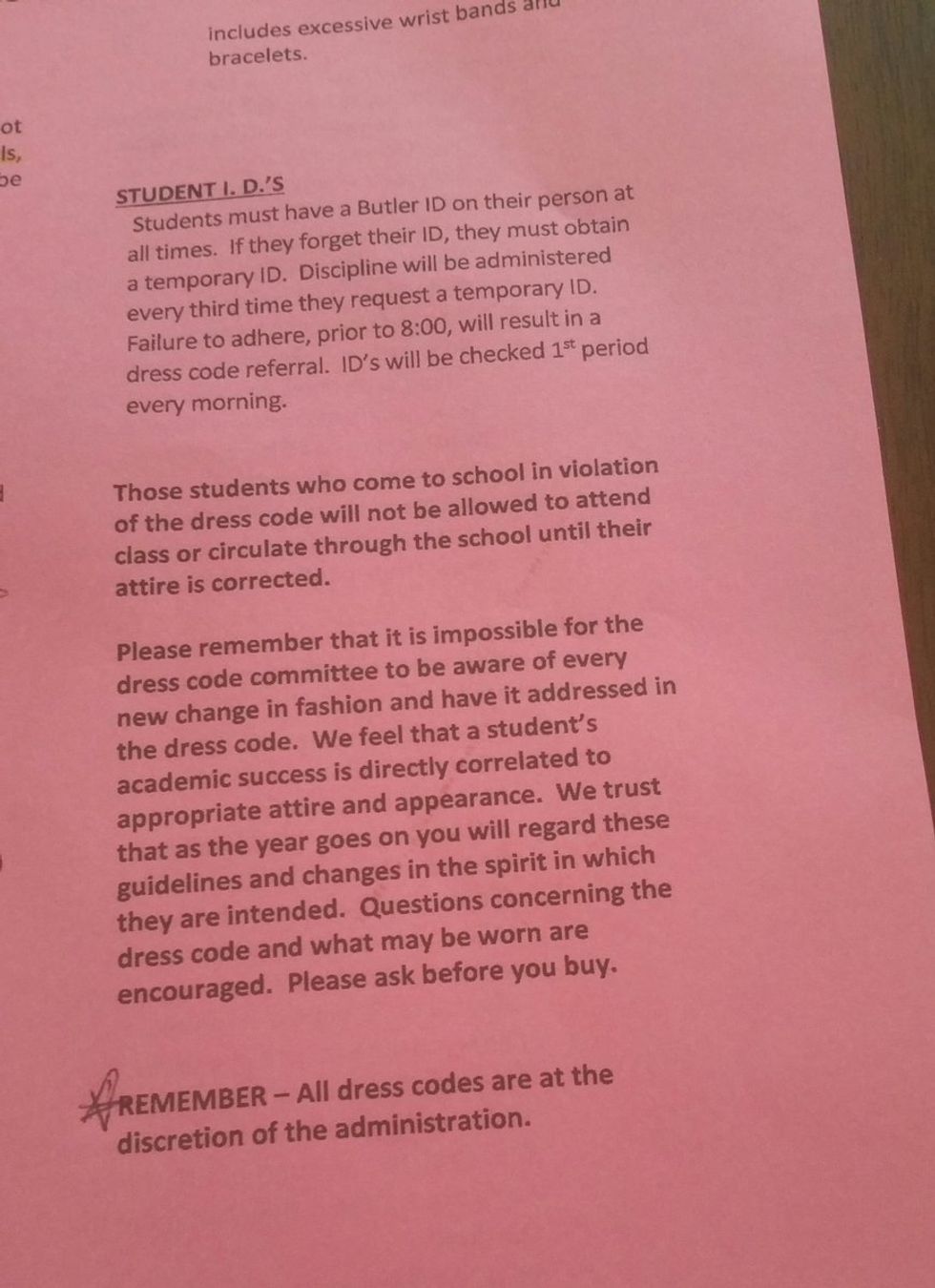
To catch some of you up: Attica Scott, a candidate for the Kentucky House, tweeted photos showing local Butler High School’s policy on how hair is to be worn at the school. This came out to be highly controversial, as some of the hairstyles banned seemed to target black hair– specifically, dreadlocks, cornrolls (referring to a hairstyle called ‘cornrows’, as it resembles rows of corn when worn) and twists. This proceeded a statement that read “hair must be clean and neat at all times," as if dreadlocks, cornrows and twists were dirty hairstyles.
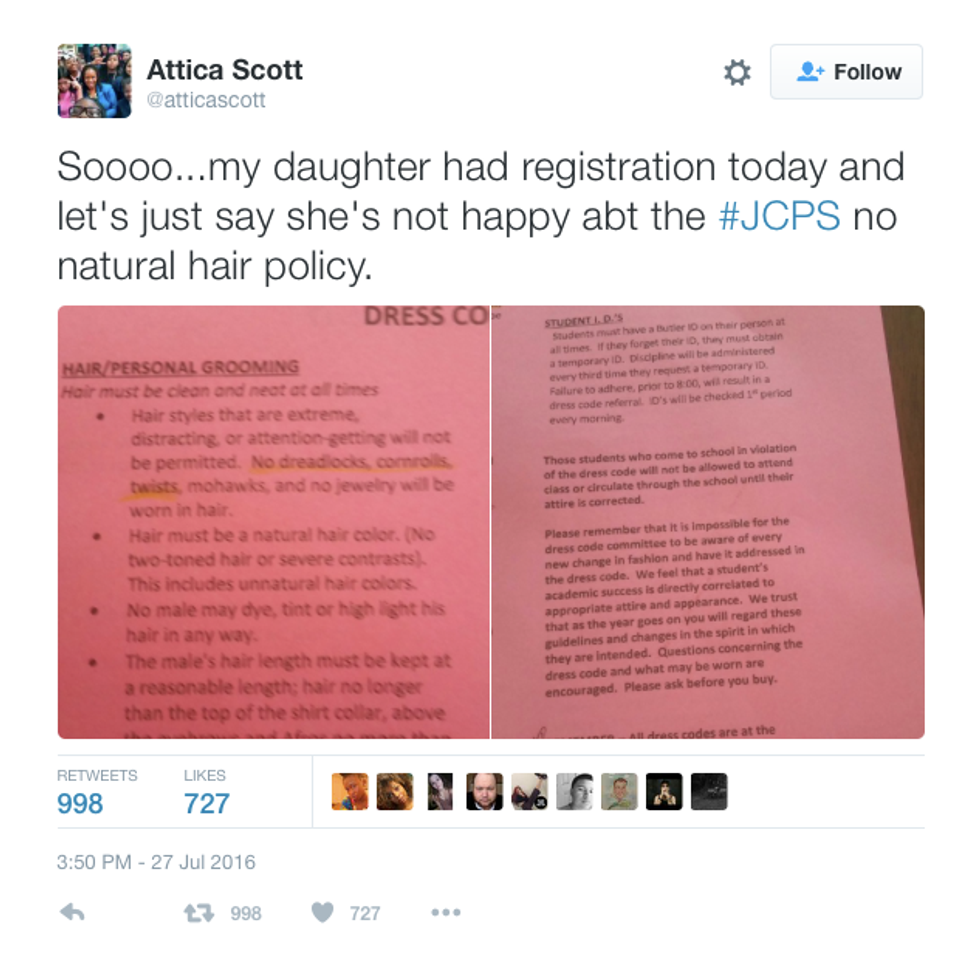
In response, Attica Scott, in an interview with the Courier-Journal, stated, "I don't understand why we're going to focus on something like natural hair styles when we should be focused on education," also mentioning that the targeting of black hairstyles "stinks of institutional racism." With that being said, if any other girl can braid her hair before school, why can’t the black girls?
To blacks, such as myself, these hairstyles widely regarded as natural hairstyles. They’re thought of as staples to black culture, as they came from hairstyles worn in Africa. My hair can ‘lock up’ (the process of turning into dreadlocks) if I stop using as much water and conditioner on it as I already do. Even cornrow braiding, which is specific to black culture, can keep your hair neat and out of the way when needed. These so-called "unnatural hairstyles" by the school are actually natural hairstyles, but for some reason they seem "dirty" and "unkempt." In fact, they’re all ways to keep your hair contained and out of the way. Besides, what is more distracting: a flat head with cornrows, or a foot-high afro?
A statement released by Jefferson County Public Schools Superintendent Donna Hargens mentioned actions being taken to review the policies on hair. The statement specified steps to ensure that their "policies are not obtrusive" and don't "infringe on the many cultures embraced across the school district."[1].
This seems to me to target hairstyles unknown and unfamiliar to non-blacks. Regardless, where did the stigma come from that dreadlocks and twists aren’t clean? You still have to wash dreadlocks.
These hairstyles have been worn by blacks for centuries, but today they’re considered unclean, and not neat. This is a very dangerous way of thinking, as it could have unforeseen consequences on young black girls and boys’ psyche. When I was 6, I told my first grade teacher that I wanted to be white, my hair being one of the reasons. I’m already half-white, but being also half black made me feel lesser than my peers. Imagine how other children could feel about their own hair at such young ages. Imagine the damage it will do to black children’s self-image.
















