
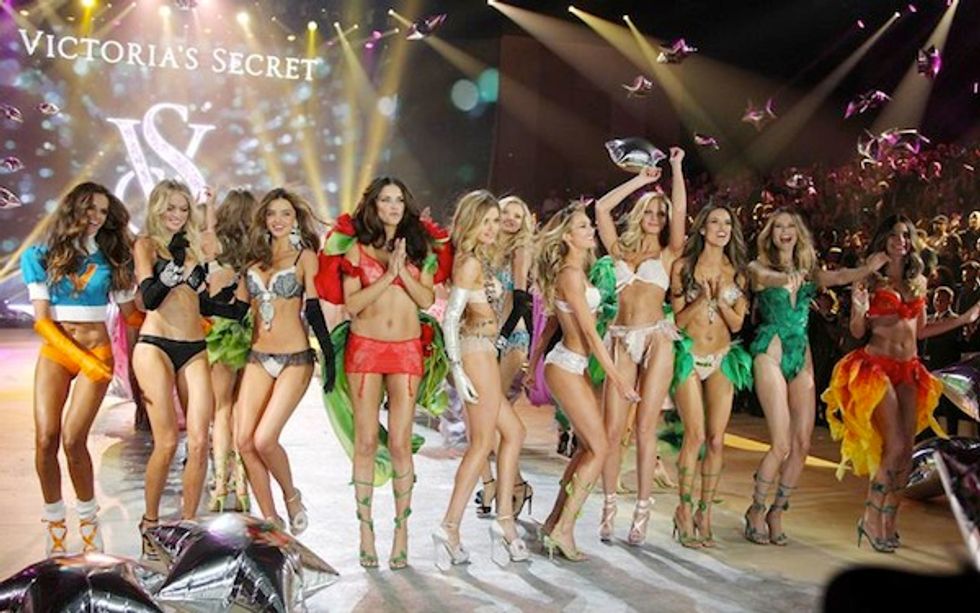
Since the musical guests have been announced for the annual Victoria’s Secret Fashion Show, it seems like the show is all anyone on the web can talk about. It is amazing how many people tune in to watch this show every year. However, I am not one of those people, nor will I ever be.
Let me preface this article by saying that I am a regular customer of the brand. In fact, I am wearing one of their tank tops as I write this article. So if I am a fan of their clothing, why do I refuse to watch the show?
Frankly, I don’t like what the show promotes and how it makes the viewers feel, specifically young women. I want you to take a moment to think about the tweets that appear on your newsfeed throughout the show. The number of self-deprecating, sarcastic tweets is limitless. Although many girls may appear to be fine, there is a deeper truth behind the front of humor.
Watching young women parade down a runway with bodies that are essentially unattainable to the average person takes a toll on a woman’s self-image. I’m not shaming the models; they are beautiful people and shouldn’t be criticized for being thin, but I don’t feel that the image Victoria’s Secret is portraying is one of fitness. It’s one of perfection, and the quest for perfection can lead many young women, and young girls, to go to drastic measures to fit this mold.
Now, Victoria’s Secret is not the only brand to promote an unattainable image of beauty. The American fashion industry as a whole lacks diversity, but the degree of publicity Victoria’s Secret’s show gets makes it necessary to address this particular brand and it's image.
According to the research from Anorexia Nervosa and Associated Disorders, 86% of college women have reported the onset of an eating disorder by the age of 20 (http://www.anad.org/get-information/about-eating-disorders/eating-disorders-statistics/). Eighty-six percent. That is a disgustingly high percentage of women. Eating disorders are extremely complex and I would not make the ignorant claim that the media portrayal of perfection is what causes them, but they do play a role in how women view their bodies and definitely contribute to low self-esteem, which make women more susceptible to body-image obsessions.
It’s also important to think about how the show impacts how young men view and treat young women. Can we really be surprised by the amount of catcalling and sexual harassment women receive today when they are constantly objectified and sexualized by the media, giving men the impression that women are nothing more than their bodies? The show isn’t selling lingerie, its selling sex.
My opinion may be unpopular with people my age, but it’s time for us to question what we are watching and not just blindly absorbed whatever the media throws at us.













