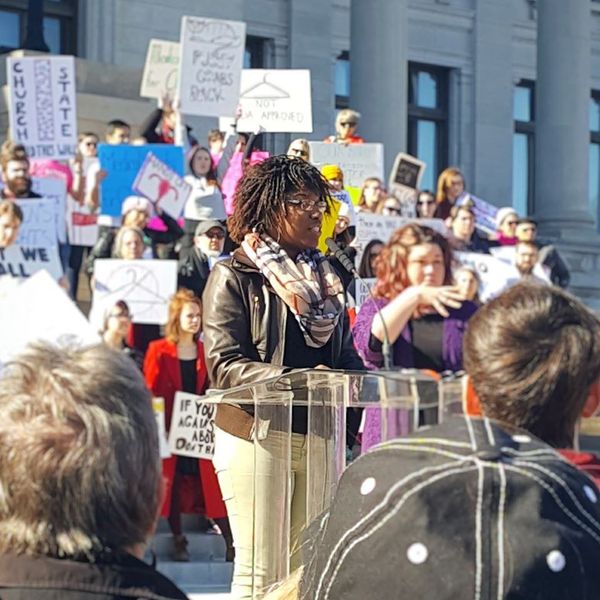
Prolife. An antichoice, misogynistic, hypocritical, backwards, redneck movement that belonged in the 1970s, right?
Or is that really an accurate portrayal of the prolife movement?
I hear or read insults like this thrown at prolife advocates almost every day. Unfair insults. Unfounded insults. Insults that fail to take into consideration the core tenets of the prolife perspective. Insults that refuse to acknowledge the intentions behind what is viewed as an outdated religious issue. Insults that are exactly that—childish insults reflecting a naive misunderstanding about the prolife movement.
Let me begin by clarifying the aims of the prochoice movement—to secure women's rights, to give women control over their own bodies, to save children from feeling unwanted.
Now let me explain the prolife movement for those who have not researched it enough to know.
The prolife movement isn’t just about women’s rights. It’s about everyone’s rights. It's about minority rights. Yes, it is about women’s rights, shockingly enough. But mostly, it is about a child's rights.
Children—the beloved creatures formed in the biological union of a man and a woman. From teenagers, hopping behind the wheel for the first time, iPhone in hand; to kids, playing with their Barbies and their action figures, to toddlers, waddling around on chubby legs, plucking flowers and tottering after balls in the grass; and finally to babies, small, innocent, gentle, precious babies, smiling and staring around the world with big curious eyes, giggling and catching at bubbles and wildflowers and grinning faces. We work together to safeguard all children, to ensure that their innocence is protected for as long as possible, but our concern extends especially to babies, those pure creatures untouched by bitter emotions such as hatred and jealousy, creatures who rely completely and utterly on those around them, creatures whose innocence is unmeasurable by anything else in nature. We want to take care of them, make sure they grow up safe and happy and protected. We defend them from harm. That is, except in the case of abortion.
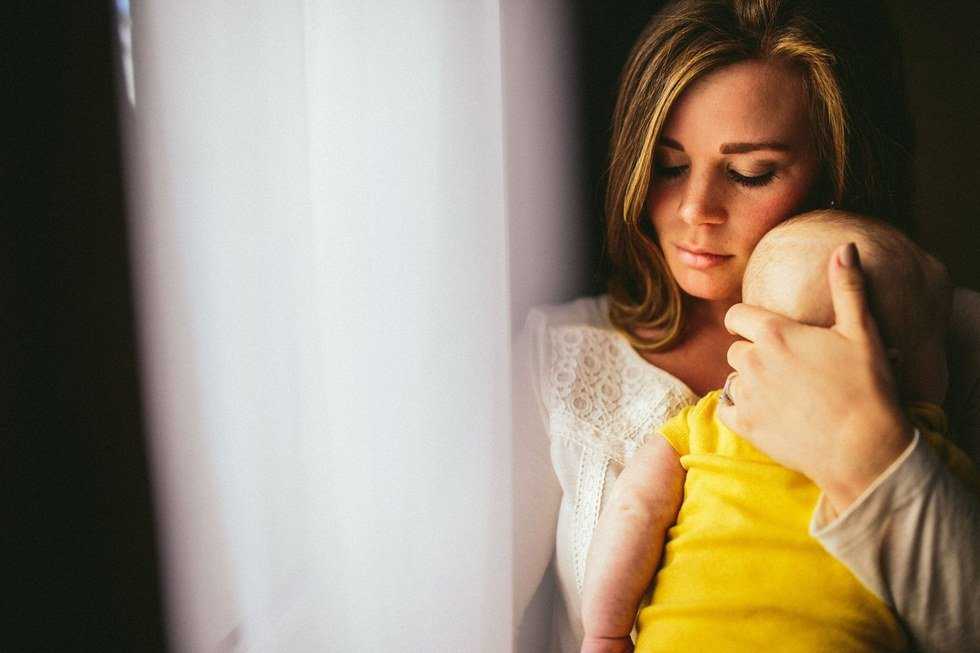
Take a newborn baby fresh from childbirth, dozing peacefully on the breast of his exhausted yet glowing mother. This baby is a child, soft-skinned, unwrinkled, fresh to the world, only just learning how to smile, a child wholly dependent on the whims of his parents, a child with complete faith that when he cries, his discomforts will be assuaged. And yet just sixteen to eighteen weeks prior to this warm, rosy time, that precious child can legally be killed in a medical setting. Furthermore, no justification is required for this murder; any woman who does not feel “ready” to be a mother can choose the death of her child over the responsibilities of caring for him.
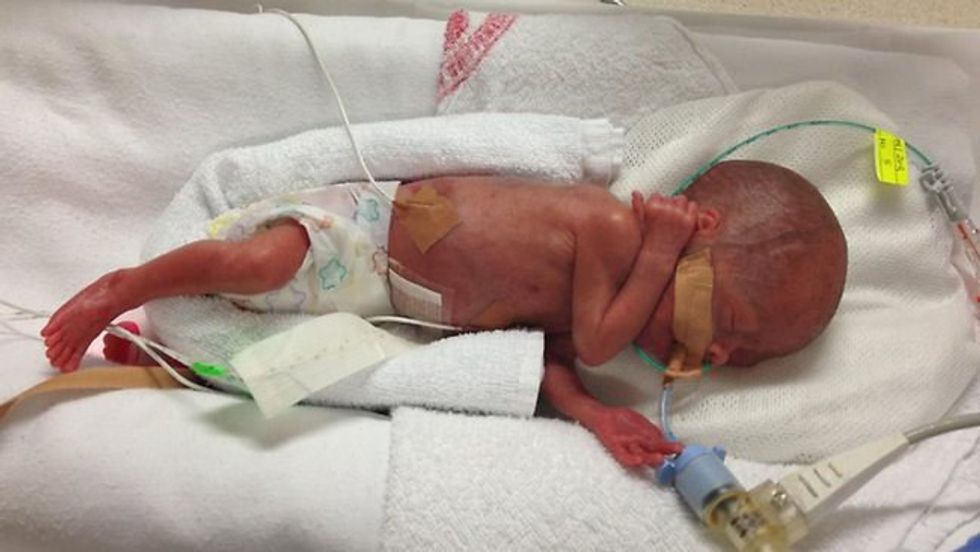
Just sixteen to eighteen weeks prior to childbirth, a woman can choose to inject her unborn child with a death serum and then birth a stillborn. She can choose to her baby surgically removed from her uterus piece by piece (and yes, there are pieces—if you doubt that a fetus looks like a baby at this age, below is a picture of a 24-week premature fetus, the same fetal age at which many abortions are performed).
And now let’s look at the effect of abortion on women. Here’s just a few of the emotional side effects: regret, shame, loneliness, loss of self-confidence, nightmares, depression, anxiety, suicidal thoughts and feelings, and eating disorders. One-third of women experience psychological side effects. Seeing as how there are 3,000 abortions a day in the United States (and, consequently 1.1 million per year, in the United States alone), that translates to about 365,000 women per year experiencing negative psychological reactions to abortion. Studies have shown that the suicide rate of women who have recently undergone abortions is almost three times that of the average person and six times that of women who go to term (that is, give birth). Further studies have shown that even among women with no prior psychiatric history, the rate of deliberate self-harm—aka, behaviors such as cutting or burning oneself—is 70 percent higher after abortion than after childbirth. And prochoice advocates claim that abortion is good for women? Even as it affects their mental health in such a drastically negative fashion? Many experts have even petitioned for a new disorder to address this crisis, Post-Abortion Syndrome, an offset of PTSD. Yes, that’s right—some women experience Post-Traumatic Stress Disorder as a result of the so-called “removal of bodily tissue." You don’t hear much about appendicitis survivors suffering from PTSD or suicidal thoughts.
Now let’s talk about minorities and the impoverished of our society. 37 percent of abortions are African American women, even though African Americans as a whole are only about 13 percent of the population. Likewise, 19 percent of abortions are Hispanic women, even though only 17.6 percent of the population is Hispanic. 69 percent of women who undergo abortions are economically disadvantaged, and Planned Parenthood has conveniently positioned an astounding 80 percent of its clinics in minority neighborhoods. The facts speak for themselves—minorities and the poor are disproportionately targeted for abortion.
Lastly, I want you to think of the fetus—the unborn child so often characterized as a meaningless “clump of cells.” From the moment that the sperm fertilizes the egg, a new creature, distinct from his mother, is born. That embryo is not just part of the mother’s body—that embryo has his own DNA code, uniquely his own, and uniquely different from his mother’s. That little embryo, after fertilization, only one cell big at this time, attaches to his mother’s uterine lining and begins to grow. About 21 days after fertilization—earlier than almost all abortions—that little creature’s heart begins to beat. By the eighth week, all of the fetus’s organs have taken shape inside the little baby’s body cavity, ready to grow and continue to develop all the way up until birth. At about fourteen to sixteen weeks, the baby can respond to external stimuli and even move around a little bit; this may be the first time pregnant women begin to feel their baby kicking. And by twenty-five weeks, the baby begins to release steady brain waves (for more development milestones relevant to the controversy of when life begins, read here). And prochoice advocates try to assert that this little human inside his mother’s womb is nothing more than a lump of random tissue, a clump of useless cells?
So, no, the prolife movement isn’t just some outdated religious problem. The prolife movement is a movement dedicated to the betterment of our society, to the health and happiness of our country. The prolife movement is a movement dedicating to saving lives—be it the life of a child or the life of a woman. The prolife movement is about choice—the choice of life, the choice of the unborn child, the choice to selflessly give life to that child. No one said that it would be easy, and so many women in trying situations choose abortion simply because they feel that they have no other options. But there are other options—options that are beneficial for the woman and her unborn child. Maybe not the “easy” route in the short-term, but the best option long-term for all parties involved. Because that woman and her baby—neither deserve the negative consequences that stem from abortion. That woman doesn’t deserve to be plagued by regret and shame; that baby doesn’t deserve to die. Abortion is a complicated issue, but killing an innocent child is never the right decision.
The prolife movement is not antichoice. It’s not misogynistic. It’s not hypocritical. It’s not backwards, it’s not redneck, and it doesn’t belong in the 1970s. The prolife movement is about love, selflessness, compassion, truth, justice. The prolife movement is about fighting for women’s, children’s, and minorities’ rights. The prolife movement is about fighting for women’s, children’s, and minorities’ rights. But mostly the prolife movement is about hope—the hope of moving past a trying situation, even when it seems impossible.
If you or someone you love is considering abortion, I urge you to go to a crisis pregnancy clinic or to call or chat with someone at http://optionline.org/. An unwanted pregnancy is a serious situation, and you or your loved one deserve to be wholly informed about all of your options before making a decision. If you have already undergone an abortion and are experiencing negative feelings as a result, I urge you also to either seek help from a therapist or counselor or call or chat with someone at http://optionline.org/after-abortion-support/.