Basically, the idea I’m trying to get across is that power structures are far more complex in this day and age: everyone takes part, advertently or inadvertently, to different degrees, in the perpetuation of privilege and oppression. We live in a state that feigns liberalism by allowing a small threshold of the middle class, the working class, and oppressed minorities to enter into the lower levels of the privileged classes. This gives the appearance of equality, while allowing the same oppression to continue to take place for most of the rest of the population.
Why does any -ism still exist? Why are we racist, still? Sexist, still? Homophobic, still? Ableist, still? It’s because our country was founded on the idea that there are normative traits in human nature, and that those traits can be hierarchically categorized: it was a given, something that was not even thought about. White, straight, christian males were normal: this was the only really acceptable outlook of the times. Any deviation from the norm was viewed by the leaders of communities as anarchy, a threat to the state: it took massive popular support to bring minorities out of the shadows and into public discourse. Now, both parties are highlighting the social problem: but they aren't addressing the problem, so much as making fun of the other side. The liberal media calls out the conservative media for xenophobic comments and xenophobic policies, and the conservative media calls out the liberal media for being elitist and for their own xenophobic policies.
Then, if both liberal and conservative elites claim to be fighters for equality, and not just out to maintain their political and financial dominance, how does that figure into the fact that social relations between discourse communities are continuing to worsen?
The reason that isms stick around even after they have been “dismantled,” is because the dismantling is always generally carried out by a privileged few (politicians, generally) through the use of law; this is an action that yields two reactions. The original action exposes and/or corrects the follies of the social order: one reaction to this progress, is to embrace the new social order; the other reaction is to reject, and so feel threatened by, the new social order. Such a huge number of changes have occurred over the years without input from vast majorities of the public: it is public officials, in private quarters, who dictate public policy. Politics is, though not totally equal, slightly more equal than it was even 30 years ago; also remember, that media has the ability to remove Horrors from their context, and blow up or shrink that Horror until it either scares people into support, or until the subject fades away un-talked-about.
That’s why when you try to tell a hardcore evangelical christian white conservative, or that impoverished white family, that white people are power hungry fools who are ruining everyone’s lives, they will wonder what the fuck you are talking about. Whites are still the majority of political offices, yes, we know that: males hold the most positions in office as well: but try telling that to someone who has grown up seeing how shitty the lives of rural whites are, how impoverished everyone is, white and black, and how little media attention impoverished whites get in comparison to other minority issues. Then take into account that what they see on their TV News station, although it may be false or out of context, are people of all colors, orientations, and genders in positions of power. Imagine being told by all of your news sources, the sources you trust to tell you what's going on, that the country is falling apart. Being told that, on a daily basis. Have you ever listened to a Michael Savage radio show? That stuff is like real-life Old Testament, apocalyptic stuff (note, the scary talk is always interwoven with commercials....), and he always makes sure to trace the cause of all this mayhem to liberalism. On the other hand, liberal media focuses on the horrors that conservative policies cause for minorities; this causes a similar hatred to spread amongst minorities and other liberals, towards conservatives. Keep in mind that liberal media covers minority issues very superficially, just as conservatives highlight white issues very superficially: they both choose clips in order to create an image of themselves, and thus cannot be sincere. Consider that neither liberal nor conservative media/corporations actually care about helping people: they care about crafting an image and maintaining the “They said/we said” argument between the two parties. Politicians, people on television, they want more of your money: they don’t really want you to change in any meaningful way.
It's important to keep one thing in mind: you can feel empathy for more than one group of people. You can feel empathy for people of color, for all of their struggles: and you can, simultaneously, recognize that whites are struggling in many of their own ways. You can feel empathy for women and their struggles: while also recognizing that men have struggles of their own.
This is a question of values, ethics, and proportion, and cannot be dismissed with cynical catchall phrases or dreams of utopia: our lives, at this point, are inseparable; we will sink or swim, together.
The reason why programs such as affirmative action are viewed negatively by the republican party is because while poor whites (who make up most of the republican base) continue to suffer without the aid of such social programs, things like immigration and affirmative action become evidence for conservative media to use in proving that there is more attention being paid to minority groups than to them (even though affirmative action doesn’t actually do all that much good for the African American community). Whatever the intention of liberal programs, they make it really really easy for conservatives to argue that the liberal establishment is, quote, “anti-white” because the liberal image is one concerned mainly with improving the lives of minorities: which would be a really really good thing, no doubt, if liberal politicians actually followed through with their ideas. Liberal legislation, when put into action, tends to do a few things: firstly, it causes backlash from conservatives over what’s perceived as “anti-white” policies, widening the gulf between liberals and conservatives. Secondly, it causes further rifts in minority communities because efforts to clean up communities have generally ended up amounting to gentrification through the removal of "undesirables". Only those in certain parts of the country (generally the parts of the country that don’t really need as much help as others), in certain situations, receive help: and even then, the help tends to be pretty minimal. There are still 45 million people still live in poverty, much of the worst poverty in the south and midwest. Thirdly, and this is important, not many people end up getting helped at all, even if the policies are honestly trying to do good: the wheels of bureaucracy tend to move slow, sometimes stalling long enough to negate any real help the policies could have afforded.
In addition, liberal media’s appropriation of minority issues, as well as the poor liberal policies instituted over the past 20 years, allows Conservative pundits to pin liberalism as insincere, fascist, and anti-white to their disenfranchised white viewers: even though none of that is fully true.
The working class is in a period of incredible distress right now, both black and white: and both feel, validly, that they are being taken advantage of by people in power (maybe because they are...), and so they take it out on the people they believe are the problem. For many conservative working class white people, this is liberal media, and minorities. For many non-white working class, and white liberal working class, they do the same thing: they feel threatened by conservatives, by the “southern hick racist” coming to hurt them or take away their possessions, and so they take out their anger and fear against these people.
Neither person is totally correct: but, both people are angry for valid reasons.
Lastly, I wanted to expand on the idea of gentrification. Gentrification’s definition is rather ironic:
“renovate and improve (especially a house or district) so that it conforms to middle-class taste.
- make (someone or their way of life) more refined or dignified."
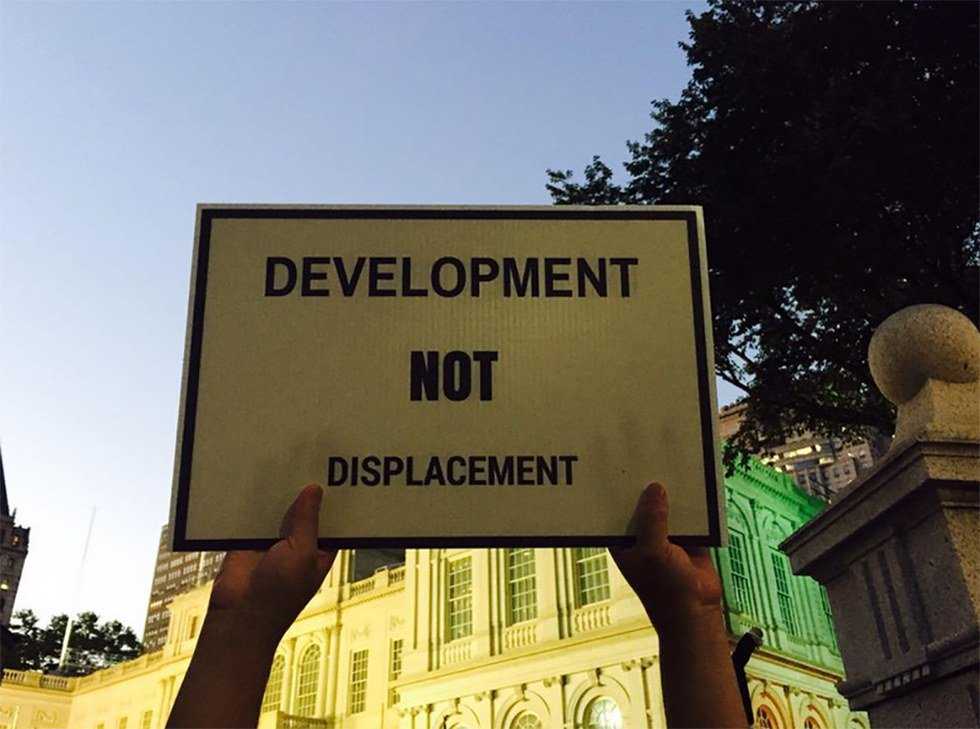
Gentrification is not a good thing, as its definition might lead one to believe. In fact, it is the little peephole through which we can see one of the most unbelievable inequities and oppressions of modern life. Generally, the end-goal of gentrification is to move “undesirables” out of desirable urban locations, so that affluent people can move into the re-made area in their place. An important bit of information:
“No one is more vulnerable to the effects of gentrification than renters. When prices go up, tenants are pushed out, whether through natural turnover, rent hikes, or evictions. When buildings are sold, buyers often evict the existing tenants to move in themselves, combine several units, or bring in new tenants at a higher rate. When residents own their homes, they are less vulnerable, and may opt to “cash them in” and move elsewhere. Their options may be limited if there is a regional housing shortage, however, and cash does not always compensate for less tangible losses.....Previous residents may benefit from some of this development, particularly in the form of service sector and construction jobs, but much of it may be out of reach to all but the well-educated newcomers.”
Gentrification forces the impoverished to either relocate or to adopt a new lifestyle as “service persons” of the middle-class (hmmmmm sounds familiar.... (cough cough, slavery)). Gentrification occurs through both liberal, and conservative policies: these policies affect people of color to a large extent, but they also affect many whites, especially Working Class and small business owners.
Gentrification is a perfect metaphor for the elite American ideology: either get out of our way or we’ll make you; and if you cooperate, we’ll let you work for us. It’s the way by which we conduct our wars, our businesses, our relationships, our education, our recreation: it’s everywhere you look, and it is not a healthy way to live. Yet, we all live this way. It’s not healthy to think that, “cleaning up a neighborhood,” is the same as moving the problem elsewhere: weren’t we taught to clean up after ourselves — not just sweep our problems under the bed?
Gentrification is another method through which minorities are oppressed: and it’s important not just for the above-mentioned, but because it is emblematic of the inherent flaws in capitalism, which is the very heart of privilege and oppression in America. Tomorrow, I will be linking the previous articles all together, with capitalism as the binding glue.