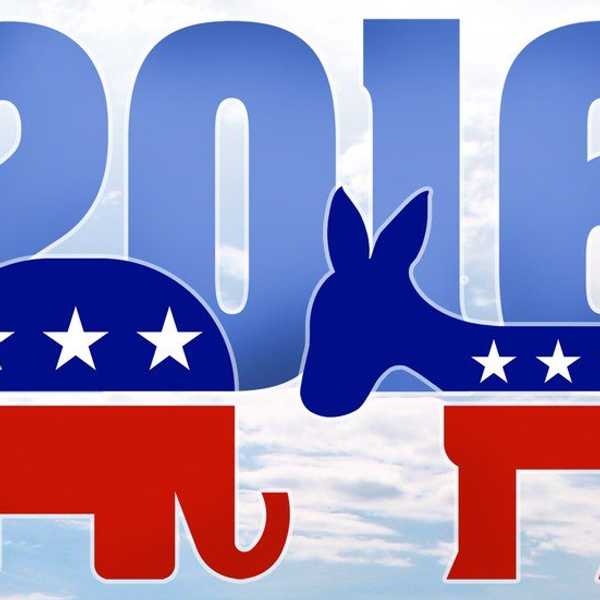
Has this election year left you saying WTF? For many college students, the presidential elections can be incredibly confusing. This is especially true if you aren't really into politics. This years election will be the first time many college students will have the opportunity to vote, and it is imperative that our age group gets involved in the voting process. Will you be a Democrat or a Republican? Are you feeling the Bern or do you want to make America great again? More importantly, do you know how the presidential elections process works? It is shocking that such a high number of people ages 18-25 do not know how we elect our leaders. There is much more involved than simply placing your ballad.
The beginning of the election year starts with primaries and caucuses to decide on the Republicans and the Democrats. This is where they will compete for nominations. The organization and who is entitled to vote varies from state to state. Some states have ALL voters, and others only allow people of a certain party to elect. For example, Republicans would only be allowed to vote for Republicans. Dates of primaries and caucuses are also fixed individually by each state. This is why Super Tuesday is SO important. It is important to know that Citizens DO NOT vote for candidates directly.

Hopefully you already knew this. We only elect delegates. These delegates are in turn bound to a particular candidate. All together 2,286 delegates are elected. The winner ultimately attains more than half of the delegates votes. Once the states have elected their delegates it is usually pretty clear who the candidate for Presidency will be. BUT officially the delegates only vote for their candidate at the parties national conference.
If none of the candidates get more than half of the delegates votes, than negotiations are held within that party. At this point, some candidates simply withdraw, which means that the delegates have to vote until 1 wins. If this happens, the delegates are no longer bound to one person, they can change who they vote for. Making more sense?
After the parties national convention, it is clear AND official who the candidates will be. This is when the election campaigns really take off. As you know (or I really hope you know) the winner is decided by United States citizens on election day, which takes place in November. Anyone over the age of 18 is legally eligible to vote. HOWEVER just like in the primaries and caucuses the Presidential candidates are not voted for directly.

We vote for electors that in turn are pledges to vote for one the candidates. The number of electors in each state depends on the states population. So that means at the end of the election day in every state a certain number of electors are for Democrats and a certain number are for Republicans.
However they are NOT simply assigned to the presidential candidates. In almost all states the "winner takes all" principle applies. For example, if a state has 10 electors and six of them vote Democrat, than Democrats win that entire state and get all 10 votes. This is the reason why the election is fought harder in some states. For example you have California that almost always is a Democratic state and Alabama usually is a Democratic state. The rest of the states are known as "swing states." Their are 538 electors all together and the candidate who has more than half of all electors on their side wins the election.
So after the electors have been elected it's pretty clear who will be president. BUT officially the president is elected later by the electoral college. It is then that all of the electors cast their votes in their state some time in December. HOWEVER, these votes are counted at a still later date in the beginning of January by congress. FINALLY it is officially announced who will be allowed to move into the white house for the next four years. Makes more sense, right?