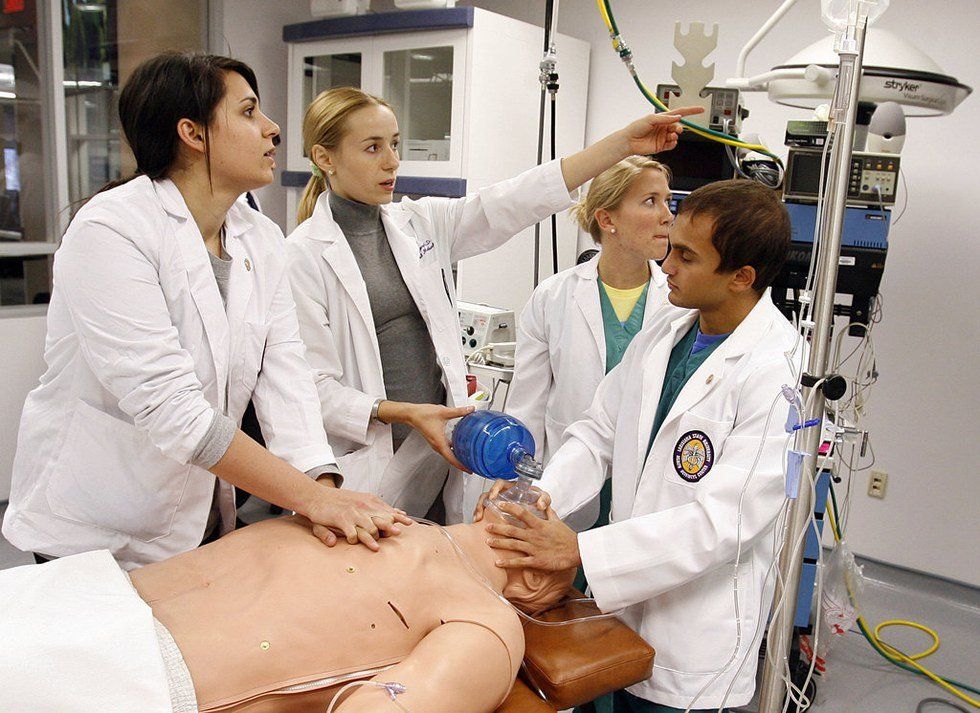
Those who have ever been interested in a medical career know that the pre-medicine path is a long one. It is many years of school, and when you finally graduate, you're an intern before another long road begins. The time it takes to become any type of medical professional is a reason many are wary of going into a career of medicine.
As a behavioral neuroscience major, I can personally attest to the fact that there are many routes to medical school. When I completed my Associate of Arts with an American Sign Language certificate at community college, I had taken science and math classes that were more interesting to me, thinking that I wanted to become an American Sign Language interpreter. When discovering my interest in the brain, I slowly changed my future dreams to involve neuroscience. I love exploring how the brain works. Sometimes being a doctor isn't what you've always dreamed of, but you wake up and one day you think "I can do this." After that, I became more and more interested through my classes at university and knew I'd made the right choice.

A bachelor of science in behavioral neuroscience is only one of the many degrees that can be considered "pre-med." Medical schools look for diversity and balance in their prospective students, and having interests in fields other than science and math can actually give you a leg up. There are many required classes to take before taking the MCAT placement test and going to med school. It's very common for those going to medical school to obtain more than one university degree before attending.
The program I am completing with the other B.N. majors is heavy in math, science, and psychology. Some people love these classes, and some people hate them. While I have a love-hate relationship with my math and science classes, I tend to enjoy the flexibility in psychology. It seems to me that I found the perfect major to balance my interests with requirements as I work towards applying to medical school. As I didn't know that I could apply to medical school with a degree like this originally, I want others who may not be aware to know that you don't need to major in chemistry or biology to be a doctor.

As a student, often in class in the math and science buildings, I'd like to share some tips for getting through the tough classes and long nights. It can be really difficult to juggle math and science classes, especially at the same time. Labs, frequent testing, and lots of homework can catch up to you, so stay on top of it. Keeping a calendar and writing due dates in it, as well as personal plans, can help you stay on track.
Taking care of yourself is really important when it comes to getting through your long while as a student. It's important to remember to eat, sleep and drink water between classes, studying, and even your job. Make time for yourself -- take a jog or do some yoga to clear your head; get some exercise in. With energy and a clear head, you'll get a lot more done! Being friends with other students in your major can be really helpful in getting through tough classes without burning out.
If you've decided to be a doctor, keep your head up! The years of schooling are difficult, but many would say it's worth it in the end. For those that want to have a medical profession but aren't sure what they would enjoy doing yet, there are many professions and specialties to choose from after attending medical school. You just have to find what works for you.
So good luck, my fellow pre-medicine students!