From Snapchat to Instagram, social media consumption is at an all-time high; hashtags and “selfie” filters have consumed the minds and eyes of most ages.
Every day, at any given moment, there is a parent who questions their child’s use of their smartphone or a news broadcast that inspires the question of “too much screen time?” In reality, it is not the phone or screen itself, but what’s most important is what the user is doing on the phone.
Most are either Snapchatting double-chin pictures to their best friend. Others will be commenting on Zac Efron’s picture on Instagram. Either way, the person has a purpose for spending an extended amount of time on the phone.
While social media and the digital generation have numerous negative qualities, one of the positive factors is the speed of global communication in a time of crisis. Even though many people in this generation focus on menial actions, others use this medium to band together and create a movement.
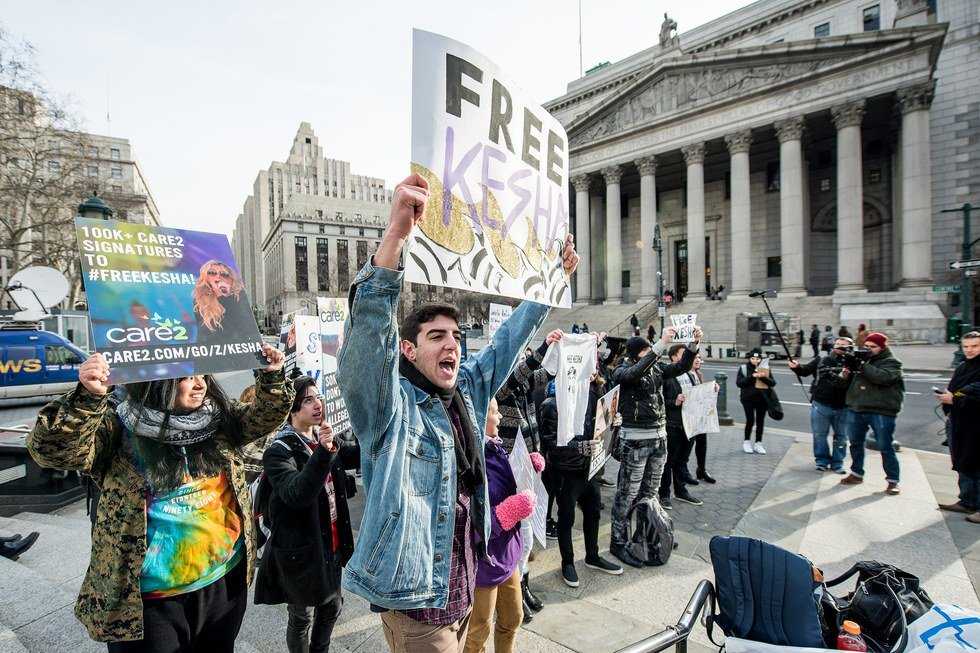
Recently, in the media, there has been a movement called #FREEKESHA. After years of legal battles against her producer and alleged abuser, Kesha recently received a court answer, which stated that she was not permitted to drop her contract to Sony and to Dr. Luke, her producer.
Although this situation seems upsetting, one positive outcome is the gathering of forces, famous and not, to free Kesha, any other victims, of sexual assault. Taylor Swift specifically donated $250,000 to Kesha to pay for any legal bills. Other artists, like Zedd, offered to produce her music for free and without any contractual connection.
Other artists, like Demi Lovato, decided to voice their opinions on the matter in a more direct way. She voiced her opinion against Swift’s donation and then said that she should, “Take something to Capitol Hill or actually speak out, then I’ll be impressed.”
The famed community decided to stand for Kesha and her music while those of a lower standing still continue to support her and the movement in general. While the music community has voiced its opinion on the matter, many other voices have been heard and millions have expressed their disgust to the situation on all forms of social media.
The community of followers and supporters work to overrule the court decision socially and to prevent ignorance toward other alleged victims of sexual abuse. In addition to the #FREEKESHA movement, other causes have also come to light this past year, including the movement to support an entire nation.
After the terror attacks in Paris, almost everyone used the French flag filter on Facebook to signify their awareness and their support of a nation in need. This proves that in this day and age, there is no limit to support. With social media, anyone can support a movement and can speak up in a community that may seem unattainable or helpless. There is no movement and no crisis that is too big when it comes to social media.
Many people believe that there is more power behind a screen and I agree. Social media platforms allow for free speech to be exercised and although many comments may be negative, I find it astounding that a community can come together and create a revolution.
Even though older generations will question our consumption of social media and smartphone usage, I find that there is a bigger purpose and a bigger channel that should be exercised.
Revolutions and movements start small and they end big, but in this case, social media starts big and attains the desired goal.
One person may not change the world, but one person’s group of Twitter followers may.