
Many people are not fond of the Electoral College; especially after an election like this one, where one candidate won the Electoral College and another won the popular vote. This process of electing a president has been used since it was established in the Constitution, so lets take a look at why our Founding Fathers backed it.

The New York Times defines the Electoral College as "a group of people that elects the president and vice president of the United States". In this instance a college is an organized body of people engaged in a common task. So this means that instead of a popular vote for president, your vote affects the presidential candidate the members of the Electoral College in your state vote for. So to clarify, you are voting for representatives in the Electoral College who will then vote for the president.
Most states use a winner take all system, meaning the candidate with the most votes gets all of the electoral votes. Maine and Nebraska are the two exceptions to this rule. These two states use proportional representation to divvy out their electoral votes.
There are 538 total electoral votes, and the presidential candidates require 270 to win the election. These 538 people are made up of 435 electors plus 100 senators plus three representatives from Washington D.C. The amount of electors per state is determined by the number of representatives that state has currently in the House of Representatives. The minimum number of electors per state is 3, which is their one representative in the house plus the two senators from that state. Washington D.C. is the only exception to this rule, the 23rd amendment voted that Washington D.C. be given its own electoral votes. The number of votes they were given was equal to the minimum number a votes a state must have. There are seven states who have this minimum in place.
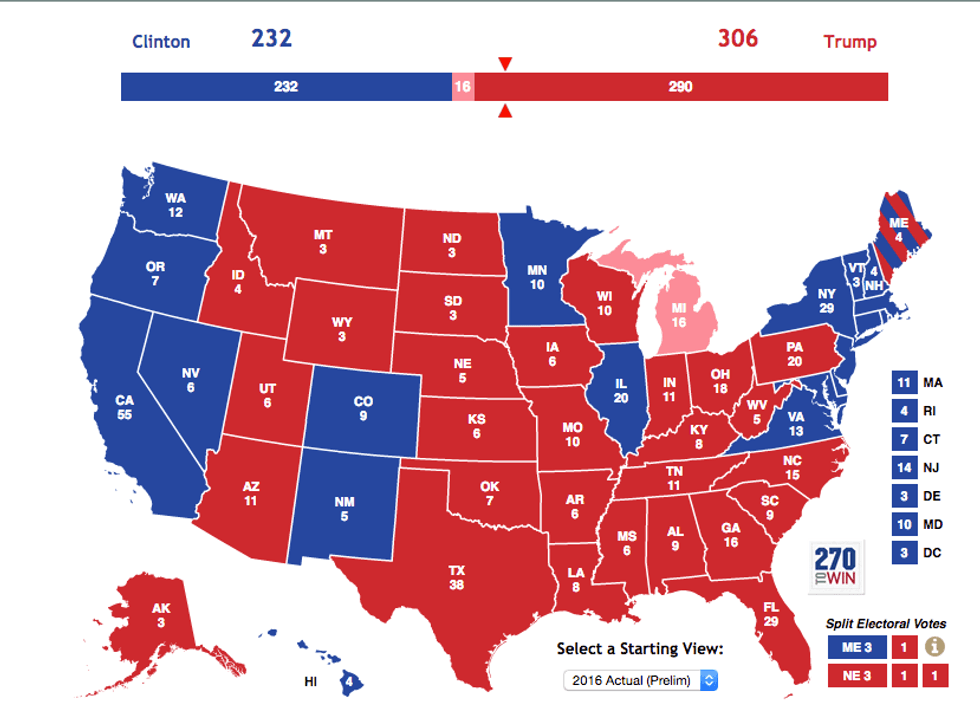
The reason this was originally established was to promote fairness in the election process. The Founding Fathers did not want a president who only had to win a majority of votes in one section or region of the country, they wanted someone who won favor overall. This is why is is possible for a candidate to win the popular vote, but still lose the election.
Many people are not fond of this system as they feel that their vote does not count. The "value" of a vote fluctuates from state to state, so someone who votes in a state with a larger population would have a vote that counts "less" than someone who lives in a state with the enforced minimum number of electoral votes. People also feel that their vote does not count when their state votes for the same party every year.
Faithless electors also play a role in this. The electors are not bound by law to vote with the majority in their state. Meaning they can vote whichever way they want. This has never affected the outcome of an election however, and happens very infrequently. The last time a faithless elector disregarded the voters in their state was in 2004. The person voted for John Edwards, the Democratic vice president instead of John Kerry, the Democratic presidential candidate. At the time many people believed this to be a mistake, later it was determined to be intentional.

As with most government policies, there are flaws and strong points and people who agree and disagree. As our country ages it will be interesting to see how the interpretation of the Constitution changes, or does not.

















