

As a musician studying jazz and metal, I often receive questionable glances from friends as I begin to sing every word of “Blank Space” or “Teenage Dream.” However, pop music is the greatest force in society. These songs are meant to be stuck in your mind and repeated for weeks until a new one replaces it, and although it teaches its listeners the importance of structure, pop music could be improved. Fortunately, there is one force who is beginning to establish a new way of pop music: Carly Rae Jepsen.
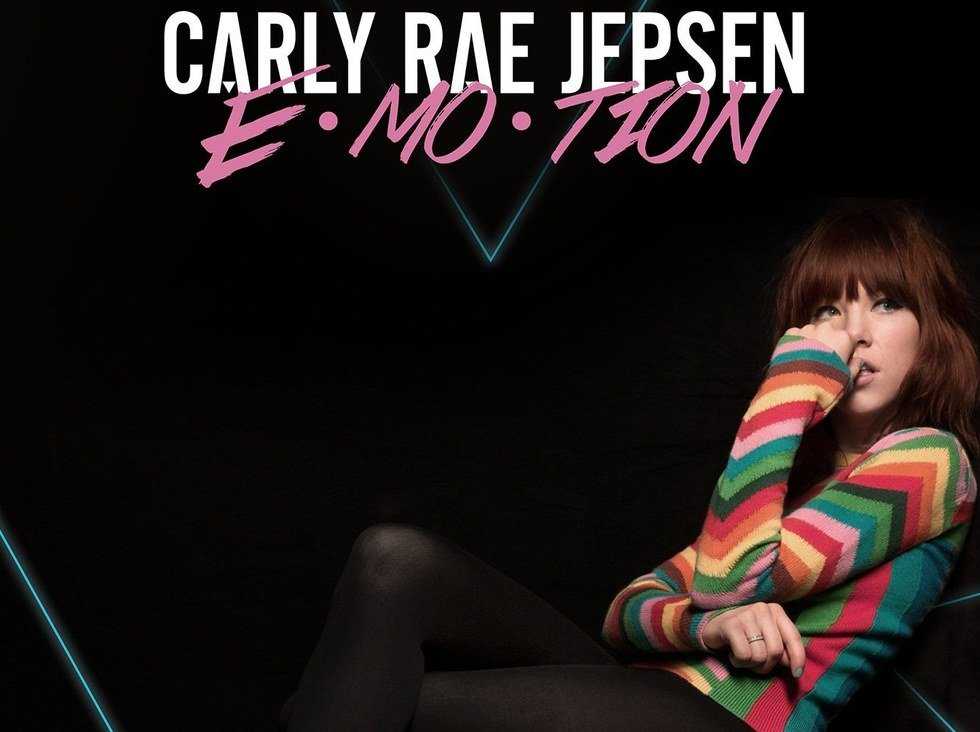
One needs to forsake Taylor Swift’s irresistible "1989" and begin to listen to Jepsen’s "Emotion." “Wait,” one might ask, “that annoying child who sang ‘Call Me, Maybe?’ I’ll pass, thank you.” Before playing the record for the first time, I was of a similar opinion. I had heard the lead single, “I Really Like You,” and appreciated the clear and powerful production but disdained the repetitive chorus. It seemed as though it were a challenge to see how many times she could sing “like.” But, as usual, a week went by and I began singing the chorus while I was walking, cooking, and cleaning. This was enough for me to become interested. The single forced me to listen to the album. And so it began.
The synthesized saxophone motif on “Run Away with Me” immediately enticed my ears, and from the quiet verse to the explosive chorus, I couldn't sit still as my heart jumped with excitement. This was something different. The feeling didn’t go away. “Emotion” followed, and the reminiscent eighties synth powered through as the guitar and drum machine entered to fulfill another climactic chorus that forces one to dance without hesitation. After pondering the success of the opening tracks, I was afraid the album would fade, and I hoped to receive at least another two tracks as good as the ones before. Something better than my wishes came true.The album was pop perfection from beginning to end but, my attention was given to “All That,” a mix of seventies soul and funk with an eighties feel for production and eccentric sounds. It felt as though Marcus Miller came to the studio and used his “pop” technique to add a sensual dimension to an already smooth and intimate landscape, a technique used throughout the album, especially on “Boy Problems.” This mixing of sounds from the seventies and eighties pervades the album, harkening to Daft Punk’s grammy winning “Random Access Memories.”
My favorite track was the penultimate “Warm Blood,” a song one might expect to hear from Blood Orange. The thriving four note bass line, backed by the inverted synth chords, sends a delightful shiver down the spine as I imagined a dance floor flooded with people enjoying the playful, yet cultivated, assortment of noises that keep layering on top of one another. That is what’s special about Jepsen’s album: it is undeniably pop, but each song is well thought and that care is heard through the music. The album was not rushed because Jepsen wrote over a hundred songs before deciding which to record. It is one of a special collection of pop albums in recent years that was made not for the collection of millions of dollars, but for the pleasure of music, a rare occurrence in business history.
Are there problems with the album? Certainly. At times, it feels overproduced, as occurs frequently with pop music. Other critics are expecting too much, however, such as Kevin Ritchie, who claims the album “falters in its lyrical blindness.” Was he expecting the songwriting talent of Joni Mitchell or Elvis Costello? Becoming this successful in the pop world, Jepsen is more than likely prohibited by the record company to put too many literary devices in the lyrics, and her audience is not looking for the next lyrical master.
Nevertheless, Jepsen has been sending mixed messages with her music. "Kiss," although charting higher, lacked the fluidity of "Emotion," but if this most recent album gives her audience a sense of her musical interests, we should be expecting more greatness. "Emotion" is the unsung pop hero because it experiments with an array of genres and sounds others are unwilling to explore. Just as Daft Punk brought disco back to the mainstream, Jepsen appears to be using this opportunity to bring back a pop era in which Prince was king.
We are animals: we thrive on repetition and routine. Let us break this routine by examining the glories of the past, which we mistakenly left behind.
















