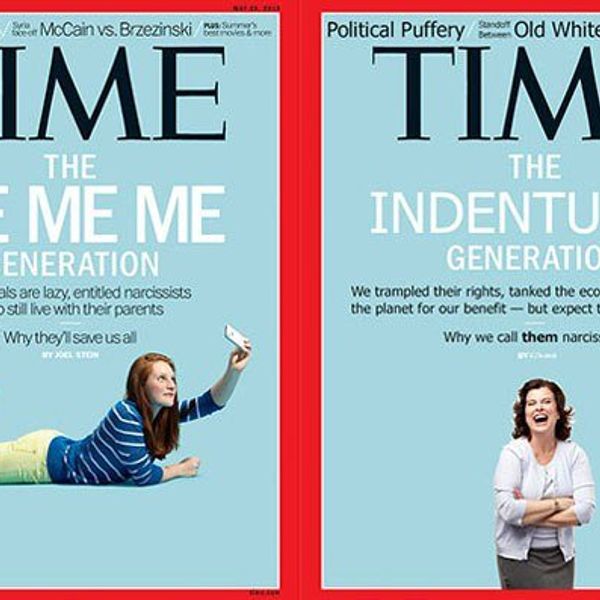

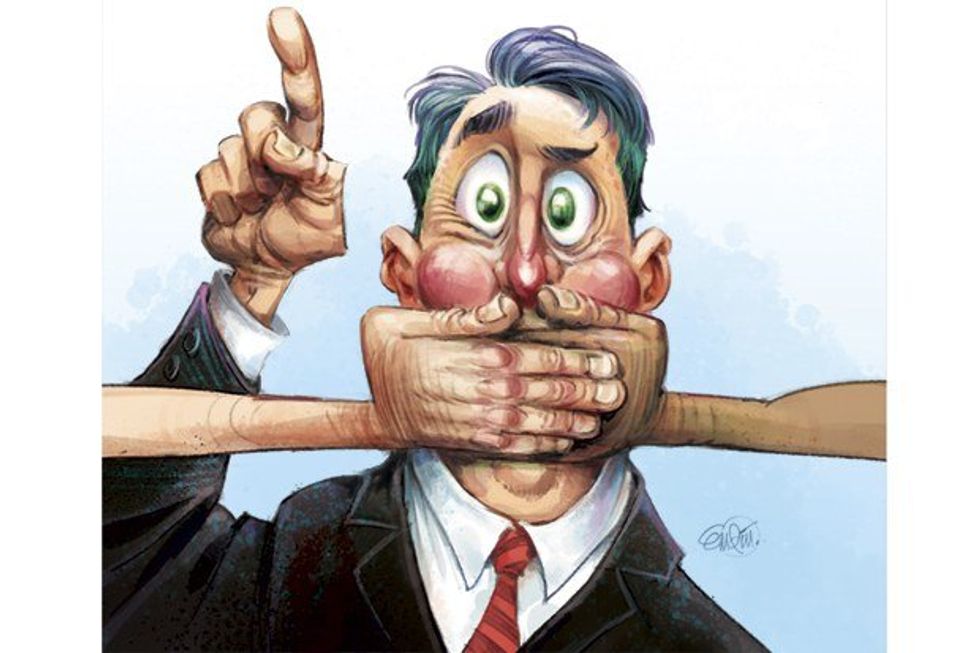
"Politically correct," "micro-aggression," and "privilege check" seem to be buzzwords on college campuses lately. In fact, they have become so pervasive that most people are becoming sick of hearing them. The term politically correct, abbreviated by many as "PC," is used to refer to language and behavior that is censored and sensitive so as not to be offensive to a group of people, usually a marginalized group. Students seem to be growing increasingly frustrated by this term, because they feel it is too restrictive and makes it difficult to speak one's mind without fear of saying something that is politically incorrect. While the movement makes sense in regards to preventing comments and actions that are racist, sexist, homophobic, etc., it is not working in the way it is supposed to.
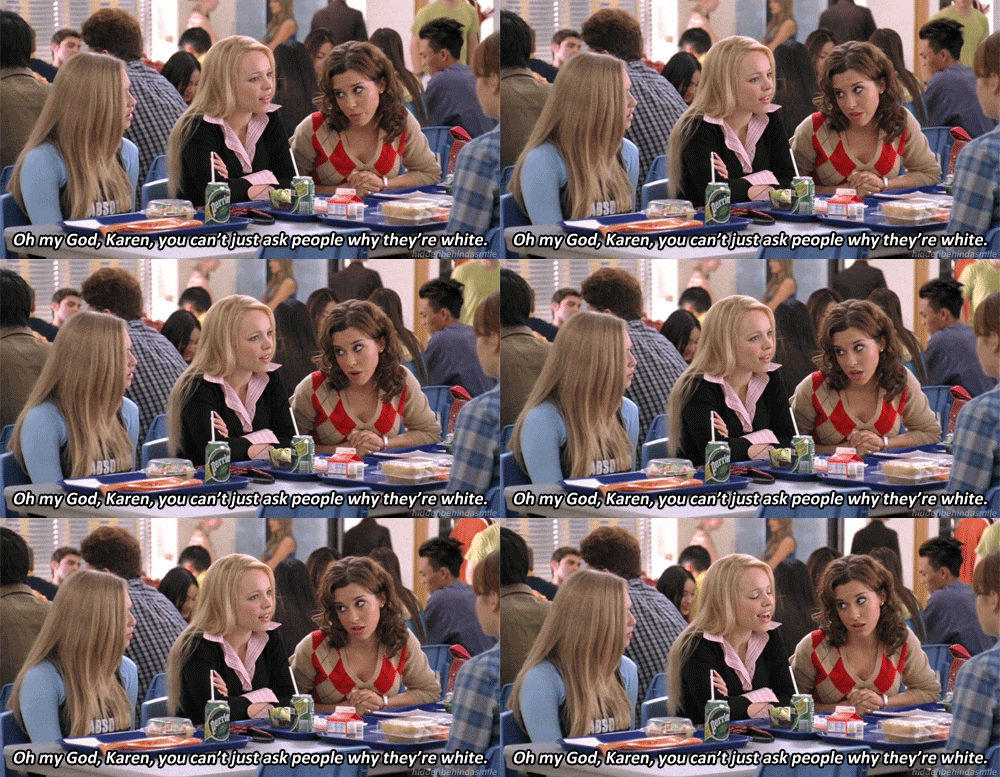
Political correctness has become a joke among many. People are tired of being told to be PC, so they have begun to disregard anything related to censoring themselves. They'll jokingly call their friend out on something they say, tease about how they feel personally attacked, and roll their eyes at people whom they deem to be "social justice warriors." This is problematic because people are beginning to use it as an excuse to behave in offensive ways and completely disregard anything related to privilege or marginalization. If a gender fluid person were to bring up an issue about their pronoun usage, for example, it is likely that people would try to disregard them and brush off their point because it is "too PC" and they do not want to hear about it. However, that is not an issue of political correctness. That's a matter of respecting the identity of another person, something that we actually should be doing.
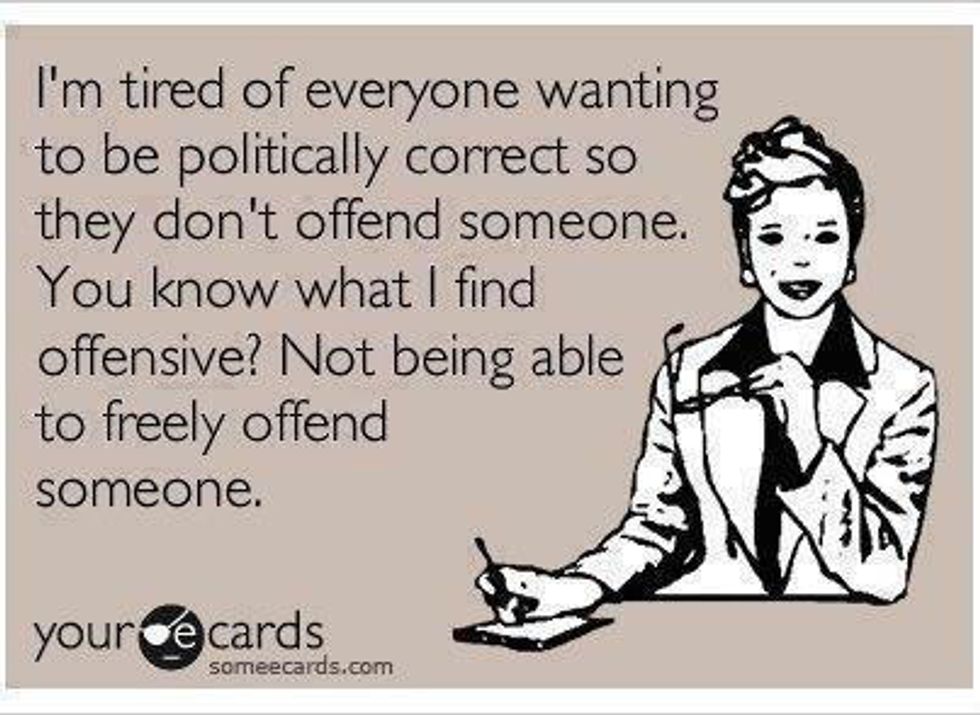
The other issue with trying to create a perfectly politically correct world is that you can never fully censor everything. You can't put a trigger warning on life. Bad things are going to happen, people are going to say offensive things, and there is no way you can be fully sheltered from it. Rather than trying to put one big politically correct blanket over every single issue, we should instead work towards tackling discrimination issues at their sources. It shouldn't be a matter of avoiding hurting people's feelings with little "micro-aggressions." It should be about combating systematic oppression in broader contexts. Though language does matter, and words can be damaging, it is not the most harmful form of discrimination, so it should not be the main thing we focus on.
This is not to say that we should just be able to say whatever to whomever we please. Choosing to not take the PC approach does not give you a free pass to make whatever prejudiced comments come to your mind. Instead, simply be a respectful and compassionate person. Consider who you are speaking to at any given time. Is what you are about to say going to be disrespectful or discriminatory to one of those people? Are you close enough friends that they will know you are joking and not be offended by it? Is it a necessary thing to say for the sake of argument, or in order to get your point across? If you ask yourselves all these questions and are content with your answers, then it's probably okay to say it. Just keep in mind that someone may disagree with you, and you should respect their opinion. And if someone tells you that something you said is offensive to them, then don't say it around them anymore! It's not about being politically correct, it's about not being an a**hole.