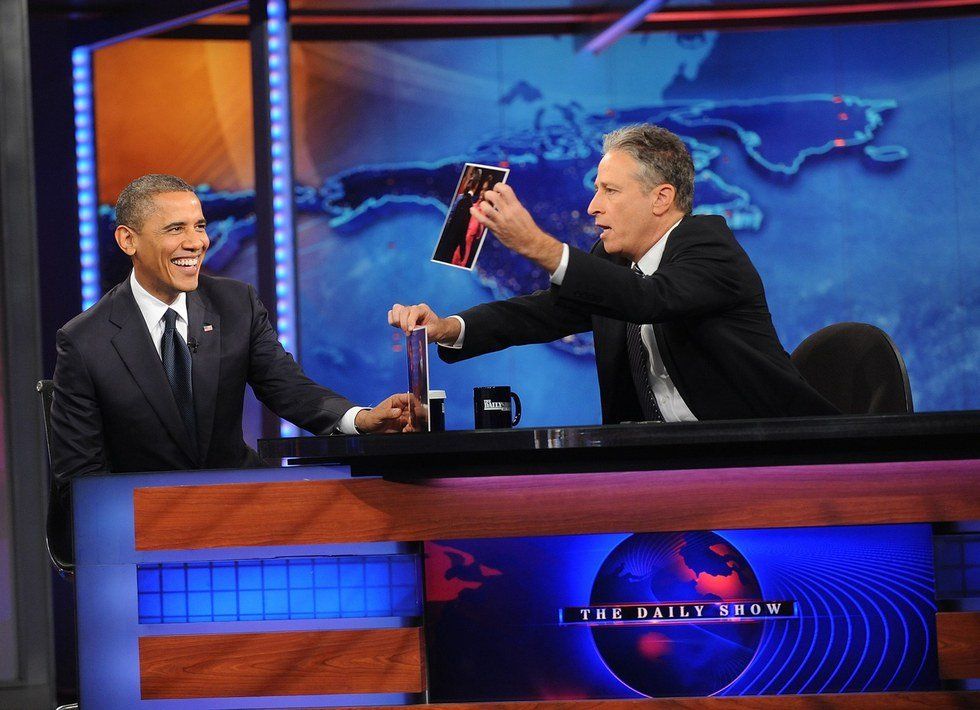
Almost everybody in America is familiar with political, satirical TV shows that poke fun at current politics. Jon Stewart and his famous "Daily Show" on Comedy Central popularized political satire. "The Daily Show" would later influence other political satire shows such as "The Colbert Report," "Last Week Tonight with John Oliver," "Real Time with Bill Maher" and many foreign television shows. Many people tune into these television shows to inform themselves of political events that are not normally mentioned in your basic news outlets and to learn a possibly different perspective to a pressing issue in today’s society.
The power and influence of political satire shows is much greater than most people would originally think. "Last Week Tonight with John Oliver" consistently has an average viewership of a million people each week. "Last Week Tonight with John Oliver" is just one of the many growing political satire shows in America that have consistently high numbers and ratings. Essentially, a fair number of people are influenced by these political satire shows that offer perspective on current issues.
With contributing perspectives, these shows bear social responsibility for how they deliver and present their analyses of a situation. Most take a progressive stance on society and attempt to listen to both right- and left-wing opinions for the sake of delivering facts. It is contradictory to many popular news sources, which tend to appease to either right or left-wingers in America. For instance, CNN is most notably a left-wing news source, as Fox News is known for being right-wing.
With the ability of the TV show, "Al-Bernameg" hosted by Bassem Youssef was immensely popular in Egypt. The trouble was that "Al-Bernameg" was airing during a fragile time in Egyptian history. Egypt was, and still is, experiencing a backlash from the Arab Spring of 2011, particularly among political parties and changing regimes. Bassem Youssef was very critical of these political parties and the changing regimes on his show. On the television show, Youssef would particularly make fun of the president and his actions. This resulted in the government responding by shutting down Youssef’s show under the Morsi government for fear of another uprising against the president of Egypt at the time. "Al-Bernameg" did return briefly after the military coup in Egypt. But even after that, Youssef decided to cancel the show due to pressure from various groups.
We may view political satire shows as comedic intrigue, but their impact is much greater than that. With reaching out to a large audience not only here in the States but across the world thanks to the Internet, these political satire shows have the ability to shape and influence public opinion while providing a platform for political exploration. In the case of Egypt and "Al-Bernameg," the case is clear. The government was afraid of that particular political satire show influencing another revolution and disrupting the far right political regime. Political satire shows should not be suppressed as they provide another voice on a large scale in order to add to the foundation of informing the public with less bias than typical media outlets.