Pockets are simple.
An everyday presence in the modern world, it isn’t really a subject most people give much thought to.
Now, you may be asking, “Why should they? There’s nothing interesting about pockets, it’s arguably one of the most basic and insignificant inventions that humankind has ever created!” and indeed; their purpose is pragmatic, but their significance and history in relation to the development of gender equality in the 20th century is surprisingly vast, and goes mostly unnoticed and under appreciated by the modern American.
First, some historical context, ancient people used leather or cloth pouches to hold food, weapons and valuable possessions. Particularly in European clothing, pockets grew in popularity in the 13th century, when these outside pouches were later connected to clothing via a belt or incorporated into the production of the clothing itself as opposed to the handheld pouch. While both men and women carried the external model of the pocket - the internal model became much more prevalent in men’s clothing and as time went on and the external model evolved into the modern “female” equivalent- the pocketbook. Now you may ask “Why is it that this inconsistency developed in the way men and women carry their possessions? Why didn’t men and women both just use the internal pocket, or both just carry pocketbooks?” you also might be asking, “What does this have to do with gender equality?” and, “Why do I care?” Well get ready to dive deeper into to the origins of the clothes in your closet than you ever have before!
To answer the first question, this inconsistency developed due to old-fashioned concept of gender roles in society. Modern pockets and pocketbooks developed in time along with the ideas of a traditional familial structure, where men went out to work and provide for a family and women mainly tended to the household and were wrongfully not encouraged to pursue careers of their own. This idea led to the practicality of this traditional man being unable to carry the inconvenience of a pocketbook while working, and the idea that women didn’t need pockets as much essentially because they were not as preoccupied or needed for physical labor that required a hands-free method of holding their belongings. This was also supported by the thought that women needed the extra space due to the demeaning idea that they were expected by society to carry cosmetics with them at all times to conform to beauty expectations, whether they enjoyed wearing makeup or not.
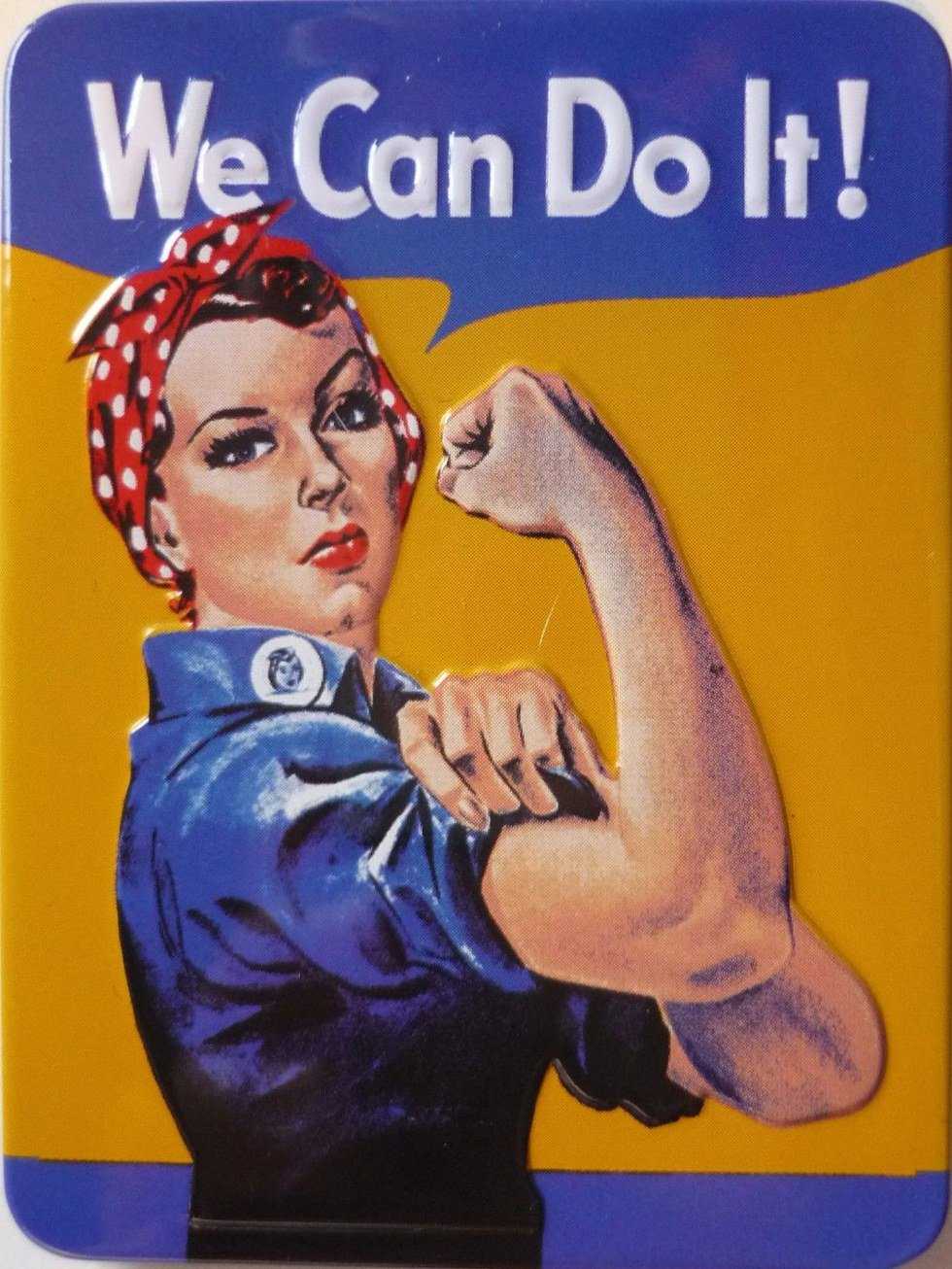
Now don’t get me wrong- there’s nothing at all wrong with carrying pocketbooks. I myself own more than I can count, both because they do indeed typically hold more than pockets do and because it is sometimes difficult to find functional pockets in women’s clothing that aren’t just for show. Despite my modern “struggle” with women’s pocketless jeans, this is actually an area in which there has been much change in the 20th century when women’s rights issues came to a head as a political, social and economic priority. Since women got the right to vote in 19__, the movement for gender equality gained significantly more traction in the aftermath of WWI and on the dawning of WWII, when women became the powerhouses of the workforce while the men who traditionally would’ve held such jobs were away at war. Now that women were working and equitably holding the same positions men often occupied (yay!), it became essential that they also began using the same practical pocket that men necessitated earlier as opposed to being burdened by the weight of an external purse. Voila! Surely enough, this is when pockets rose in popularity and became commonplace in women’s clothing- a symbol of progress on the front of equal rights and opportunities for women everywhere!
So ladies, revel in your sweatshirts, jeans, pocketed skirts and know that whether you prefer them to the handbag or not that your options in the matter are a subtle and unrelenting emblem of us women overcoming obstacles and striving for equality in the workplace. Not to say that our job is done- as I’m sure all you ladies have experienced the inconvenience of buying a new article of clothing only to find that the faux pockets are just for show, there are still many obstacles to equality for women all around the world, specifically in countries outside of the United States. According to the 2012 EFA Global Monitoring Report; UNESCO Institute for Statistics database , almost a quarter of young women aged 15-24 today (116 million) in developing countries never had the opportunity to complete primary school. In Nigeria there are almost five and a half million girls out of school, in Pakistan, over three million, and in Ethiopia, over one million girls being denied an education and therefore also being denied jobs and opportunities for their future. We in the 21st century, can certainly do better than that! Let us continue to fight for the education of young women all across the globe- creating opportunities and pockets for all!