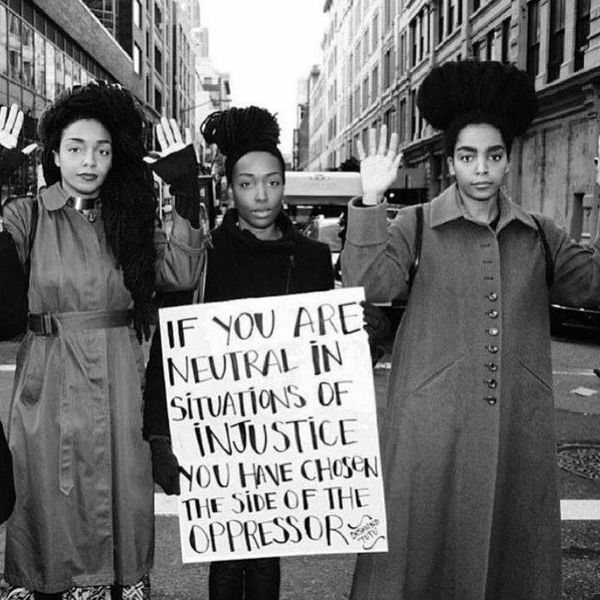
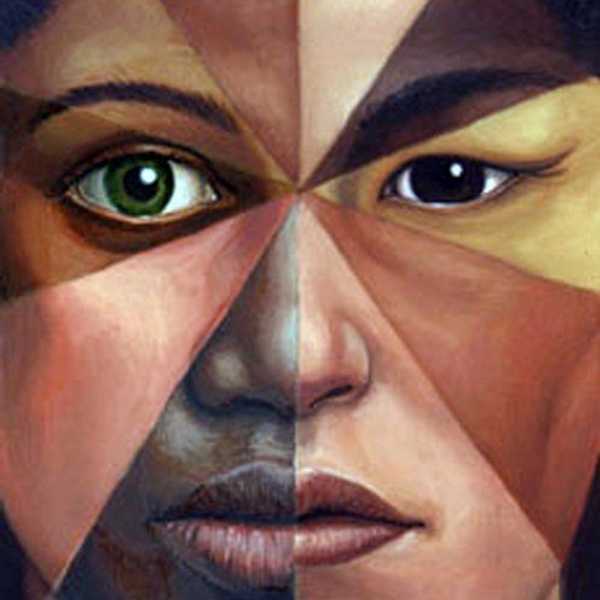

Diversity on college campuses is hard to come by. There aren't many campuses where you will see (without looking) a large group of students of different races. It's obvious that many college campuses are heavily populated with white students. Students not of that race have many experiences that lead me to ask this question specifically; What does it mean then to be a Person of Color (POC) on a less diversified campus?
The University of Illinois is a large university with a total population of 44,880 students (2016). Of that population, 5.16 percent is African American, 8.78 percent is Hispanic/Latino, 2.62 percent Multiracial, and 14.78 percent Asian. I had the pleasure of interviewing Alondra Pulido, a student from the University of Illinois-Urbana Champagne about her experience on campus. Alondra is a POC first year, who is very driven and ambitious. When talking about her experiences, she mentioned that there are many times she is often the only Mexican in her class. This does not make her feel isolated or comfortable, but instead empowered. Alondra takes pride in representing her race in which she said, "I'm one of those numbers." She recognizes she is a statistic on her campus, coming from a public high school on the southwest side of Chicago. She is expected not to graduate, or take longer to graduate. However, Alondra is very proud to be one of those number and will work hard to graduate in order to set an example for people like herself. Overall, Alondra feels she can easily get along with people of other races on campus and loves the friendly environment she is in.
St. Olaf is a small liberal arts college with a total population of 3,046 students (2015-2016). Of that population, 2 percent is African American, 5.15 percent is Hispanic/Latino, 3.5 percent is Multiracial, and 6.23 percent is Asian. I also had the pleasure of interviewing the intelligent Stephanie Ramos, a junior from St. Olaf College about her experience on campus as a POC. When I asked Stephanie about her experience, she first began to describe the classroom setting. She mentioned how the professors in her classes never assumed she would share her personal experiences/perspective whenever race was a topic. When discussing her peers, though, she has interesting things to say about the classroom and outside of it. Stephanie described the way in which sometimes her classmates would turn to her when topics of race arose. She also mentioned how she is (like Alondra), sometimes the only one/few POC in the classroom.
Unlike Alondra, Stephanie feels being the only one/few POC in a classroom makes it harder to interact. Socially, outside if the classroom is also hard for Stephanie. She finds it difficult to make friends outside of the POC group because they tend to make assumptions/generalizations about her identity. Stephanie feels she has to "convince people to get want to get to know [her]." It is much easier for her to make friends with other POC's because they seem to want to get to know her more as an individual, and less of a generalized ideal of who she is. Because of this, Stephanie makes sure that she invest in relationships with people who genuinely want to get to know her as an individual and with whom make her comfortable.
There is a noticeable similarity between U of I and St. Olaf College in which the percentage of POC students is significantly low. There are a lot of differences between these two colleges as well. One is a public, state school, while the other is a private, liberal arts school. Most importantly, there is a difference in the way these two students feel on campus as people of color. What exactly does it mean to be a person of color on a campus where the percentage of these people is extremely low?
There is no definite meaning. The experience is what you make of it. As people of color, we must be proud of who we are like Alondra, and take the time to develop relationships with people who genuinely want to know who we are individually like Stephanie. Both of these students has made their experience best for them, regardless of what issues may or may not stand in their way. As people of color, we must not be afraid to take risks and try new things. We must inspire others by being who we are on these campuses with a lower percentage of POC in hopes to increase it. We are an example for other people of color out there wanting to attend college. It is up to us to believe we can do anything, be anything, and achieve anything.