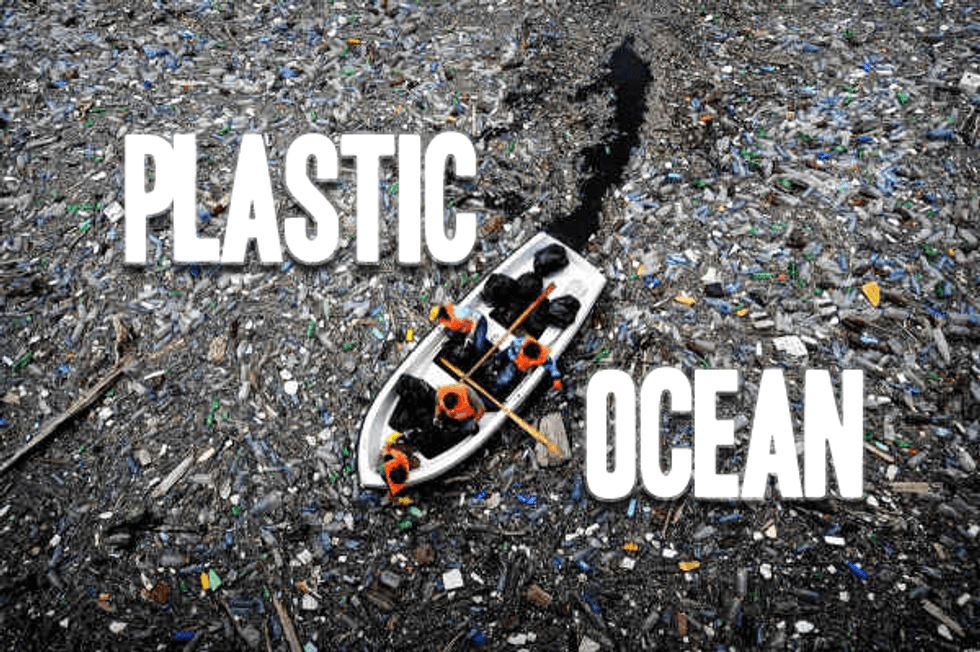
I recently watched the documentary "Plastic Paradise: The Great Pacific Garbage Patch," and I was shocked. If you get a chance I highly recommend watching it, as it will open your eyes to the toxins polluting oceans, wildlife and our own bodies.
National Geographic describes The Great Pacific Garbage Patch (Midway) as "...a collection of marine debris in the North Pacific Ocean. The Great Pacific Garbage Patch, also known as the Pacific trash vortex, spans waters from the West Coast of North America to Japan. The patch is actually comprised of the Western Garbage Patch, located near Japan, and the Eastern Garbage Patch, located between the U.S. states of Hawaii and California."
The majority of the debris found in the Garbage Patch is plastic. Despite the little green leaf on most plastic products suggesting that the products are eco-friendly and recyclable, only 6.5 percent of plastic material is actually recycled. The rest is sent to landfills and eventually finds permanent residence in garbage patches in the ocean or the bellies of birds and other wildlife. The journalist in the documentary finds plastic on the island from the 1960s, fully intact with little wear or tear. Plastic is nearly indestructible.
North America's number one export is plastic waste to China.
Our society's incredible consumption of plastic bags is leaving a tragic mark on our oceans and — shockingly — our health as well.
"Everyday we add estrogen-like chemicals to our body through plastics," according to "Plastic Paradise." These chemicals have already affected our health; breast budding and menstruation have started to affect girls earlier and earlier.
"Without your permission you are being polluted. Is that okay with you?" asks one of the interviewed researchers in "Plastic Paradise."
My response is: absolutely not! Large plastic production corporations get away with not disclosing the harmful effects of their products because most people simply do not know about them. In the best interest for our health and our planet, we need to educate ourselves and look beyond the green leaf on our water bottles.
I encourage everyone to watch this documentary. It will certainly change the way you think about plastic, and you might choose paper over plastic at the grocery store next time.