Within the past couple of years, we’ve seen the resurgence of feminism within pop culture. So much so that it has become not only a dirty word, but the term “feminist” has become almost like an insult against anybody looking for a positive discussion on equality among genders. A lot of these discussions have popped up with the rise of geek culture taking the spotlight in mainstream media. The question is “if video games, comic books and all things ‘geek’ are now for everyone, why aren’t women getting equal representation or recognition?” Throw that question, or anything like it, anywhere on the internet and your bound to get backlash and hate from people who don’t understand what civilized discussion means. So, that’s exactly what I’m going to do this week. Let’s take a swing at the reinforcement of gender roles in children’s toys and see what comes out of the wasp nest.
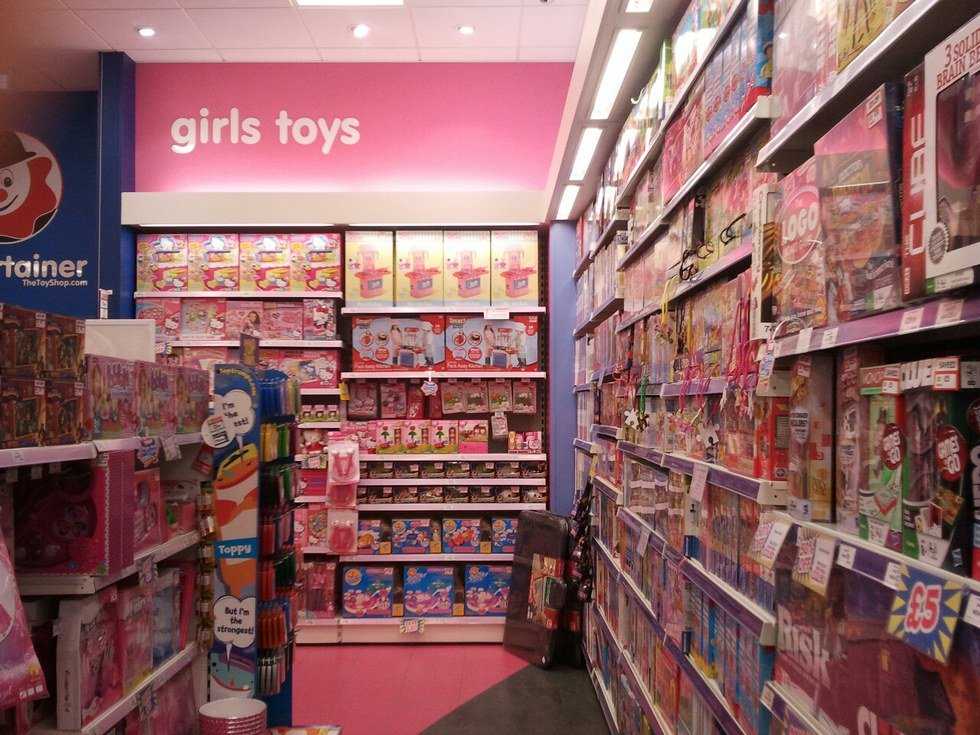
For starters, let's take a look at Pinkification. Go to any toy store or Target and you’ll immediately understand what Pinkification is. Notice the separation from the boy toys and the girl toys. Spend some time in the “boy section” and you’ll notice a large variety action figures, Lego sets, brain games, and nerf guns all ranging in different colors sizes and varieties. You might see where I’m going with this, but go peek over at the “girl section” and notice the stark contrast in what I just described. If a company like Nerf or Huffy does decide to make a gun or bike for a girl, you can bet it’s going to be pink and sparkly. If you’re a boy, you’re getting the military grade automatic nerf gun with camo print and a scope, while the girls get a little pink bow and arrow that would have seen Katniss dead in the first three pages of "The Hunger Games."

It’s not just with the toys, either. Pinkification has found its way into candy and shirts. Remember those horrible “it’s just for men” Dr. Pepper 10 commercials, suggesting that not only was counting calories a girly thing to do, but now guys are going to do it and their way is too intense for them. Or in a day where superheroes take the main stage, most of the shirts for woman are either of guy heroes or say things like “Training to be Batman’s Wife.”

And it's not like there is a shortage of female Super Heroes to pull from. Supergirl, Wonder Woman, She Hulk, Black Canary, Captain Marvel, Batgirl, Black Widow, and I can keep going. Speaking of Black Widow, there is another problem that doesn't exactly fall in line with Pinkification but is probably an underlying cause; at the very least they are related.
Scarlett Johansson’s Black Widow has been praised for her presence in the Avengers movies, and the films themselves have grown to become a worldwide phenomenon targeting millions of people of any age and gender (10 bucks says your mom is equally as excited for "Civil War" as you are). Yet after making appearances in four movies (with a fifth due out in May), she has yet to have a toy made for her young female fans. She is the only female representation of the Avengers and the only one without a solo film or toy. The reason, well, "girls don't buy toys!"
This was the response Emmy Award-winning writer Paul Dini got from an actual toy executive when the toy line for his Cartoon Network show "Tower Prep" got canned after girls and their parents started watching over young boys. But that logic is a self-fulfilling prophecy. Girls aren't buying the toys because you aren't giving them the toys they want or you're throwing a half-assed version with sparkles on it and then wondering why it failed.
When people have to fight to get a toy made for the lead protagonist in the highest grossing movie of all time because she's a girl, you have a problem. You have a business filled with people who aren't confident enough to sell a brand outside of arbitrarily assigning gender roles to their product. If a girl wants to run around and shoot people with Nerf guns or play superheroes, let her; hell, if a boy wants to spend his day pretending to cook with an E-Z bake oven, let him. It's that simple.