This past week, I was reading an essay about the Pharisees.
(We'll come back to that in a moment...)
Now, I run in primarily Protestant circles, and for those of you who haven't floated within those circles, Protestants and Catholics haven't, historically, been the best of friends. Protestants (the kind of Christianity most commonly associated with evangelicalism and the kind probably most accessible to many of you in the United States) are called "protestants" because they've been protesting Rome for a little over 500 years.
It's a shameful division, in my personal opinion, in the body of Christ, and this past week I read an essay comparing the Catholics to the Pharisees, Jesus' historical opponents. The Catholic Church is a common whipping boy among Protestants on that front: The Pharisees were famed for their love of tradition (Matt. 15:3-9), their reverence of their forefathers (Mark 7:5), and their rituals which seemed of no immediate relevance to the spiritual journey (Mark 7), and to many Protestants, the Catholic Church is but a continuation of the Pharisaical worship of tradition that our God was so critical of in the New Testament.
Now, I'm not here to say anything about that point, beyond that I strongly disagree. For a full apologetic about all that the Catholic Church has done well, from Protestant lips, and the intense need of reconciliation between the major branches of Western Christianity, come talk to me privately. What I want to talk about is the subject of that subject-predicate pair: the Pharisees, these ancient enemies of old, the Christian equivalent of calling someone "Hitler" in politics.
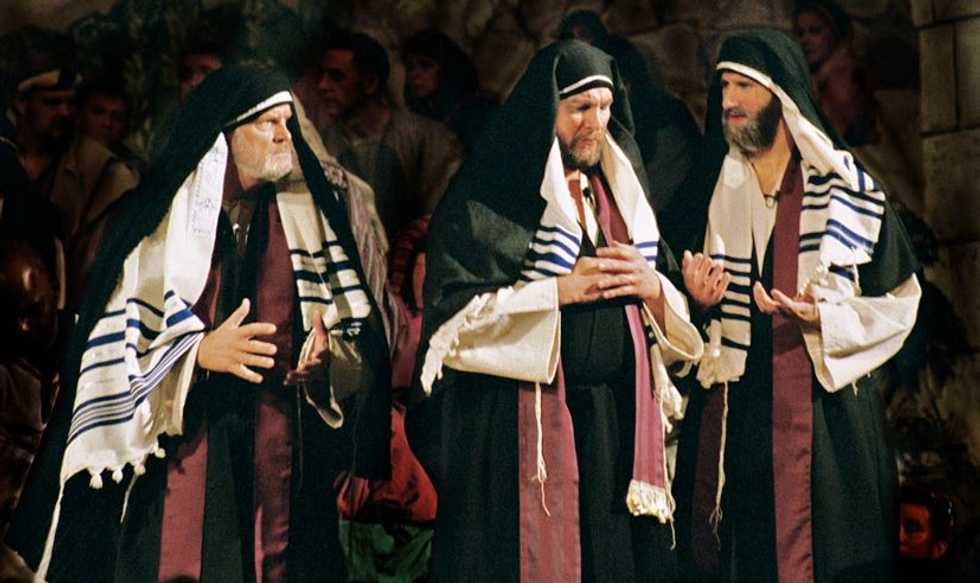
The Pharisees, a religious sect from Second Temple-era Judaism, were religious leadership within the Jewish community, probably the majority party at the time of Christ's advent. They were, it is true, very dependent on their traditions. They were also Christ's major opponent throughout the gospel narratives. Despite much of our common theology, our God didn't, in his earthly ministry, focus on fighting Satan, or the sin of his culture, or even demons, despite the many exorcisms. He fought the religious leaders who's hypocrisy and greed had tainted the name of God.
In Matthew 23, Matthew records our Christ's greatest diatribe against the religious elite, the ones who knew the Bible and failed to live it out, the ones who loved their religious culture even when the word of God commanded more than it could ever deliver.
Here are the seven woes:
"The scribes and the Pharisees sit on Moses' seat, so do and observe whatever they tell you, but not the works they do. For they preach, but do not practice." - Matthew 23:2-3
"But woe to you, scribes and Pharisees, hypocrites! For you shut the kingdom of heaven in people's faces. For you neither enter yourself nor allow those who would enter to go in." - v.13
"Woe to you, scribes and Pharisees, hypocrites! For you travel across sea and land to make a single proselyte, and when he becomes a proselyte you make him twice as much a child of hell as yourselves." - v.15
"Woe to you, blind guides, who say, (paraphrased: the gold is greater than the temple.)" - v.16-22
"Woe to you, scribes and Pharisees, hypocrites! For you tithe mint and dill and cumin, and have neglected the weightier matters of the law: justice and mercy and faithfulness. These you ought to have done without neglecting the others." - v.23
"Woe to you, scribes and Pharisees, hypocrites! For you clean the outside of the cup and the plate, but inside they are full of greed and self-indulgence." - v.25
"Woe to you, scribes and Pharisees, hypocrites! For you are like whitewashed tombs, which outwardly appear beautiful, but within are full of dead people's bones and all uncleanness. So you also outwardly appear righteous to others, but within you are full of hypocrisy and lawlessness." - v.27-28
"Woe to you, scribes and Pharisees, hypocrites! For you build the tombs of the prophets and decorate the monuments of the righteous... Thus you witness against yourselves that you are the sons of those who murdered the prophets. Fill up, then, the measure of your fathers. You serpents, you brood of vipers, how are you to escape being sentenced to hell? Therefore I send you prophets and wise men and scribes, some of whom you will kill and crucify, and some you will flog in your synagogues and persecute from town to town, so that on you may come all the righteous blood shed on earth, from the blood of righteous Abel to the blood of Zechariah the son of Barachiah, whom you murdered between the sanctuary and the altar." - v.29, 30b-25
I don't know about you, but those verses scare me. They're harsh. They're the exact kind of hellfire and brimstone teaching that has given Christianity such a bad reputation, but it's not directed at the homosexuals, the liberals, the abortion doctors or the Satanists. Catholics aren't the ones receiving the diatribe, nor are the lazy welfare recipients. None of our normal whipping boys receive this whipping - it lands on our shoulders. This whip is run across our back, and the wound it leaves festers with our unwillingness to listen or to change.
The Pharisees are not meant, in our readings of the Scriptures, to be a place we look for fodder to criticize our opponents. They are the antithesis of Jesus - where He is the model to follow, they are the model to avoid. The witness of the world against us speaks to our unwillingness to beware their leaven. Remember these words, oh Church, as we continue to see God's kingdom built - Woe to you who are hypocrites, who try to keep people out of the kingdom of Heaven, who travel halfway across the world to make a proselyte like themselves, who see the outward appearance and not the heart, and who value the outward appearance, and not the heart. Woe to you who focus on seven or eight verses and miss the narrative, and who side with violence and oppression against those preaching that God's kingdom has come, that the idols of our culture must be thrown down, that the poor are in need of assistance and that there is a greater call than what we have yet attained.
Woe to us. Because, you see, none of those criticisms apply to anyone as much as to me, nor to anyone as much as they do you, reader. They're meant for your ears, your eyes, your heart. Woe to us - for I am the Pharisee, and it is only by rejecting this leaven with all the zeal that we have, in the past, rejected each other and the people most in need of our grace and compassion, that we will ever be free.
So always remember: The Pharisee is me.