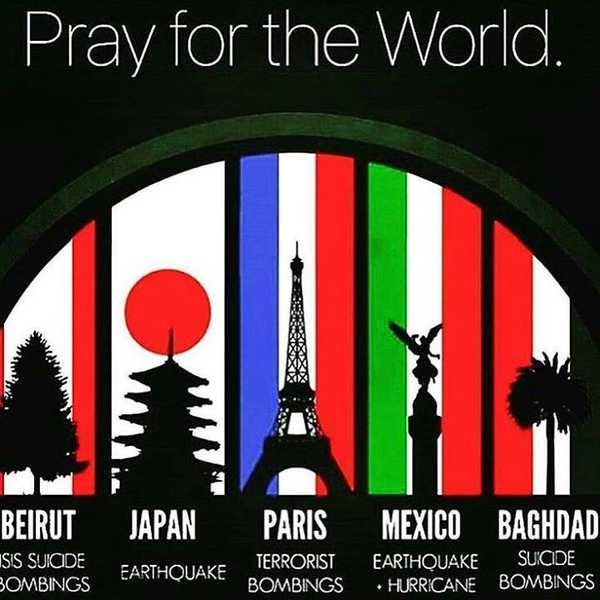
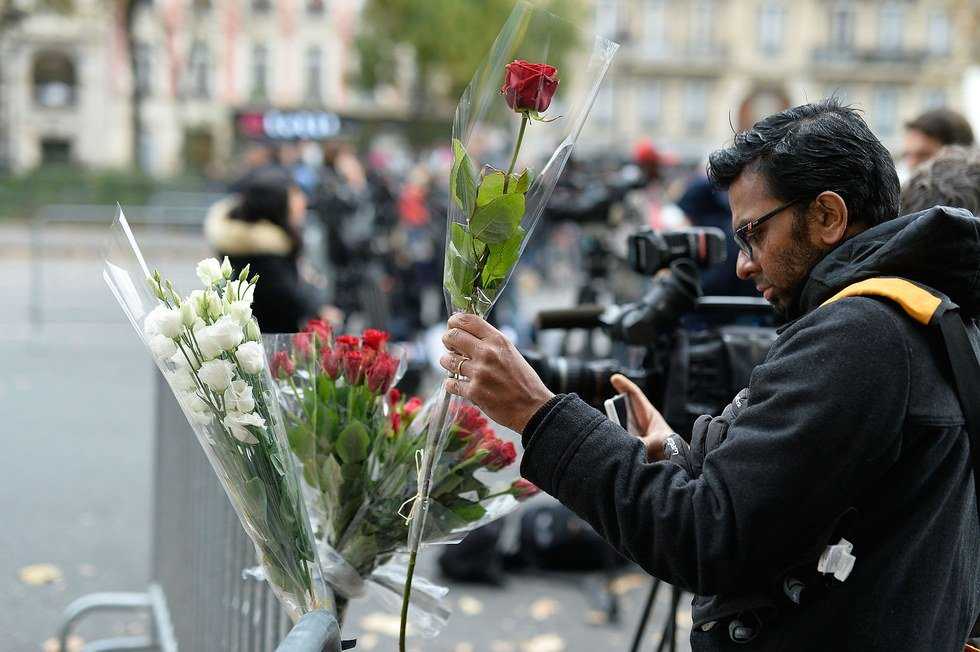
On Friday November 13th, 2015, Paris, France faced a tragedy on a magnitude not seen since World War II. Eight terrorists, using bombs and guns, attacked the Stade de France, the Bataclan theatre, and two restaurants, killing at least 129 people and injuring many more. Paris, France and the rest of the world are shocked that such a catastrophic terrorist attack could happen post-9/11. These tragic events that not only took innocent lives but also shook the world are unimaginable and very difficult to take in. And while it may seem that the attacks in Paris were devastating, it somehow gets worse from there.
Just the day before in Beirut, the capitol of Lebanon, two suicide bombers targeted a busy shopping area, killing 43 and injuring upwards to 200 people. And on the same day as Paris, an ISIS suicide bomber in Baghdad targeted the funeral of a Shiite Iraqi Kurdish soldier, who had been fighting against ISIS in Iraq. The attack killed 26 people with more injured. While neither of these tragedies initially garnered the international and social media support Paris did, both of these showed how tragedy can strike quickly and the dynamics of terrorism in the Middle East.
The Beirut bombings took place near a popular commercial center in Beirut, meaning that causalities would be high. However, due to Adel Termos, an innocent bystander shopping with his daughter, many more lives that could have been lost were not, as he tackled the second suicide bomber, sacrificing himself so that others would not perish. While in Baghdad, the bombings came after the seizing of a city held by ISIS which Iraqi Kurdish forces, with aid from American airstrikes, took back. While these are important facts to know about each of their respective attacks, they also shed light on the battle for power going on. Both of these instances show the struggle between the radical ISIS and the moderates of the Middle East.
While Paris and other Western countries are no stranger to ISIS attacks, the majority of ISIS killings are directed toward other Middle Eastern Nations. And while some have already started to blame the influx of Syrian refugees for the Paris attacks, simply looking into the conflict will show that this is highly unlikely. ISIS is a radical organization that claims to be guided by Islam, despite the Quran and most Muslims condoning terrorism. ISIS persecutes Christians, Muslims and others alike in the Middle East who do not believe in their twisted views; this has led to the prominent emigration of millions of Syrians who do not want to be under the influence of ISIS. So while it may seem easy to argue that Syrians and moderate Muslims could be responsible for these terror attacks, know that ISIS in no way represents the majority of the followers of Islam.
This article is not meant in any way to detract from the tragedies of Paris, in fact, this article should help relate the Middle Eastern conflicts to the Western world. After the initial shock of the Paris attacks, many people have started reporting and sharing about Beirut and Baghdad through the spread of news and even their own hashtags. And while there has been some prominent Islamophobic, it seems that there is now more support growing for the countries and people who have been fighting against ISIS for quite a while now. The leaders and people of the world must now unite, regardless of religion or race, in order to face a new threat to freedom and peace. As the worlds enters this sad time in history, it is important to continue to help and pray for Paris, Beirut and Baghdad.