

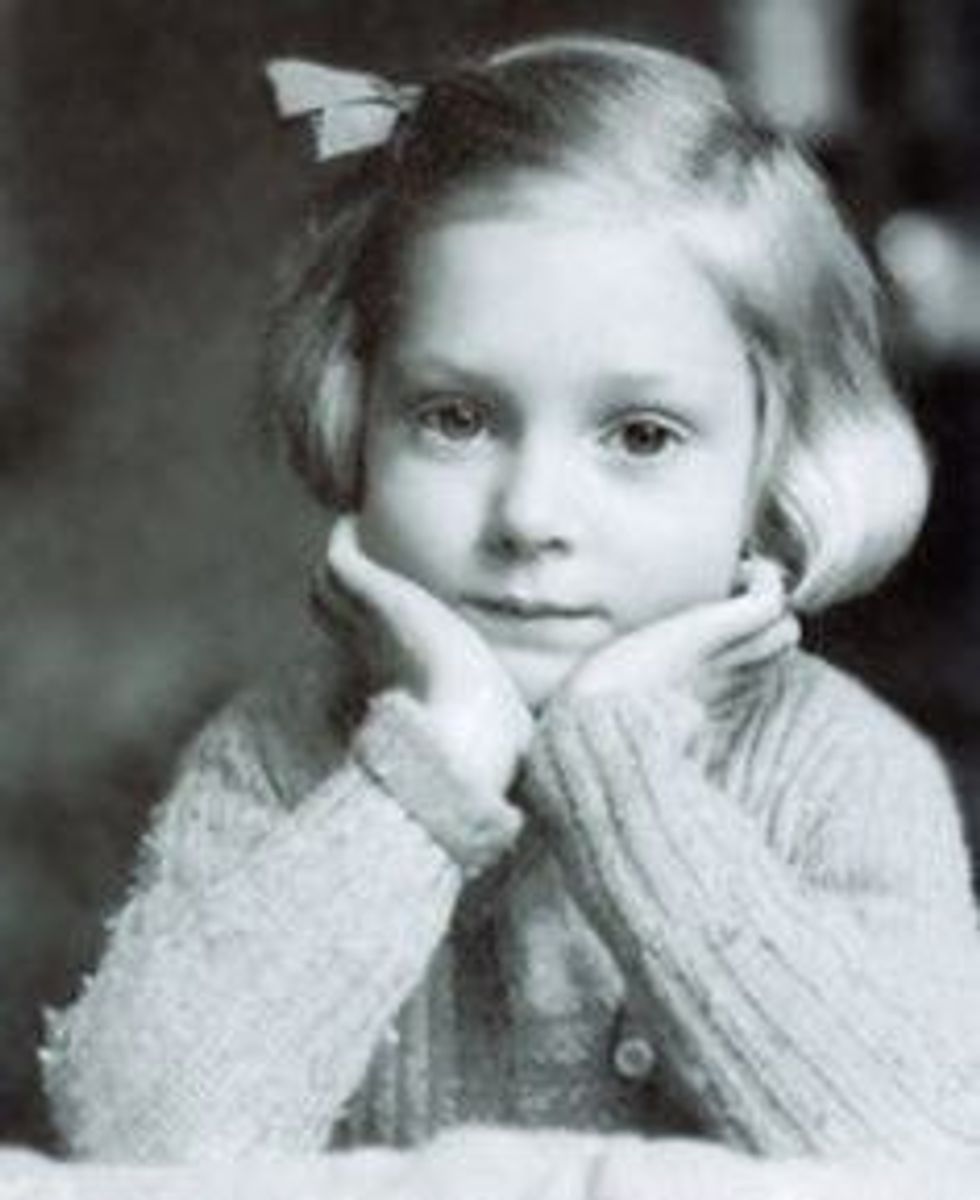
Last Saturday, I sat surrounded by Canadian bigwigs in the sold-out McPhearson Playhouse in Victoria, British Columbia, Canada. A member of Canadian parliament sat directly behind me. Her purse bumped my hat when she stood up to applaud Jane Goodall: the main attraction. In her speech, Jane set the scene for her childhood: 1934, England. It became home to thousands of newborn babies who were destined to endure the hardships of WWI from beneath their father’s oversize, hand-me-down Yorkshire caps. Civilian hardships forced households to shift roles as husbands went to fight and women stayed behind in factories. Working condition regulations were relaxed, and hours were lengthened. Poverty uprooted some and trapped others. It was this year that Jane Goodall was born to Mort and Margaret Goodall, and a series of rather fortunate events began to take place, not only for one girl in wartime Europe, but for the entire world.
Jane was gifted a small chimpanzee stuffed animal named Jubilee. She had an obsession with nature and its inhabitants, and she cared for every tree and creature -- especially Jubilee. They went everywhere together, learning about the trees and birds and worms. Jane wrote in her 1999 book, "Reason for Hope," about an incident involving earthworms, and at night, she didn’t want her adventures to end, so a handful of her newfound squirmy friends accompanied her and Jubilee to bed. Despite the external pressures of the war, Jane’s mother was patient.
When I heard about this story for the first time, I pictured myself in Jane’s shoes. I considered bringing earthworms into my childhood bed -- not something I would have done, necessarily, but suppose I did. I consider the insurmountable mountain of shit I would receive from both of my parents for ruining both my sheets and their evening. My parents would yell, strip my bed, and try to figure out what to do with a fistful of wriggling worms. Envisioning my own parents’ reaction makes what happened next for Jane pretty ridiculous.
When Margaret discovered Jane tucked in with a bunch of dirty, inter-species strangers, she did the exact opposite of what my parents would have done. Those sheets were likely the only set (as living on a small farm with a chicken coop in 1940s England doesn’t scream “Wealth!” to me), but the Goodall family was wealthy in another way. Margaret took this opportunity not only to be an excellent parent, but to make a lasting impression on someone who would grow up to redefine chimpanzees and mobilize millions for humanitarian causes. Margaret explained that Jane couldn’t keep worms in her bed, that they would die without the earth around them, and took Jane, still clutching the worms, outside. The two spread Jane’s new friends into the dirt together. Margaret didn’t freak out, but took the opportunity to cater to one of her child’s interests.
Jane credits this experience as being make or break -- Jane could have easily been scarred from this moment; it would have been easy for Margaret to yell and scold Jane, preventing her from ever doing something like that ever again, but she made the difficult choice. She stayed calm. She didn’t ruin her daughter’s attitude toward something she cared about, and instead fostered a wealth of curiosity and compassion that would swell into the global movement for animal welfare and environmental conservation that is Roots and Shoots. It is my own goal to be a parent like Margaret, to parent like a Goodall, and raise passionate children who have experiences to set them up for greatness.
















