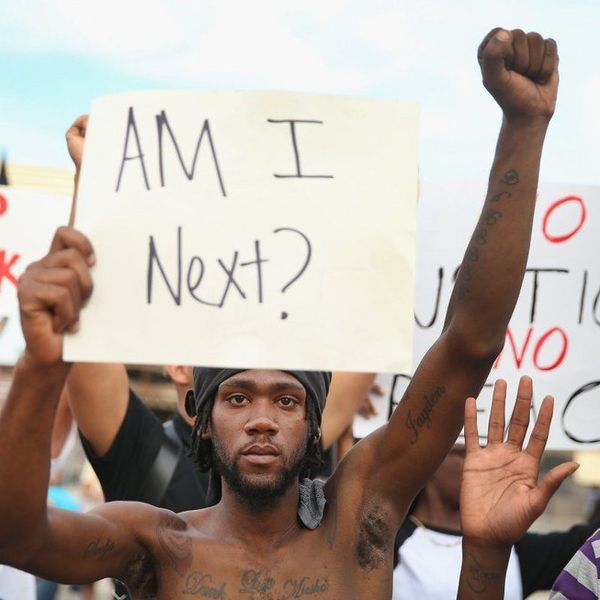
Over the past few years, the violence in the United States has been difficult for me to comprehend, because it was hundreds of miles from my home. In early July, it finally became much more real when the Philando Castile shooting occurred less than 30 miles from my home. Within hours, this event sparked protests nationwide. To think that an event such as this happened in the traditionally liberal state of Minnesota, known for our "Minnesota-nice" tendencies, is as bone chilling as our winter winds. Now, the country is reading about protests and demonstrations that have shut down highways and caused conflict in Minnesota, as well as several other states. Suddenly, people are paying attention to the quaint state of Minnesota.
But the protests and knowledge of the violence in the United States extends beyond our borders. The other day, I noticed a post on my college's freshmen Facebook page from an international student, whom I will be calling Hannah in this article for the privacy and safety of the student. The post stated: "People living in Minnesota: can somebody shed some light on what's going on with the shooting in St. Paul?"
I paused in silent awe when I read the post. Hannah lived across an ocean and several countries away on a different continent over 8000 miles away. And she had been informed of the violence in Minnesota, where she would be spending the next four years as a dedicated student. However, what truly horrified me about her post was her confession that she was "honestly afraid of coming to America."
The day after I saw the post, I decided to follow up with Hannah and messaged her on Facebook to accomplish two goals: express my sentiments about the situation, and ask for her permission to interview her for an Odyssey article. Hannah kindly agreed to answer a few questions:
When/why did you decide to come to the United States for college?
Hannah: I always knew I would study in the US. Both my sisters attended university in America so it was kind of already set for me. So I guess you could say my sophomore year is when I was completely sure. Why I decided to -- good education, highly valued in Tanzania. Sort of gives you an edge when looking for employment.
What have you heard about the current events regarding violence in the United States?
Hannah: I have been hearing about the oppression of African American people by some police. It seems that lately some police have been more violent and oppressive towards African Americans probably due to still very alive racism.
What do you think about the events?
Hannah: I think it's very sad. It's very difficult to understand why things like that happen especially coming from a country where everyone is extremely friendly. Some may even say too friendly. In all my life I have never been worried about the color of my skin until all the violence in America started up again. Knowing that I am black makes me aware of the things that could happen to me because I am black, and that makes me afraid of going to the US.
Would you make the decision to study in this country again?
Hannah: Honestly I cannot say that I would change my decision of coming to the US. Yes, I am afraid, but I also know that this does not exist all over the US. Not all police are prejudiced. Even with all the violence and racism, the US still has a good education system that I wouldn't want to miss out on. The only thing I can do is pray that God will keep me safe throughout.
Hannah: Everyone around me says that I've made the wrong decision to go to the US. 'You need to be careful. We don't want to see you on the news.' Stuff like that has been told to me several times. Because I'm not afraid enough.
What is something that you would want your future classmates to know?
Hannah: Something I'd like to tell my classmates- be mindful of people's race, culture, personality. Ask before you make an assumption about anything. It's always the little things that lead to violence. Let's try to stick together and respect each other for who we are.
And let us all work to do just that. Respect-and support-those around us, regardless of race, gender, age and background.