"Why the hell would you go there?"
I was three days away from leaving for Beirut, Lebanon, when a former classmate texted me back in response to my plans for the summer. She didn't know my story –– never asked –– so I wasn't expecting anything else but what she said. I've heard it before. It's on the news. It's on social media. It's in the home.
"Why the hell would you go there?"
It's a question that epitomizes the ignorance and stigma towards the Middle East in the western world and I've answered it one too many times. When I was younger, I never knew the answer. I grew up with my American mom, not my Lebanese father. I knew of the Middle East but I didn't know the Middle East. I still don't. And I never will. The region will always be a mystery to those who haven't grown up here, as is the case with all foreign places. But coming to Beirut this summer was definitely an attempt.
This is my second time coming here, the first being a short three-day visit with my family. But now I've been here for about a month studying at the American University of Beirut and all I think every day when I go outside is how lucky I am to be here learning. It hasn't been easy getting to this point in life, coming to terms with the other half of my life, the other half of my family. I was sheltered in America to this outside world of rich culture, ancient history and vibrant life. And it was my fault.
If you asked me three years ago if I thought that I would be where I am today I would've told you, "No way." But today I tell you "الحمد لله" meaning "Thank God." For three years ago I didn't know anything about this place and I most definitely didn't know the language.
"Why the hell would you go there?"
My response was "because I can."
As I continue this journey and I continue to write on my adventures around the world I will remember my response, "Because I can."
I came here because I can learn Arabic. I came here because I can be safe here. I came here because I can explore the beauty of my roots. I came here because I can see my family members who have been living here all of their lives.
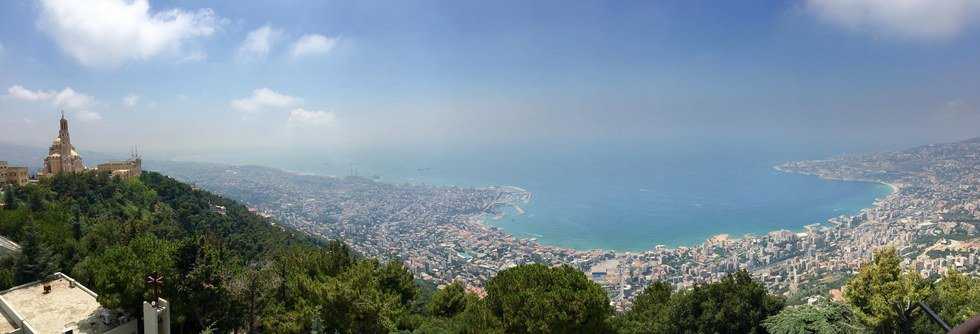
My last field trip with my program was to Harissa a Christian pilgrimage site on top of a hill named after the surrounding village. At the very top of the hill sits Our Lady of Lebanon –– a 15 ton bronze statue of Virgin Mary stretching her hands out over the beloved cedar trees and mediterranean mosaic in front. It's a site that brings thousands of Christians and Muslims from all around the world, it is a place of worship and most importantly a place of unity. Regardless of religion, race, background, or ethnicity Harissa was a place to overlook the differences.
There is so much to see here. So much more to learn. But إن شاء الله, hopefully, I can find the balance between my two worlds and share it as an example of the future that our world can achieve.