

"To create something beautiful about despair or out of a feeling of despair is for me the most hopeful life affirming thing a person can do." — Sarah Kane
People always think of depression and darkness as two evil entities. They only have that reputation because it is the easiest thing to accept. With enough dedication, you will soon see these things more as a "beautiful despair."
I hope to list all of the coping mechanisms that I use to help me and other people. I should state that I am not a licensed psychologist, but I will use sources to back my claims. I first recognized my symptoms at the age of 13 and have carefully observed my behavior and my emotions. When my emotions were out of whack, I would write them down in my journal.
I believe that my situation would have been a lot worse if I had told others that I had depression. I'm a very independent thinker. Additionally, I hate to be at the center of attention, and receiving too much sympathy or having people think I was going to kill myself would have made my situation a lot worse. Naturally, I believe that I would have had to go to a psychologist. I was a lot more reserved and less willing to share my deepest emotions, so it wouldn't have made any sense to go to a psychologist. Of course, I am not particularly advising this strategy to anyone.
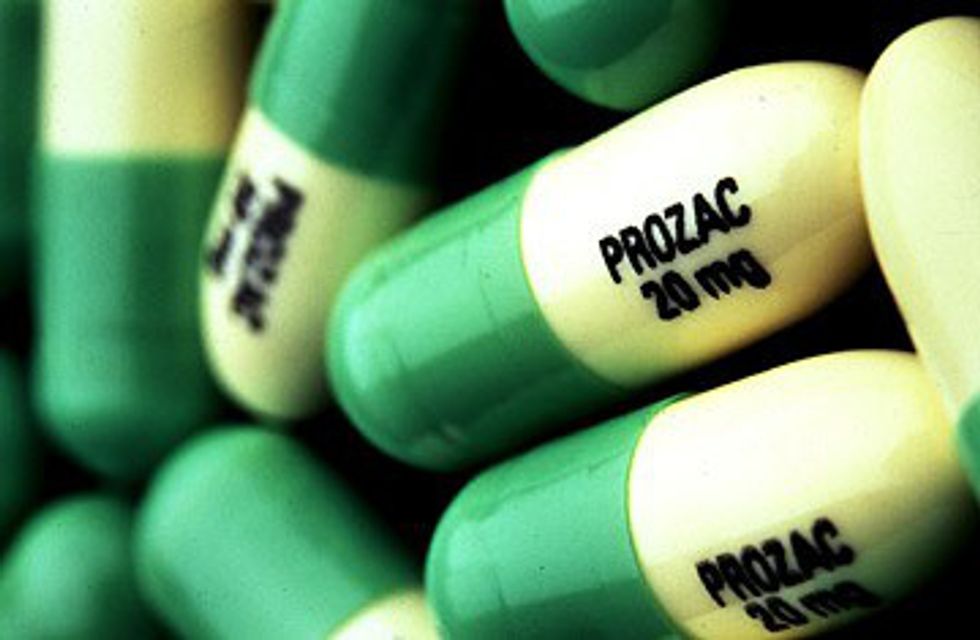
When I was younger, I was already reading medical articles on the subject. I read constantly that anti-depressants are overrated and don't really work. The Journal of the American Medical Association came out with an article (also summarized in an article by Scientific American) saying, "antidepressants are no more effective than placebos for most depressed patients." Irving Kirsch (Ph.D. clinical psychologist and professor at the University of Hull in the UK) wrote the book called "The Emperor's New Drugs: Exploding the Antidepressant Myth" saying that "drug companies claimed that 'more than 80 percent of depressed patients can be treated successfully by antidepressants.'" Claims like these make these medications a $19-billion-a-year industry.

Why is the FDA (Food and Drug Administration) approving these drugs? Irving Kirsch said in this article that he "used the Freedom of Information Act to get the data that the drug companies had sent to the FDA." The research found in the study (described in the article) found that there was "hardly a significant difference between drug and placebo but a difference in side effects." According to Irving Kirsch, "All they require is that there are two trials showing a statistical difference between drug and placebo... it doesn't matter how large the drug effect is." FDA later determined that SSRIs, which is the most common type of antidepressants, actually will increase the risk of suicide. Let's not forget that drug companies may have a lot of power over doctors — paying doctors to prescribe drugs. Last Week Tonight with John Oliver even discussed this on the show.

I read two books that especially helped me. A Mind of Your Own by Kelly Brogan M.D. She has a degree in cognitive neuroscience from MIT and board certified in psychiatry, psychosomatic medicine and integrative holistic medicine — making her one of the very few people in the nation to have these qualifications. Although, this book was especially targeted for women since women are more likely to experience depression, a lot of advice still applies for men. Most of her work currently revolves around treating other physicians and psychiatrists as she mentions in the book.
The second book is Feeling Good by David D. Burns (M.D.). It's more a self-help book. The book mostly revolves around Cognitive Therapy, which has been proven to be the most beneficial and effective way of treatment.
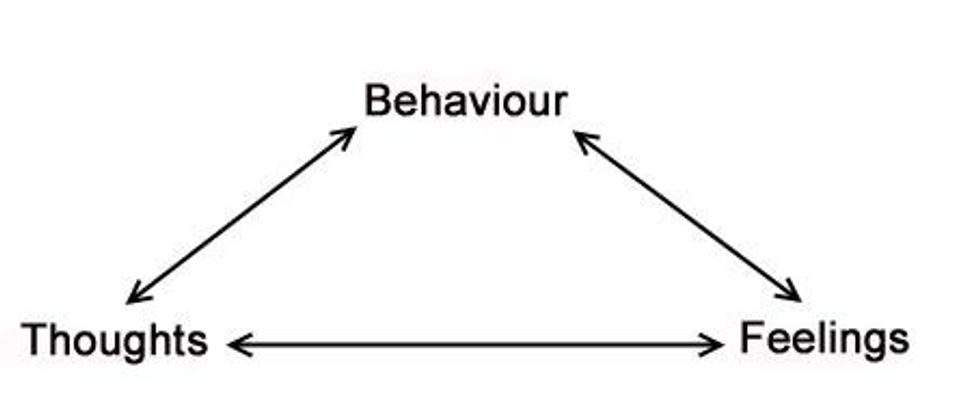
Understanding, self-control, and prevention and personal growth are all important techniques. Some people want to talk to psychologists to help them with their thoughts and feelings. I usually find that talking about my feelings or thoughts to my best two friends at my college usually helps as well. As an overly-analytical person, it helps to clear the "noise" and messy emotions.
Exercising has been a proven techinique to reduce stress and depression. I often take walks while having music playing to help with the "noise" and stress. A study also found that taking a short walk in nature lowers depression and prevents negative thoughts. Social interactions can also help reduce depression and stress. It is also important to know that introverts (such as myself) need a lot of time to regain energy though.
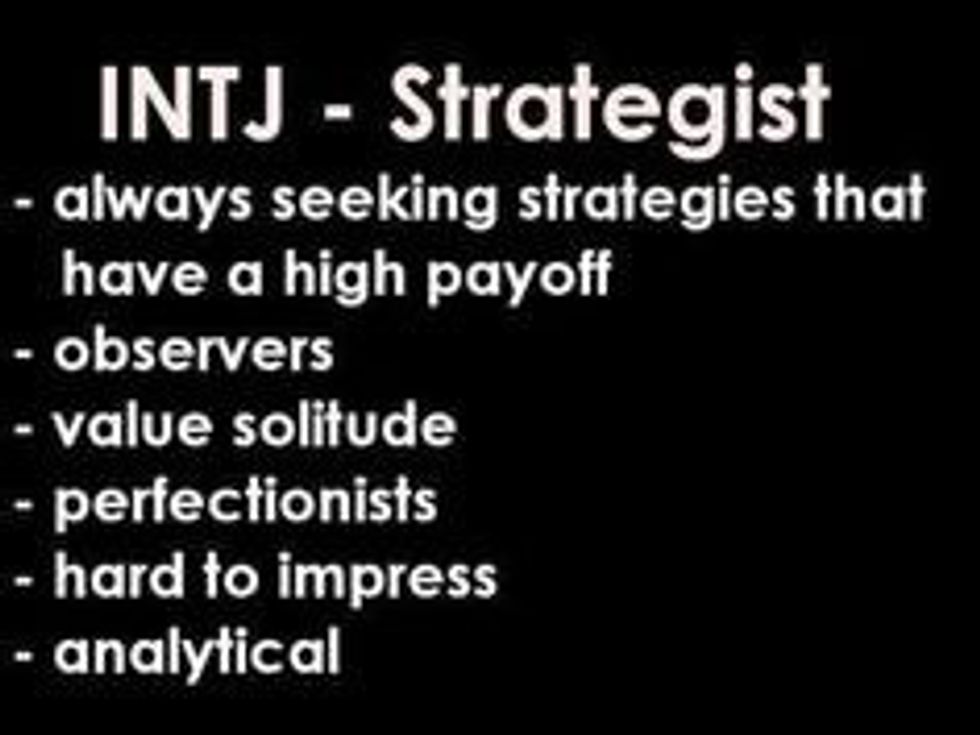
As a thinking introvert (INTJ personality), I need constant intellectual stimulation or I will become bored, which sets up depression. This is part of the curse of who I am — I easily slip into depression because of my deep thinker side (see my last article for explanation), but I can strategize and get back to normal pretty quickly! I love to research, and it brings me great joy when I find some pattern or figure out some complicated issue. Listening to certain music also helps reduce stress! Also, watching comedians and funny videos/photos helps me!

I feel better when I'm able to use my creativity to explain the issue. As I mentioned in my last article, creative people are more likely to have depression than those who aren't as creative. So use your creativeness whether it is your musical, writing or artistic abilities to share your deepest emotions with the world! You're a disgruntled idealist who sees many problems in the world, share them! Ludwig Von Beethoven is believed to have bipolar disorder, and he said, "Music isn't just entertainment but a moral force."
You might have thought that evolution should've taken depression away since only the strong survive. Wrong! Psychologists Andy Thomson and Paul Andrews state that depression is an evolutionary way for us to tightly focus our attention on what needs changing in our lives. They also mentioned that depression is not a malfunction (although it does have some costs) but a mental adaption that brings certain cognitive advantages.
Dr. Paul Keedwell, an expert on mood disorders at the Institute of Psychiatry in London, has written How Sadness Survived explaining how depression can not only give us new and quite radical insights but "can give us a way of responding effectively to challenges." There are also many studies that show how after depression people's work performance and health improved. "You become more realistic and empathetic," says Keedwell.
So yes, I have existential depression, and I have insomnia. I can become extremely lethargic and anxious. My appetite is screwed up at times. I question my existence, and I can lose concentration and pleasure in activities that I would normally love. However, since I changed my mindset (which takes dedication and work), I can see beauty in the darkness, and so can you!
"The greatest fear in the world is of the opinion of others, and the moment you are unafraid of the crowd, you are no longer a sheep, you become a lion. A great roar arises in your heart, the roar of freedom" — Osho
"The only way to deal with an unfree world is to become so absolutely free that your very existence is an act of rebellion" — Albert Campus