For the last few weeks, the headlines have been full of stories about tens of thousands of migrants arriving in Europe seeking a new home. This migrant crisis will be a turning point for Europe as it opens its borders to hundreds of thousands of people from Africa and across the Middle East, all of them hoping for a life better than the one they left behind. Yet what nobody is talking about is why they’re coming. This article, the first of a series on this crisis, will explore the causes of the mass exodus of migrants from Africa to Europe, a story full of both hope and tragedy, and try to explain the complexity of this crisis that is overwhelming some of the most developed nations in the world.
The first thing that needs to be realized about the migrant crisis is that it is not new. Conflicts and economic crises across Africa and the Middle East have driven thousands of refugees into the European Union (EU) over the last two decades. However, the crisis really began in 2011, when the Arab Spring and resulting revolutions in Tunisia, Libya, Egypt, and Syria began to create thousands of refugees who needed a place to go. Ever since, tens of thousands have made their way across the Mediterranean Sea each year, hoping to make landfall in Europe.This year, however, the number of refugees crossing the Mediterranean is astounding. Of the roughly 400,000 documented migrants who have arrived in Europe so far this year, about 300,000 of them have done so via the Mediterranean according to a UN report. Most land in either Greece or Italy, although Spain and France are also popular destinations.
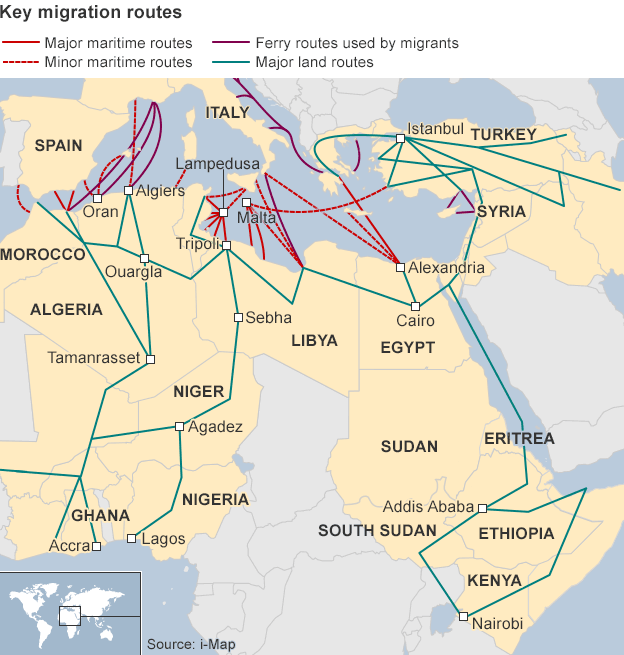
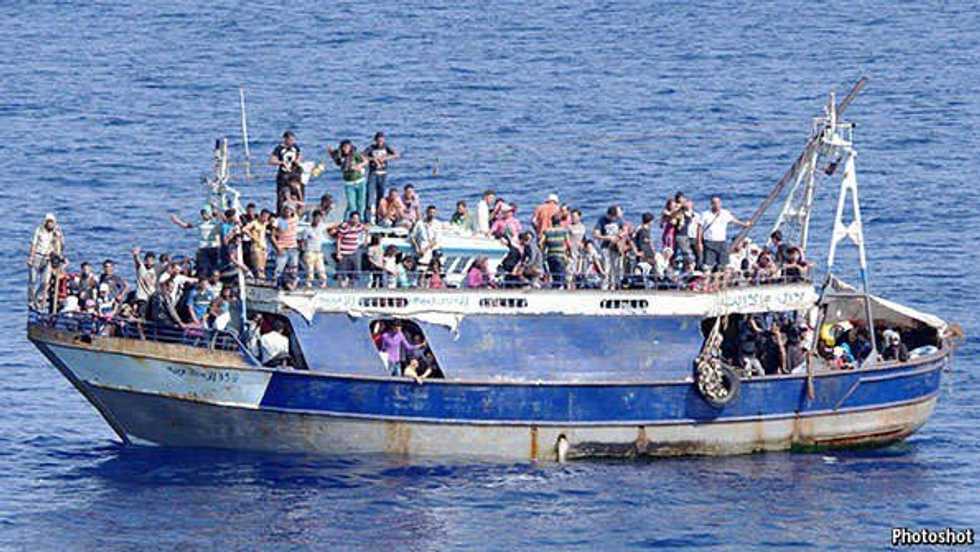
These are not easy voyages, however. So far in 2015, nearly 3,000 migrants have died making the crossing and last year it’s believed that 3,500 people died. To put those numbers in perspective, according to the U.S. Department of Defense, as of September 10, 2015 there have been 2,355 American soldiers killed in the Afghan War since 2001. There have been more migrants killed trying to cross from Africa to Europe this year than American soldiers killed in a war that has lasted 14 years. Most of these deaths are due to a lack of resources on the part of Frontex, the EU’s border protection agency, which replaced a well-funded Italian operation called Mare Nostrum in 2014. Despite a tripling of their budget this year, Frontex is still woefully under equipped to conduct search and rescue operations in the Mediterranean, meaning that they can’t reach the hundreds of people trapped in boats that capsize. Despite the death toll, thousands of migrants still turn to human traffickers and smugglers, who have free reign in a lawless Libya, to get them to Europe, paying thousands of dollars to be locked into dubiously sea worthy vessels and sent into the Mediterranean.
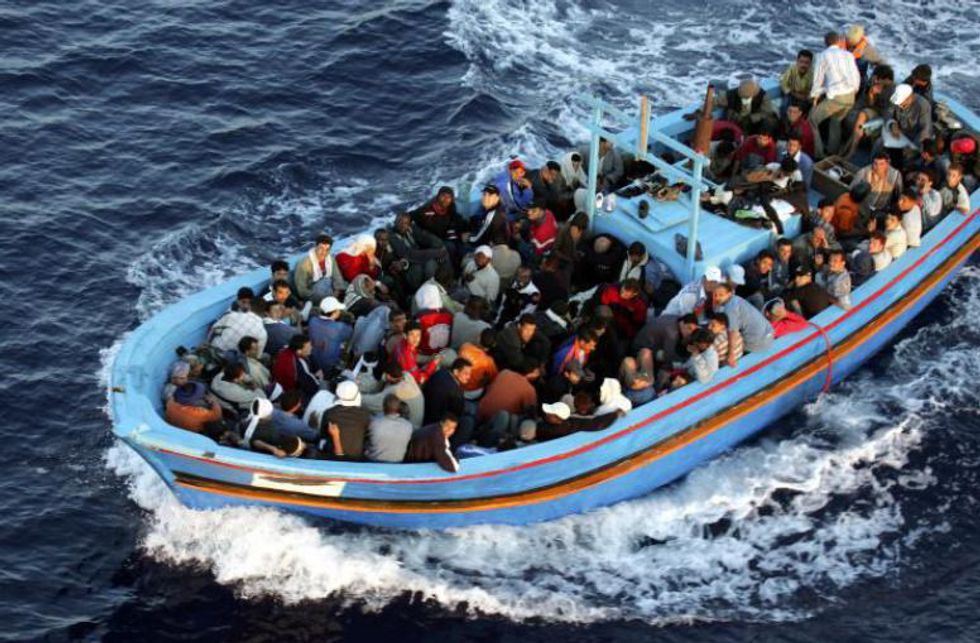 Migrants Crossing the Mediterranean
So why do hundreds of thousands of people make such a dangerous journey with no guarantee of success? Because they have nothing to lose and everything to gain. Most African migrants are young men with no economic prospects who are fleeing conflict or oppression and hoping to make a better life for themselves in Europe. They see Europe as a land of opportunity, with social safety nets and robust economies and living standards that they could only dream of. They are willing to pay to be smuggled across a sea and risk their lives because they have hope for a better future outside their home countries.
Why these young men feel that their future lies outside their own countries varies. Most migrants are from sub-Saharan Africa, a region hit hard by civil war and political repression. Thousands of Nigerians have fled the civil war between the Nigerian Government and Boko Haram, an Islamic terrorist group that controls a large part of the countries northeast. Eritreans, the third largest group of migrants arriving in Europe, are fleeing a repressive dictatorship which conscripts citizens aged 18 and older into national service and forces them to labor for the state, turning them into slaves with no hope of freedom. Civil war in South Sudan and terrorism in Somalia have pushed thousands north as well, and rampant poverty in Gambia, Ghana, Senegal, and other nations has also contributed to the flood. Some migrants, however, never intended to flee to Europe. Libya had a thriving community of migrant workers from sub-Saharan Africa who worked in the country’s rich oil fields. However, racism and the rampant lawlessness of the country forced many to flee for their lives.
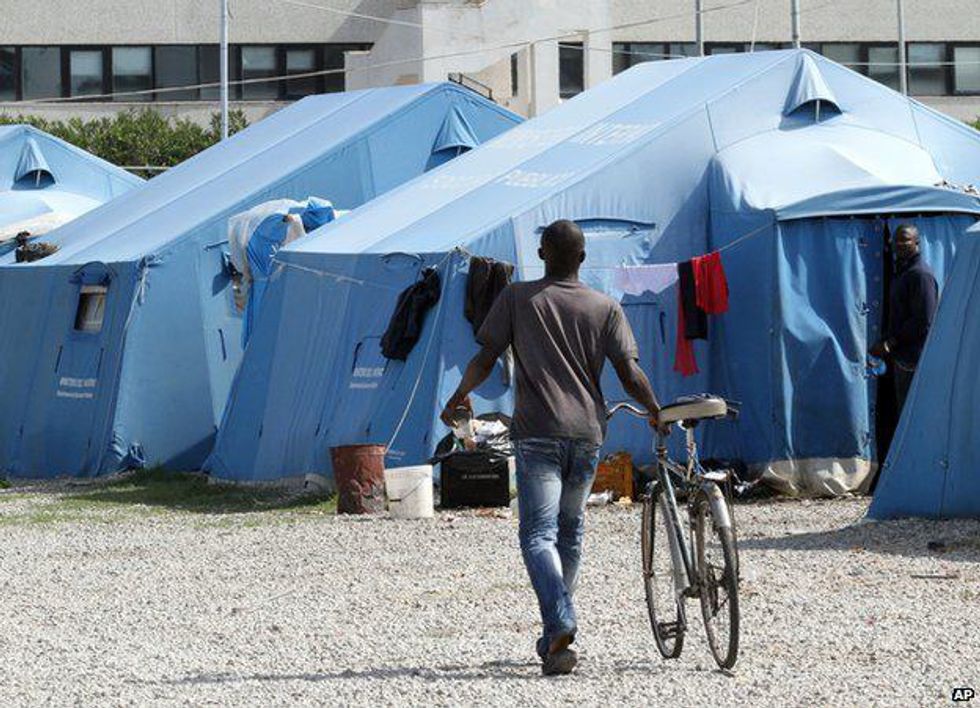 African Migrants in a Refugee Camp in Italy
The main facilitator of this mass exodus from Africa has been the Libyan Civil War. Following the downfall of dictator Muammar Gaddafi in 2011 at the hands of NATO supported rebels, the country slid into further lawlessness. Despite an internationally recognized government being formed, it never held any real power over the various militias that had fought the war against Gaddafi and was forced to flee Tripoli, the Libyan capitol. Since then, the country has existed in a state of total anarchy, with militias, terrorist groups, and even the Islamic State fighting for control, turning the country into a giant war zone. With no government in power and no single group able to provide law and order, crime has skyrocketed and smugglers and human traffickers have been able to operate freely. It is this anarchy that has allowed so many African migrants to board ship in Libya, as there is no government to keep track of the influx of refugees or to crack down on smugglers and traffickers.
Ultimately, the only way to control, if not resolve the crisis facing Europe, is to deal with the root causes of the mass exodus. It doesn’t matter how many refugees the EU lets in, as long as there are still conflicts and endemic poverty throughout Africa the migrants will keep coming. At the very least, the first step that has to be taken is the stabilization of Libya. Without a safe haven to operate in, the human traffickers and smugglers who send most migrants across the Mediterranean would have to lay low, stemming the tide of migrants and possibly granting the EU time to put measures in place to deal with the mass influx of people to their borders. Without any action, this crisis will only escalate as thousands more die trying to get out of Africa and tens of thousands more succeed.