
Disclaimer- there are mentions of heavy topics embedded within this article such as sexual assault and violence.
It was a Thursday morning. I had forgone the coffee that morning, convincing myself I would be able to make it through my hour and a half class without the additional caffeine boost. I sat in the back, slightly drooped down in my chair, scrolling through my Facebook newsfeed as I half-listened to the conversation happening within our small classroom.
It was the last day of the semester. My classmates had been asked what they felt needed to be changed about this particular course and potential problems the course structure provided. I was hesitant to listen. I was scared to listen because throughout the entirety of the semester, I had witnessed a slew of troublesome conversation that proved that our understanding on the topic was minimal. Within this conversation, though, one student raised her hand and suggested an emphasis on more sensitive dialogues. Throughout the semester, there had been several 'outbursts' which had lead to some pent up anger, frustration, and anxiety on behalf of many other students. Perhaps the most notable of which being a blurted out opinion on victim-blaming and how it is a 'non-issue' when it comes to rape/sexual assault.
When the original conversation had taken place, I was prepared. Our professor had made mention of the topic of study before we came to class that day, and I was emotionally ready to face whatever that conversation would have allowed. As someone that has touched, smelled, breathed, and experienced these issues, I most definitely needed this warning. Because with this conversation, I knew there would be many questions and musings that would threaten to throw me into a break down if I wasn't careful. I needed a second to put up my dividing wall. The wall that would allow me to separate my academic mind from my emotional reality.
But the following Thursday morning was different. The topic was reintroduced to our class without warning, and without much prompting from our professor. And the slew of commentary continued. But this time, I had no wall. I was stoic. I was trapped. And the only sounds playing in my head were the horrors of my own reality; the moments I actually lived. And this feeling tagged along the entire day. And unfortunately this was not the first time.
University of Chicago released a statement last week regarding 'academic safe spaces.'
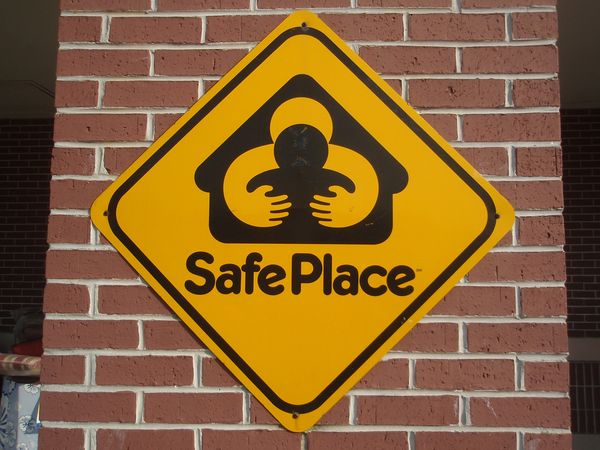
If you're unfamiliar with the idea of "academic safe spaces" you may not be alone. It seems as though there is a great deal of confusion as to what this truly means. Some believe this is the warning that comes before a particular class lecture that touches on heavy, sensitive issues. Others believe this is a movement to generate censorship within particular curriculum. But, regardless, this has been an area of concern for a while: How far will we go to ensure the emotional safety of other students? When do we draw the line and force students to engage with particular topics at hand? Are academic safe spaces and trigger warnings inhibiting the academic well-being of our students? etc. etc.
The Chicago Tribune outlined the released statement and quotes UChicago Dean of Students John Ellison in saying, "Our commitment to academic freedom means that we do not support so-called 'trigger warnings,' we do not cancel invited speakers because their topics might prove controversial, and we do not condone the creation of intellectual 'safe spaces' where individuals can retreat from ideas and perspectives at odd with their own."
Hold on.
I might be misunderstanding some things. I might be unaware of what the student body at large is asking for, but I am almost certain it does not include the cancellation of speakers and the refusal to discuss particular topics within an academic setting. It does not include the refusal to engage with such topics. It might actually be the opposite... at least that's not what I'm asking for.
To fully understand the weight of such commentary, I think it's most important to view it through the lens of a specific example. For instance, in the case of my example, my class discussion surrounded the topic of sexual assault. Considering the fact that a reported 1 in 4 women experience sexual assault on campus as an undergrad, this is an issue which, statistically speaking, personally affects at least 25% of the female student body. This figure also does not take into consideration the vast numbers of other demographics that have come in direct contact with the issue. While being mindful of the psychological affects of assault, one could note that engaging with such topics, especially in an environment that forces the student to be thinking logically, critically, and without bias, might be of challenge.
For me, while not attempting to make sweeping generalizations to others that have come in contact with these issues, getting past the psychological barriers of anxiety, depression, and other subsequent effects of trauma, especially within an academic setting, is to mentally remove myself from it. It is reminding myself that I am in an institution of learning. It is reminding myself that I am safe, that I am able to engage, and that I am capable of pushing aside painful memories in order to desensitize myself, even momentarily.
But this is something that takes time. This is something that cannot be done without a bit of warning.
When we remove the necessity for such warnings, we allow for an environment that favors particular demographics over others. We are only allowing for the success of those who have been privileged enough to not have to endure such issues. We are inadvertently allowing for the student engagement that is exclusive to the 75% while simultaneously forgetting the remaining 25%. We are saying, "Your pain does not matter. You are a burden to us." When it is clear that only one group is allowed access to a particular discussion, the divide of access to overall education is widened. In our attempt to be inclusive, we have become increasingly more exclusive.
And further, the refusal to include trigger warnings/safe spaces further perpetuates a culture of hate that is so immensely prevalent within our society. When our public rhetoric contains extreme bouts of insensitivity and glorifies a lacking of 'political correctness,' we are only allowing for an academia that provides the same. Academia is a part of our society. It is often times contributing to the political and social waves reflected on our television screens, in our newspapers, in our homes, and in our communities. What we say here matters.
And that really is the point. Our message matters. What we say matters. How we say things matters. In dealing with sensitive discussions, we must remember that our words matter. They have the power to shake people's worlds. They have the power to remind us of our brokenness, our heartache and our pain. And sometimes our words serve more than just a mere reminder. They have the power to act as a time machine which takes a person right back to where the crime started. It's incapacitating. It's debilitating. It's real.
When so many of our students face these issues, it's difficult to ignore the necessity of such terms. When so many of our friends and peers face violence at increasing rates, I'm not entirely sure how we can continue to sit by and allow for it. I'm not sure how we can speak on advocacy and change in one breath and deny the sensitivity that is so entirely essential in another.
Love belongs in academia too.
Or maybe not "love." But at least common courtesy and respect.
When mutual testimony is forgotten, and when the failure to allow for an inclusive academic environment occurs, we have failed. We have decided who will achieve and who will not. We have not taught students how to cope, but have taught them that they are incapable.
I never asked to leave that class discussion. I never saw these issues as an opportunity to storm out of my classroom defiantly. I saw these issues as a way of connecting the personal to the political. I saw these conversations as a way of understanding the issue in an entirely different light. One that is separate from myself. One that allows me to learn. One that does not force me to escape, but to engage. If education is a stepping stone to real change, this was our chance. But I was busy. My mind was elsewhere. It was ingrained in pain and darkness. The same pain and darkness that has the ability to hang over my entire day if I'm not aware and if I'm not careful. I'm not trying to be melodramatic here. This is real. This is a consequence of our culture. This is a consequence of our society as it stands.
I don't want my education to be a mincing of words. Frankly, I wish it to be the opposite. I want to know what is real. I want to know the facts. I want to engage in these conversations. I just want to be ready for them.
It is important to remember that everyone deals with trauma differently. As mentioned, I never wish to make generalizations. Trauma is unique. It manifests differently in everyone. Some people may walk into a classroom discussion and be bombarded with such topics and leave in an entirely different state than I. Others may need to leave in the middle. Others may feel the way I do. But regardless of how it manifests, what really is the harm in a warning? What really is the harm in not allowing for hateful rhetoric in a classroom? I'm not quite sure. But what I am sure of is that this idea is more than just an allowance for broader topics of conversation. It is a political issue. It's an issue that is reflective of our hearts in a much broader setting. We see insensitivity in the grander public sphere, and we bring it into the academic sphere. This is a problem.
Our message matters. Our thoughtfulness matters. A trigger warning does not have to hinder the message. It doesn't have to inhibit us from speaking on issues that truly do matter, but it allows for people to separate themselves from the topics they need to engage with, in order to be rational, logical, and free from emotional burden.
The personal is political. The personal is educational. But in order to capture these stories, the environment to allow for them needs to be present. Without it, we are only ensuring the success of a percentage. Without it, we are securing an 'us versus them' dichotomy. Without it, we're not educating to our fullest potential.
We're not whining. We're not asking for handouts. We're not even asking for a free pass. We're asking for a bit of warning. We're asking for a little bit of sensitivity. We're asking for a little bit of love and respect as human beings.