

Alright, let's talk about something nobody ever really wants to talk about: body hair. In many cultures, it is considered unsanitary, unfeminine, unattractive and is generally treated as something bad, something to fear. It occurs as a natural part of human development, yet as soon as it starts to appear, primarily in women, we want to remove it just as fast. And it has become a common expectation that that is how it should be. But, why? Where did this strange practice of removing a completely human, a completely organic part of ourselves, come from?
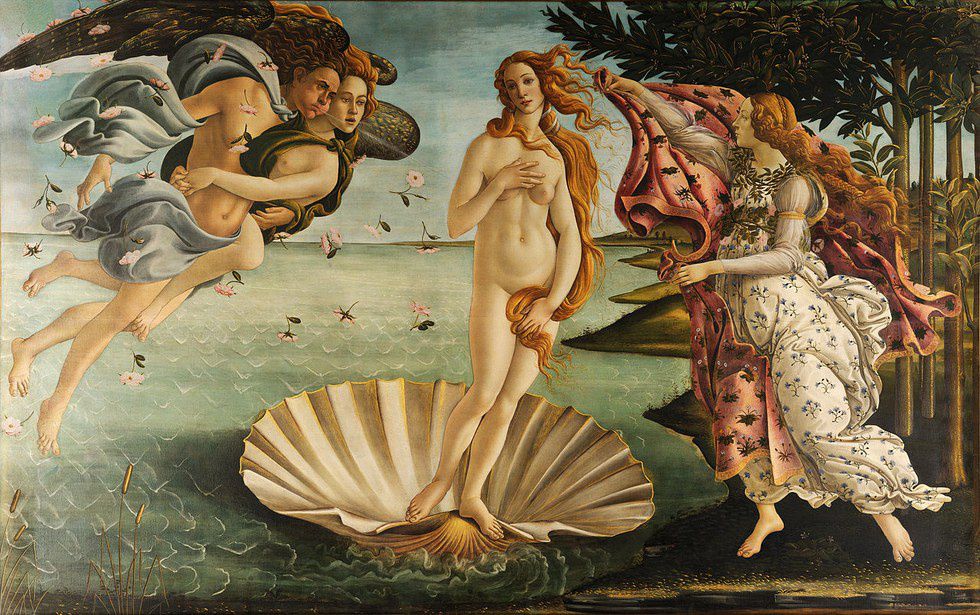
According to Jill Burke, a lecturer in Italian Renaissance Art History at Edinburgh University, this belief about body hair and the practice of its removal started as far back as Renaissance times. It was in this time period’s art and culture that women’s bodies were given certain ideals as to how they should look, whether it be in paintings and sculptures or in depictions of goddesses such as Venus, the ultimate symbol of love and beauty. And as you can see, she is totally hairless. Especially in the pubic region, where it was often seen as uncivilized to have hair (and often still is today)
There are records of books being published, such as the Trotula, that include some of the first recipes for hair removal concoctions. One book includes a recipe with these instructions:
Boil together a solution of one pint of arsenic and eighth of a pint of quicklime. Go to a baths or a hot room and smear medicine over the area to be depilated. When the skin feels hot, wash quickly with hot water so the flesh doesn’t come off.
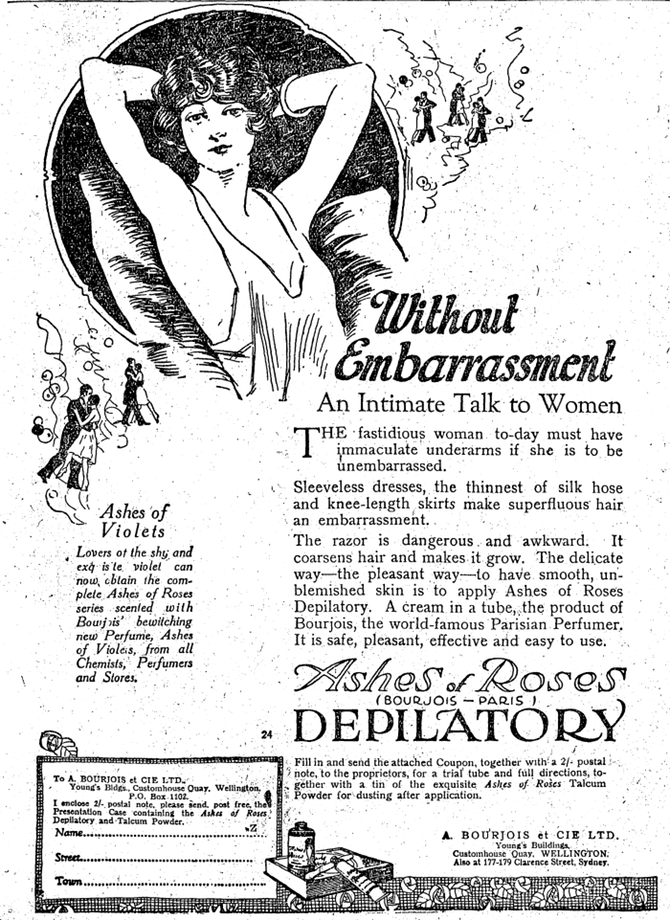
Today, we have similar ointments, waxes, razors and gels like Nair, Veet and Gillette that can get rid of hair anywhere. Gillette was the first to let ladies know they were not addressing a serious issue, like the state of their underarms and legs (as dresses began being cut above the ankle and started to lose their sleeves), and in 1915 they introduced a razor for women.
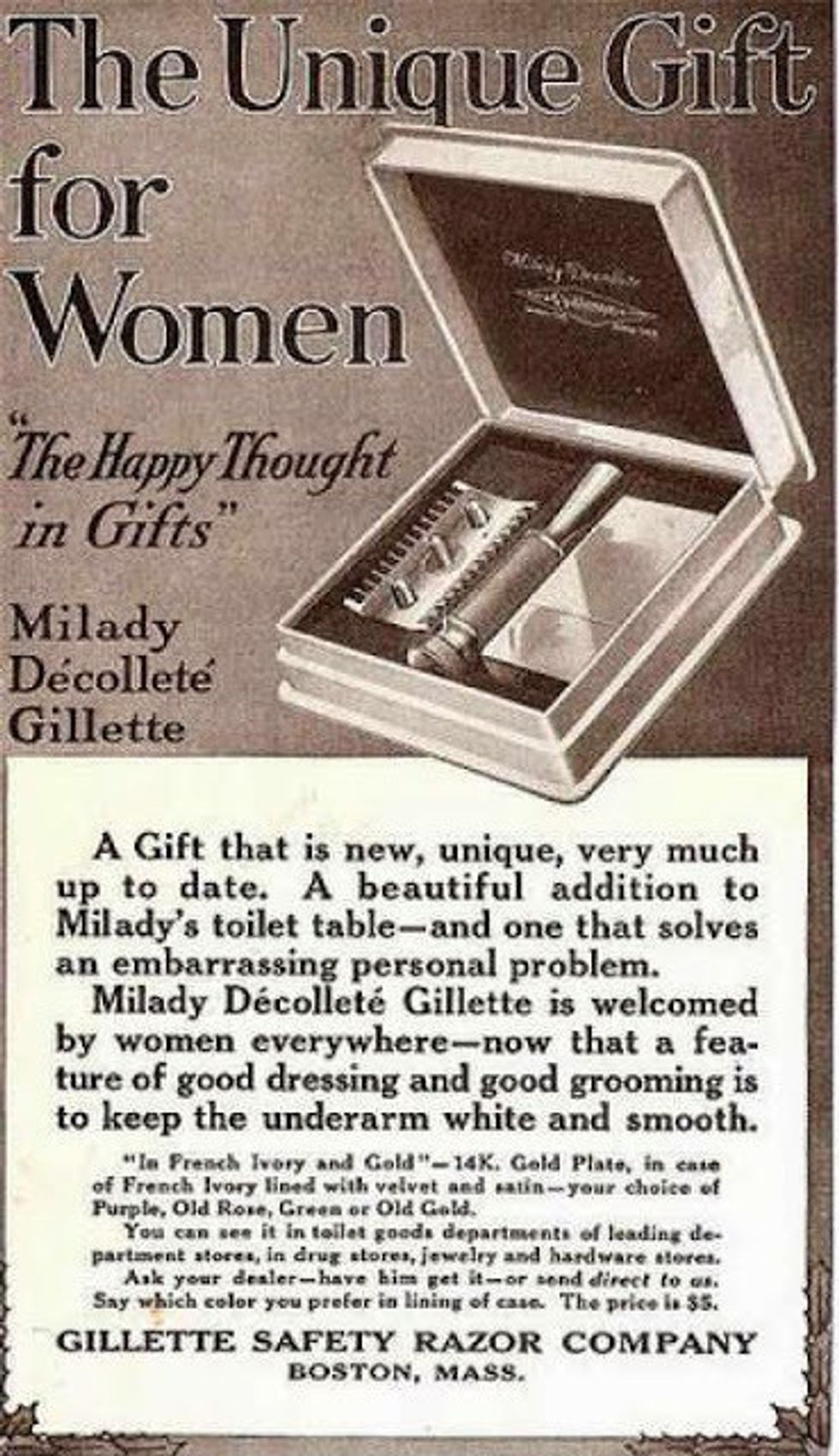
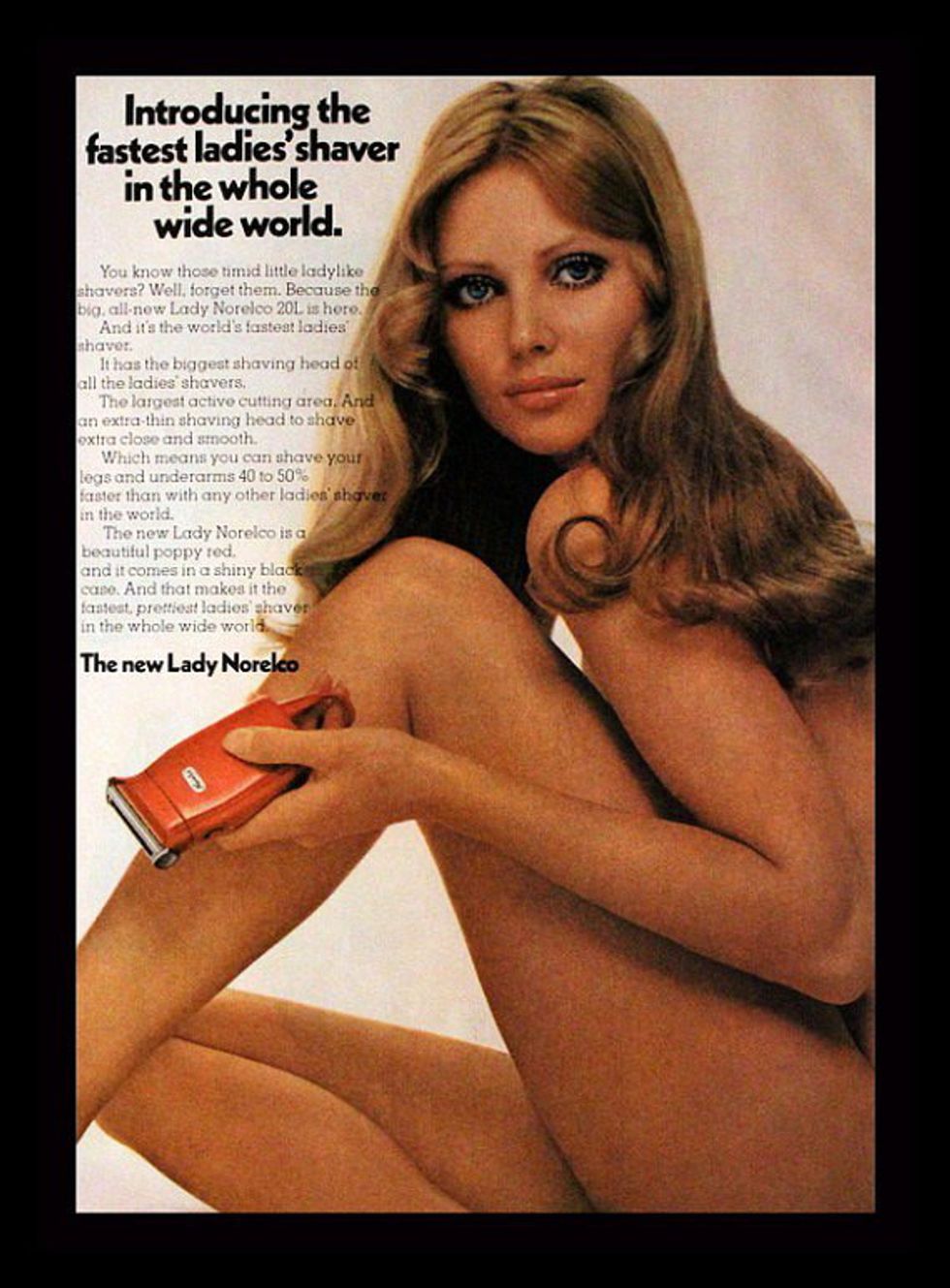
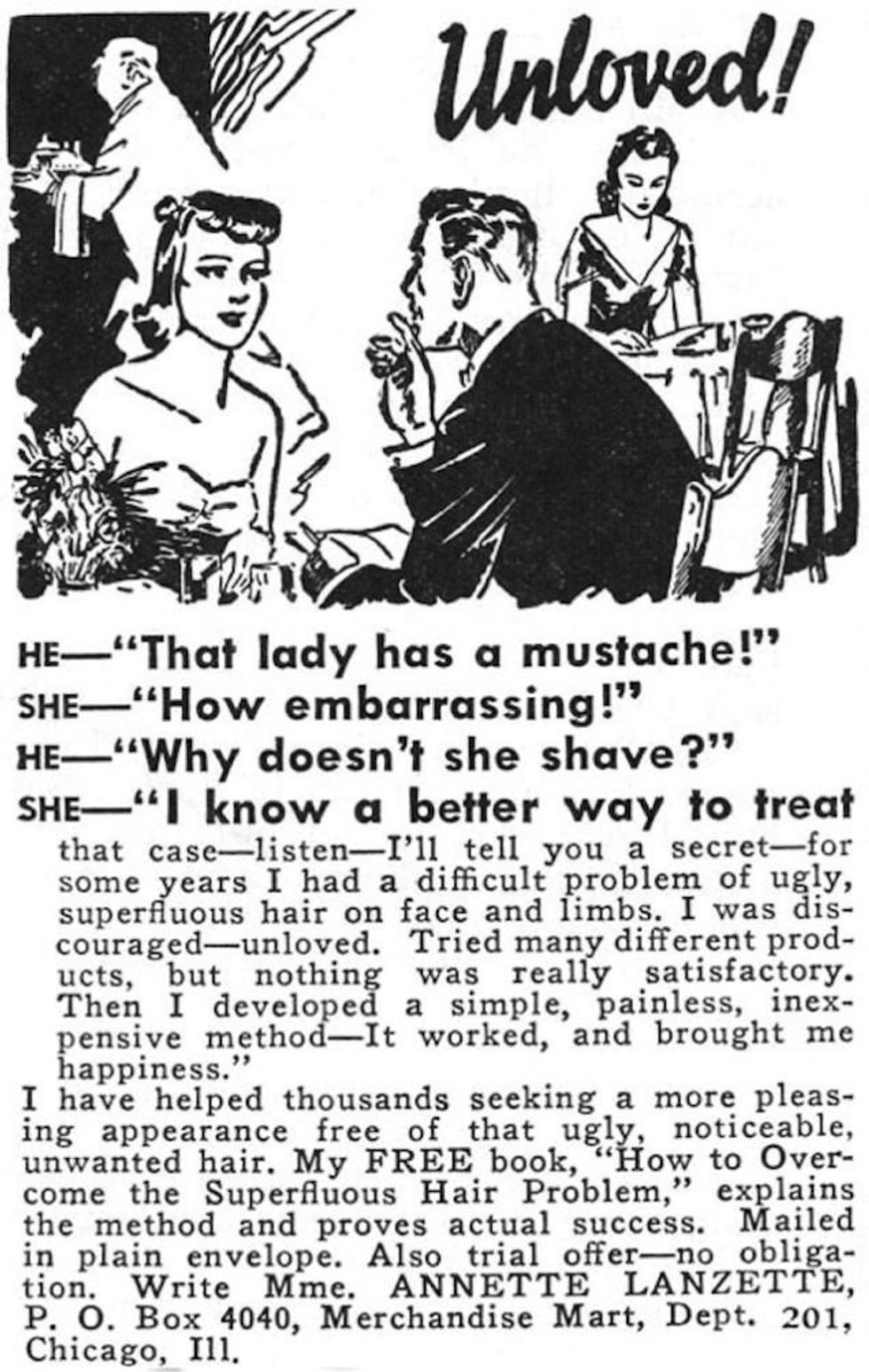
From then on, magazines and other forms of media began to include advertisements for women's hair removal products, aimed at hitting a woman's sensitive nerve: how the world views her, how the world loves her and ultimately how she should view and love herself.
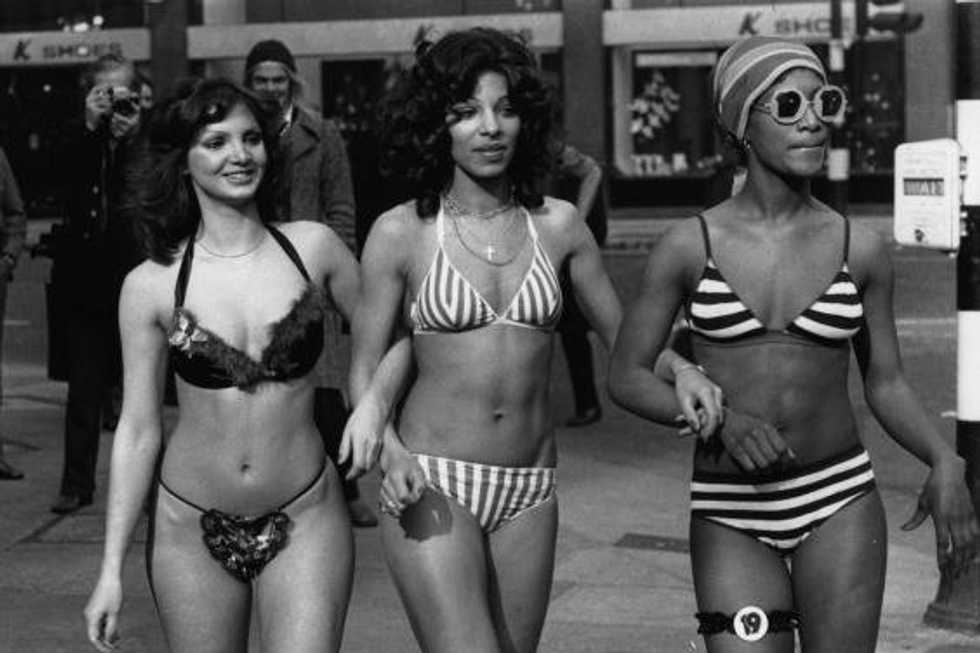
Women continued the practice of hair removal even through the 1970's second-wave feminist movement, when not shaving was said to be an ultimate test of feminism. Once again, a major reason hair removal is said to have survived is for fashion, as shorts and bikinis became tinier and tinier.
Today, not much has changed. Actually, in the western world especially, women seem to have become even more hyper focused on being hair-free. Phoebe Waller, a writer for Bustle, interviewed 17 women on reasons why they shave, and she got a variety of responses. Some do it because they feel pressured by society and the media, pressured by other women, because they believe men will find them more physically and sexually attractive, they feel more clean or simply because they like a physical and emotional feeling they get from it:
“I shave so it's easier to clean. If you get what I mean. I also think men prefer shaven-clean bits. I think it looks cleaner and more feminine.”
“I have dark hair, so I need to. But I suppose it's because society tells me that I should. However, I do feel sexier/more feminine when I'm silky-smooth! I have issues with sensitive skin, though, and tend to only regularly shave more visible areas!”
“I was thinking, 'Why do I shave?' and it's because I want to be nice and soft and smooth, and hair isn't attractive! But why isn't it? It's like autopilot to shave! Thought-provoking question, ha! Who started all of this shaving malarkey?”
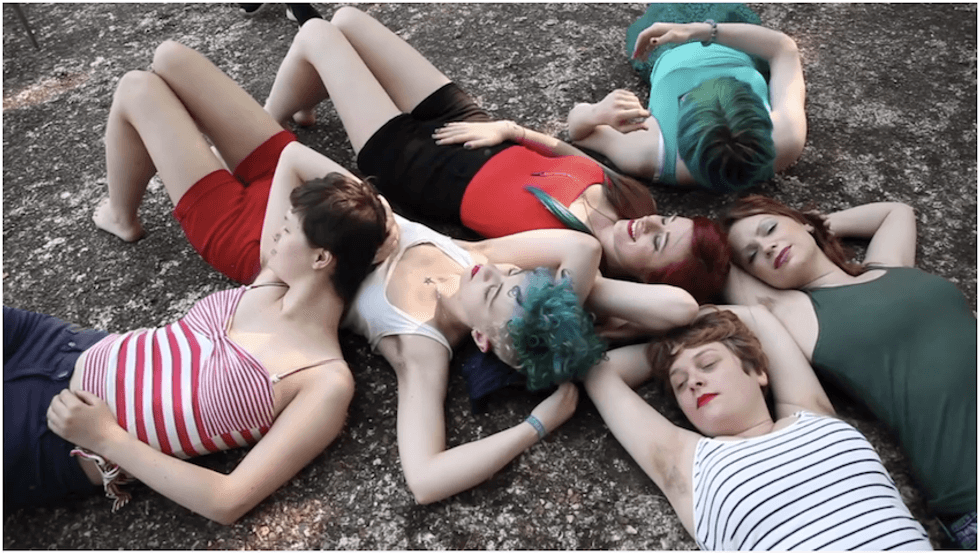
In the documentary "My Body, My Hair," several women tell their stories of why they began shaving, and why they choose not to now. Some were advised by their mothers as young girls not to, so they never began as adults. Some were tired of the hassle, the time, money and pain it cost. Some felt it was a form of oppression, particularly by men. No matter what their reason was, not a single reason came from seeking approval or mindlessly conforming to an expectation by someone or something else. And along with this, all of these women have a strong sense of themselves, a natural confidence and empowerment. They are just who they are, happy with who they are and have a deep, personal connection with their bodies.
"I think it's sad that body hair is linked to attractiveness, like, lack of body hair in most people's heads. Personally, I think it's really attractive on a woman...I think it looks adult...it's quite sensual I think as well, but most people don't see it that way."
"It feels liberating not to shave, it absolutely feels liberating, truly. And that might seem like a silly thing to say because it's so little really, it's such a little thing to decide to grow my hair. But, in the face of opposition that we see everyday around us, it sometimes feels like a great big thing and I feel quite proud, but most of all I feel liberated."
"...if I'm gonna own myself, I have to give up some of that sort of comfort of being considered attractive, the comfort of being considered the right kind of woman, you know? I am doing this because I want to and to claim my own body as my own."
From a scientific viewpoint, having body hair is actually a very beneficial thing, and contrary to belief, it is actually cleaner than removing it. Hair on the underarms reduces friction when the arm is in lots of motion, covers vulnerable arteries, releases sex hormones and if washed just like a naked armpit, does not accumulate odor. In the pubic region, it protects the body from bacteria and infections, and provides cushioning for the body to be protected from uncomfortable friction and abrasions.
So, to shave or not to shave? Whatever view a woman has on body hair is her own, and she has the right to do whatever she likes with her body without pressure or input from anyone or anything else. She has the right to be herself, to love herself, and not feel shame for doing so. Body hair does not make a woman any less feminine, any less beautiful, any less of a woman and is definitely not something to fear.

















