
Students everywhere have written them, and every class assigns them: essays. For someone who has written very many essays over the years, I found myself knowing very little about their origins, until hearing of Michel de Montaigne, the father of the essay.
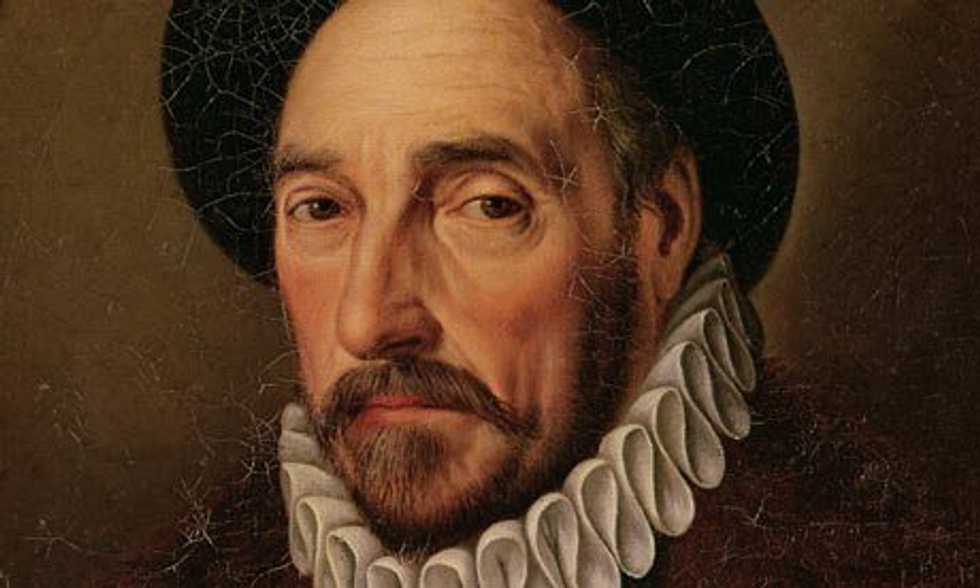
Montaigne was born in 1533, around the time of the French Renaissance, the time period that would influence his ideas, values, and writing. He gained the reputation of a skeptical observer through habits of studying interactions. Montaigne published his viewpoint in a collection of what we now know as essays, titled, Essays.

The limitless ideas of the time, hindered by the Wars of Religion, gave Montaigne a negative view on life that extended into his essay style. The pessimism that comes across Essays deals in great deal with the loss of connection with truth. Montaigne portrayed the human being as one that is weak, and knows very little. Even with such a negative disposition, Montaigne is not opposed to reaching out and connecting with those around.
One concept Montaigne writes about is the ties formed between the individual and the life around them. He speaks of humans as having two ‘chambers’: the first is for socializing and entertaining others, a place to interact and relate, while the second chamber serves as a retreat for the individual to reflect and connect with their own identity. Not just a preacher, Montaigne practiced this structure by ceeding the parliamentary seat he filled, and retiring to a secluded, ivy covered tower.
With this structure in mind, Montaigne encourages exploring by traveling, meeting a breadth of people, and reading. Similarly, Montaigne valued public service as a form of making ties with the world, though he warned against letting service consume one's life: “Lend yourself to others, but give yourself to yourself”.
The concern for freedom is one of many motifs in Montaigne's writing. Also very apparent in his essays is the concept of the aging body. Montaigne attempts to desensitize the fear of death through his writing.
When published, Essays was met with mixed reviews; Montaigne was praised for his portrayal of the upper class and the educated while criticized for being anti-Christian in his skepticism and self absorption.

Jean-Jacques Rousseau saw the book as a personal search for true human identity, and similar praise continued on through the 17th and 18th century. Rousseau appreciated the new style, and came to view Montaigne as a master of the self portrait through words.
Though the essay has evolved greatly since its 16th century origins, the literary genre known as the essay is still wildly popular. Michel de Montaigne, the entrepreneur of the essay, was as much of a philosopher as he was a writer. Montaigne had developed distinct views on humans and on freedom, similar to cultural relativism. Through gathering thoughts in his head, Montaigne pioneered the essay by publishing a book, Essays, of what we now know as essays. The form was well received, if controversial, but admired enough to become one of the most common forms of literature even to this day.