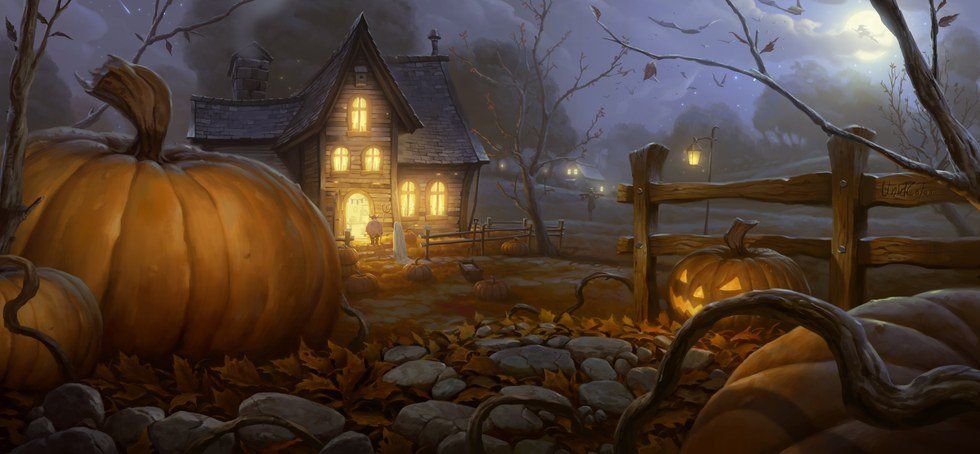
The origins of Halloween date back to the ancient Celtic festival called “Samhain” (pronounced sow-in). They celebrated their new year on November 1, marking the end of Summer and harvest and the beginning of the dark, cold winter. The Celts believed that on the night before the new year, the veil between the living and the dead merged. It was believed that the spirits of the dead returned to earth. On October 31 they celebrated Samhain by extinguishing the fires in their hearths, building huge bonfires to burn crops and animals as scarifies to Celtic deities, wore animal heads and skins, and attempted to tell each other’s fortunes. When the celebration ended they would relight their hearth fires from the sacred bonfire in hope it would protect them from the coming winter and roaming ghosts.
In the eighth century, Pope Boniface IV dedicated the Pantheon in Rome to all of the Christian martyrs. Later, Pope Gregory III designated November 1 as the time to honor saints and martyrs; this was named “All Saint’s Day.” It incorporated some of the traditions of Samhain. The night before became known as “All Hallows’ Eve,” but was later shortened to “Halloween.” During the festivities, poor citizens would beg for food and families would give them pastries called “soul cakes” in return for their promise to pray for the family’s dead relatives. The tradition of trick-or-treating is believed to be derived from the practice of “going-a-souling” which was taken up by children who would visit houses and be given ale, food, and money.
Although, Halloween didn’t become what we think of it today until the second half of the nineteenth century when America was flooded with new immigrants, these new immigrants, particularly the millions of Irish fleeing the potato famine, helped spread the celebration of Halloween nationally. Taking from both the Irish and English traditions, Americans began to dress in costumes and go house to house asking for food or money. By the 1920's and 1930's, Halloween became a community-centered holiday with parades and town-wide parties. However, due to the high numbers of children born during the 1950's parties moved from town civic centers into the classroom or home, where they could be more easily accommodated.
Thus the new American tradition was born and as it continued to grow it became the country’s second largest commercial holiday.