When I was in middle school, I went shopping with my best friend and her mom. It was a department store, so while I wasn’t running into any celebrities there, I certainly couldn’t afford it on my allowance of five dollars a week. My friend got nearly a whole new wardrobe, and I went home and begged my mom to take me back there. My friend’s mom assured me that I would surely be able to come back because it was, in her words, “dirt cheap." When my mom told me she couldn’t afford it, I nearly cried myself to sleep.
Self-pity was really more of a hobby than anything else for me when I was growing up. A hardworking, single mother, an absent father, and a sister that gave me a nephew before her eighteenth birthday.
And still, I grew up as a straight, white, middle-class female.
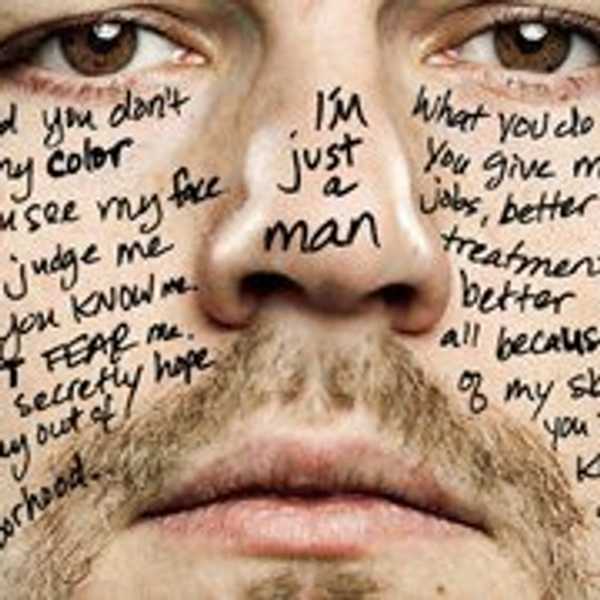
I never grew up fearing I would be wrongly accused of a crime because I was wearing a plain t-shirt the same color of the person who committed it. Never did I walk into a classroom and search around for another person that looked like me. When I made friends, it was about if they liked me for me, not if they could accept the culture differences of my family. No one asked me what I am. (Apparently it was just presumed that I was a human). The next town over was an acceptable answer when someone asked where I was from. So, in short, I grew up white.
I grew up with hardship, sure. My life certainly was not one for a ‘50’s sitcom, but this is not a mutually exclusive relationship.
Hardship does not negate privilege.
Because even if I grew up living on the side of the road, even if life threw hurdle after hurdle at me, I am still privileged. It has nothing to do with my money or my status. It has to do with my opportunity because of traits I cannot control.
So here is what I came to say: I know nothing. I understand nothing.
When I was a little girl, a cousin I didn’t know once approached me and said hello. Now, I was a painfully shy child. So shy, in fact, that I started sobbing. Did I think he was going to hurt me? Eat me? Try to make pleasant conversation? I don’t know which seemed worse to me. For whatever reason, I completely lost it. It was a family party at my own house, so my sister escorted me into the house and to my bedroom, where I sat on my bed and hiccuped until I could breathe normally again. My sister kept saying the same words over and over again: it’s okay, I understand. I understand. I understand.
She meant well, but I couldn’t take it. Through my fear and sadness, I found my anger. Anger towards my naturally outgoing and charismatic sister.
Because she didn’t understand. She wanted to help, but she didn’t. She may hurt seeing me hurt, but she didn’t understand what it was like to be afraid of the world around you. She could see it, know that it exists, but she would never understand what it felt like to be on the other side of it.
I often find myself struggling with this acceptance. I understand racism exists; I see it happening. I hear transphobic and gay slurs by people that just don’t know any better. I watch prejudice against immigrants occur and feel my blood curdle. I want to stand up, pound my fists against my chest, and fight it. I want to fight for what I know is right.
But I can’t, at least not on my own, because though I can see it exists, I am not on the other side of the arena. I am standing on the battle line and offering my hand, and that is my job. My job is not to decide what needs to be fought for and how it needs to be fought. By taking on a battle we don’t understand, we are holding up swords with blindfolds tied around our eyes.
Because we do not understand. If you have not experienced oppression, you can recognize it exists, but you cannot understand what it feels like to walk down the street and smile at a homeless person, only for them to catcall you and ask if you have any Chinese food for them; you cannot understand what it feels like to be reduced to a single quality every single day of your life. To take the battle in our own hands, into white hands, is to enter a bakery and steal the ingredients for a cake when we’ve never baked a day in our lives. It is not only wrong, but wasteful.
Our opinion is neither wanted, nor useful. Our job as allies is not to decide when or what to fight.
That is not to say we sit back and say it's not our problem. It is our problem. We are living in a world that is not the best we can do. This is not our best.
Our job is to hold out our hands and ask what they need from us, and then quietly, do whatever they ask.
I have to believe that we can do better.