If you’re in college, you’re probably familiar with the following scenario: a fraternity or sorority hosts a culturally themed party, and 48 hours later, they’re in the news, on the front page of your college’s newspaper, and groups of students are protesting against them. What was intended to be a harmless joke garnered nationwide press, and now your school is the center of attention for harboring ignorant, culturally insensitive students. Now what? How do we go about addressing these groups who inadvertently cause so much harm, and how do we prevent these situations from occurring in the future?
In high school, I was one of five black students in my grade at an incredibly wealthy, predominately white institution. On what seemed like a daily basis, I was bombarded by comments regarding my race and socioeconomic status that questioned my legitimacy and worth as a student of color. Some of the hurtful comments that my peers made were intentional, and some were not. But overcome by my emotions, I was unable to distinguish between the two. I was sad. I was upset. I was angry. I was lonely.
It didn’t take long for me to establish an “us vs. them” mentality, carefully dissecting every statement pertaining to race or socioeconomic status, and identifying them as vicious attacks on black people and poor people. Instead of easing the tensions between minority students and white students, which was my honest intention, the conflict had actually escalated, further dividing the school community even more than it already was; the incidents and subsequent reactions that I’ve observed during my time in college are nearly identical to the ones I experienced in high school not too long ago.
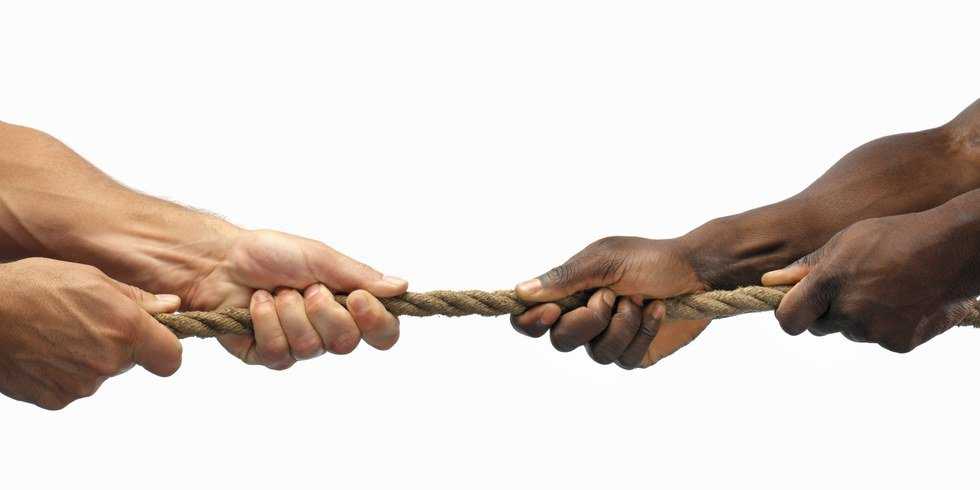
When incidents arise that have the potential to offend marginalized communities on college campuses, there are usually two antagonistic reactions; one accuses the other of being adamantly racist, sexist, misogynist, or any other –ist that negatively affects these communities while the other accuses them of being overly-sensitive, politically correct social justice warriors who demand the censorship of opinions that they don’t necessarily agree with. In order to even start the dialogue surrounding these issues that affect us so deeply, there needs to be some sort of mutual understanding between both sides, and name-calling, making inflammatory remarks, and asserting our intellectual dominance over each other won’t get us there.
As bright students who have already accomplished so much over the course of our young lives, we need to learn how to set our egos aside and listen to what each other has to say, even if we encounter sentiments and opinions that are different from our own. We don’t see things as they are, we see things as we are; the eyes merely transmit information, and the brain interprets it. Thus, what we perceive as objective truths are actually informed by our memories, experiences, surroundings, and emotions.
As a black American, I see “gangsta themed parties” as a reminder of the policies that discourage and prevent blacks from enjoying the same economic freedoms as whites, and the ways in which society perceives blacks to embody a plethora of negative character traits. But many students, namely the hosts and organizers of these themed parties don’t see it this way. These students’ lack of understanding is not a reflection of their personal beliefs, but rather the reflection of a society in which racism, sexism, homophobia, etc. are so engrained in our psyches that we’ve become numbed to its presence. I’m not excusing or condoning these actions in any way, but it is important to try to understand why members of Greek life, and many other students on campus, fail to recognize the harmfulness in what was intended to be an innocent joke.
Do I think that the groups involved should be held accountable for their actions and face repercussions from their respective universities? Yes. Do I think that the individuals involved deserve the character assassination and defamation that they often experience soon after? No. Do I think that the university should attempt to disband the groups involved entirely and individually punish the members involved? Absolutely not. Do I think that those who demand in-depth investigations and harsh punishments are overreacting and going about solving this issue ineffectively? Yes, yes I do. As hurt and offended as I get when I hear about these incidents occurring, I cannot, in good conscience, accuse the perpetrators of deliberately orchestrating vicious attacks against marginalized communities.
College is supposed to be the best four years of our lives, but it’s also supposed to be the time for young adults to mature, expand their worldview, make mistakes, and learn from them. I believe that often times, cultural insensitivity is an honest mistake, but if we’re going to respond with wrath-of-God like punishments whenever someone makes the mistake of being inadvertently culturally insensitive, what does that say about our destructive cultural expectations of nothing but perfection? If this is how we’re going to react to making mistakes, then students will be afraid to fail. Students will be reluctant to voice their opinions about a variety of issues for fear of being labeled and ridiculed because of their beliefs.
What good is attending a university with students from every walk of life imaginable if we’re not going to value others’ opinions? Coming down on members of Greek life with an iron fist will not spark the dialogue that we so desperately need, it won’t be a learning experience for anyone, and it won’t inspire students to be more culturally aware and branch out of their comfort zones. While noble in its intentions, it will do nothing but stifle the opinions of thousands of students and exasperate the already pervasive segregation that plagues college campuses around the country; I’ve seen it happen before.
Though disappointed by the groups in question, I am most disappointed with many universities’ administrations that constantly fail to address these situations in a meaningful way and propose solutions that will prevent them from occurring in the future. These are not isolated incident either, as fraternities and sororities around the country are constantly in the news for offending marginalized communities on their campuses; but it does a disservice to everyone, especially those involved, to chastise them for being wrong without explaining how or why they were wrong and helping to prevent them from making the same mistakes.
These incidents have occurred long before we arrived on our respective campuses, and if university administrators don’t step up and show that they care, they will continue to occur long after we’re gone. Until university administrators take substantive action to increase cultural awareness on college campuses, I will not be convinced that they care about the populations that they so proudly display in their brochures and pamphlets. But I’m not really convinced that administrators truly care about any of their university’s students. As institutions of higher learning, colleges and universities produce influential leaders in every field imaginable, and it’s their duty to equip students with the skills and knowledge necessary to successfully navigate an increasingly diverse and interconnected global society. Sure, a college degree sets students up for a lifetime of personal and financial success, but in terms of ensuring that students are aware of this nation’s history of social inequality and the lingering effects that still impact people’s lives, our universities are failing us all.
Echoing the requests of many advocates for social justice on college campuses, I agree that universities should enforce some type of cultural education component into the curriculum, not only for those involved in Greek life, but for the entire undergraduate community. Aware of the logistical issues surrounding the addition of an academic requirement for undergraduates, including, but not limited to: additional instructors, classroom space, and adding onto students’ already busy schedules, perhaps it would be useful to survey students about what they believe to be the most ineffective requirement mandated by their school’s curriculum, and replacing that with a course on intercultural education and communication. Of course this is not the only possible solution, but I hope that it will at least encourage students and administrators to come together to propose solutions that will make college campuses more welcoming and inclusive for all.
Sometime near the end of my first semester, I came to realize that the issues surrounding diversity that I experienced in high school wouldn’t magically disappear once I got to college and was surrounded by a slightly older, wiser crowd, but I’m okay with that. Change takes time and growth is uncomfortable. Actively trying to understand and cope with years and years of social conditioning is difficult, but as college students, I believe that we’re all up to the challenge. America prides itself on having some of the best universities in the world, and it’s time for us to prove it.